Global Expeditions South America

Peru Alpinist

Climb Alpamayo and Quitaraju

15 Days Group: Small teams, high guide ratio (2:1) $6,900 per person

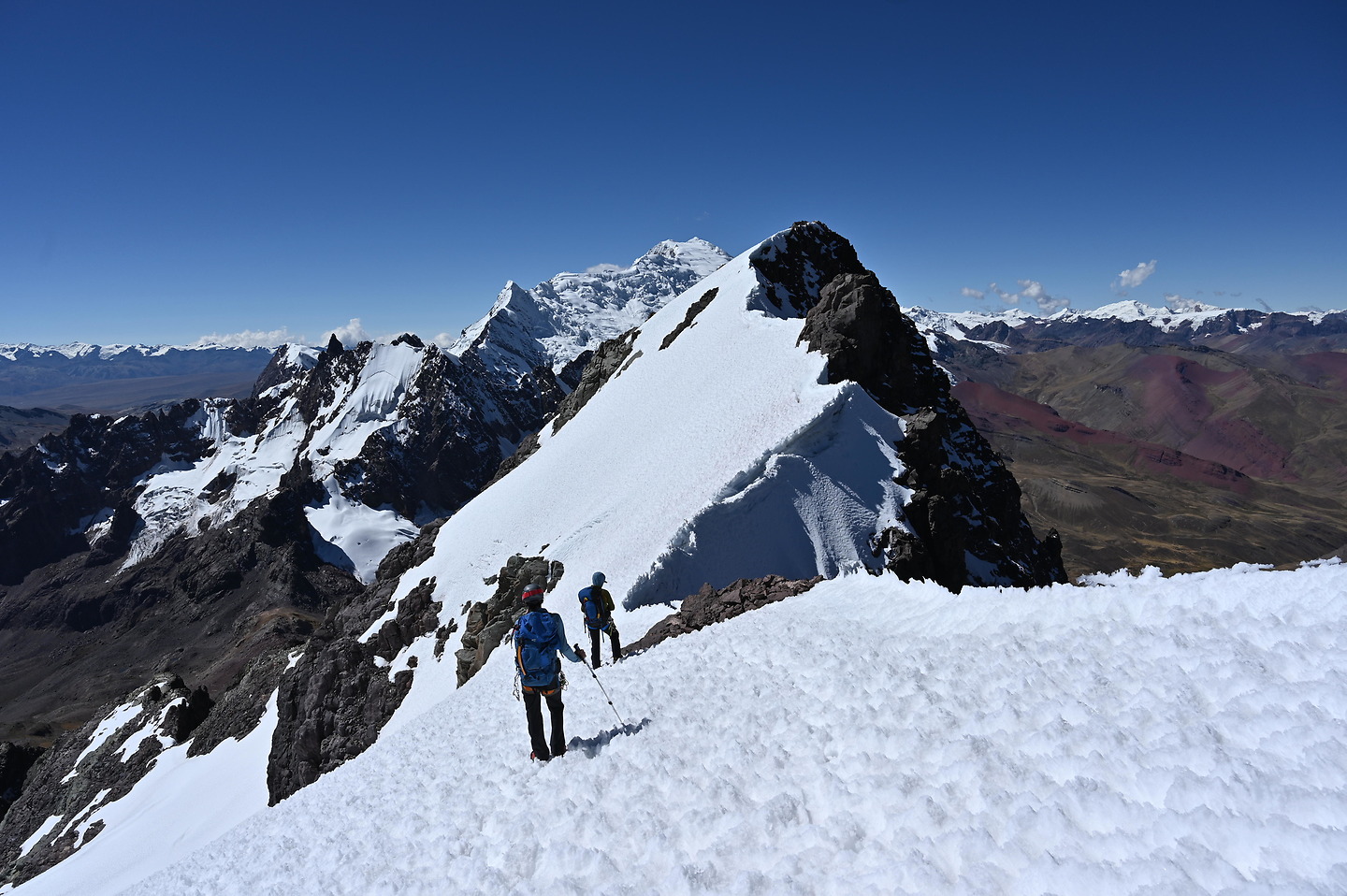
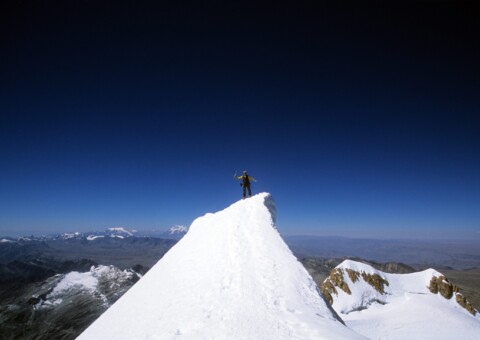
Known as the crown jewel of the Cordillera Blanca, Alpamayo (19,512 ft / 5,947 m) is celebrated as one of the most beautiful mountains in the world. Its elegant, fluted ice face — rising in near-perfect geometric symmetry above the Santa Cruz Valley — offers one of the most rewarding alpine challenges anywhere on earth. Together with nearby Quitaraju (19,820 ft / 6,041 m), this expedition is designed for climbers ready to put their technical skills to the test on two world-class Andean peaks.

This is a trip for serious alpinists: long approaches through some of Peru’s most dramatic mountain terrain, technical snow and ice climbing, and the satisfaction of standing on top of two legendary summits in the Cordillera Blanca — one of the highest tropical mountain ranges on earth.

The Mountains

Alpamayo — 19,512 ft / 5,947 m

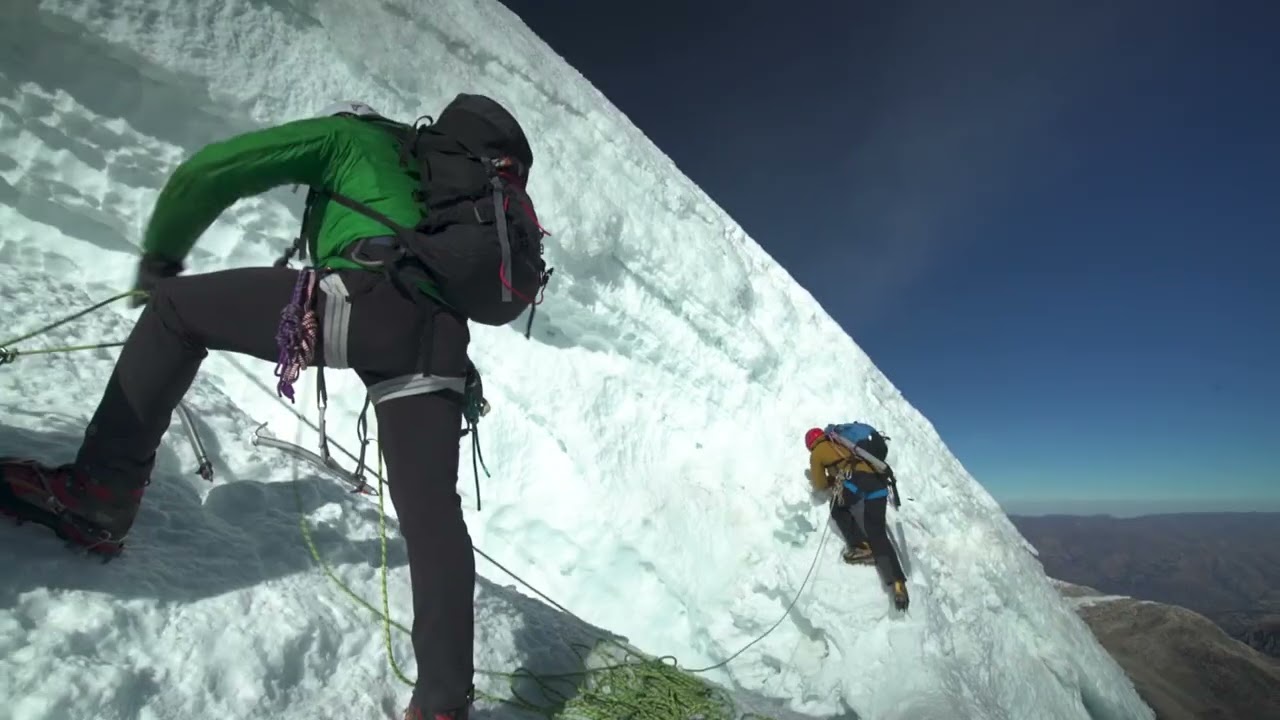
Alpamayo’s southwest face is one of the great ice climbs in the world — a nearly perfect 60–70° fluted ice pyramid that rises above the high Andean plateau. The route climbs via either the Ferrari Route or French Direct Route, both involving 8–10 pitches of steep snow and ice at altitude. A UNESCO World Heritage candidate for natural beauty, Alpamayo has been voted the most beautiful mountain in the world by multiple mountaineering organizations. The summit views across the Cordillera Blanca toward peaks like Artesonraju — the inspiration for the Paramount Pictures logo — are extraordinary.

Quitaraju — 19,820 ft / 6,041 m

Quitaraju stands as Alpamayo’s formidable neighbor, sharing the same high col and offering a sustained technical challenge of 12+ pitches of névé and hard ice from Col Camp. Fewer climbers attempt it, making the summit feel even more earned. Reaching both peaks from a single high camp is one of the defining features of this expedition.

The BBE Approach

At Benegas Brothers Expeditions, we approach the Cordillera Blanca with the same philosophy we bring to Everest and Aconcagua — small teams, real objectives, and no shortcuts on safety or logistics. The 2:1 guide ratio means each climber receives direct, continuous attention from an IFMGA-certified guide throughout the expedition. See ifmga.info for the international certification standard.

From Lima to high camp, our full logistics system — professional cooks, burro support on the approach, porter team, and fully equipped base camp — means you arrive at each camp with energy directed toward the climbing, not the camp chores.

Why the Cordillera Blanca

The Cordillera Blanca is the highest tropical mountain range in the world, containing more than 30 peaks above 19,685 ft / 6,000 m within a 180 km / 112 mile chain. Based in Huaraz — known as the climbing capital of South America — the range offers unparalleled access to serious alpine objectives with strong local infrastructure. The Santa Cruz Valley approach to Alpamayo is one of the most celebrated mountain treks in South America, passing through traditional Quechua communities and high-altitude lakes before the terrain turns glaciated and technical.

15 Days  ·  Lima → Huaraz → Cordillera Blanca → Alpamayo & Quitaraju → Lima

This itinerary is a guide, not a contract. Acclimatization, weather, and team readiness always drive final decisions.

Evening arrival in Lima (6:00 PM–midnight). Private transfer to hotel. Lima sits at sea level — a good night’s sleep before the altitude begins.
Overnight: Hotel, Lima

8-hour bus or private van ride from Lima into the Andes, climbing steadily to Huaraz — the climbing capital of South America, surrounded by the peaks of the Cordillera Blanca and Cordillera Negra. Check in at Olaza Hotel, gear check, and team briefing.

Overnight: Olaza Hotel, Huaraz  ·  Meals: D

A full day in Huaraz dedicated to gear checks, logistics organization, and your first acclimatization hike to a nearby high-altitude lake at approximately 13,000–14,000 ft / 3,962–4,267 m. This day is essential — Huaraz already sits above 10,000 ft and the afternoon hike begins the acclimatization process.

Overnight: Olaza Hotel, Huaraz  ·  Meals: B D

Drive to Cashapampa, meet the burro team, and begin the trek into the Santa Cruz Valley — one of the most beautiful mountain valleys in South America. Walking through Quechua communities and high-altitude pastures, the scale of the Cordillera Blanca opens up above. Camp at Llama Corral.

Overnight: Camp, Llama Corral — 11,500 ft / 3,505 m  ·  Meals: B L D

Continue the trek past a series of alpine lakes — glacial blue water set against sharp rock ridges — up to Alpamayo Base Camp. The mountain’s southwest face becomes visible as you arrive. Base camp is fully staffed: cook tent, sleeping tents, and a panoramic view of what lies ahead.

Overnight: Alpamayo Base Camp — 13,500 ft / 4,115 m · Meals: B L D

Carry and cache gear to Moraine Camp, following the climb-high, sleep-low acclimatization strategy. The carry pushes to 16,000 ft / 4,877 m — significantly above Kilimanjaro’s summit — giving your body a critical altitude stimulus before returning to sleep at base camp.

Overnight: Base Camp — 13,500 ft / 4,115 m  ·  Meals: B L D

A structured rest day. Your guides review advanced rope systems — short-roping, steep ice movement, rappel sequences, crampon technique on steep terrain. Rest, eat well, and hydrate. Tomorrow the glacier begins.

Overnight: Base Camp — 13,500 ft / 4,115 m  ·  Meals: B L D

We move fully to Moraine Camp with all personal gear and technical equipment. The views of Alpamayo’s southwest face, Artesonraju, and the surrounding peaks of the Cordillera Blanca from this elevation are some of the finest in the Andes.

Overnight: Moraine Camp — 16,000 ft / 4,877 m  ·  Meals: B L D

The most technically demanding movement day of the expedition. A challenging glacier climb with WI3 ice pitches under full packs brings the team to Col Camp at 18,000 ft / 5,486 m — positioned between Alpamayo and Quitaraju with views across the entire range. Gear organized, ropes prepared, summit packs laid out.

Overnight: Col Camp — 18,000 ft / 5,486 m  ·  Meals: B L D

The main event. We climb via the Ferrari Route or French Direct Route — 8–10 pitches of 55–70° snow and ice ascending the fluted southwest face. Each pitch requires precise crampon technique, ice tool placement, and confident movement on steep exposed terrain. The summit view across the Cordillera Blanca is one of the great alpine panoramas in South America. Descent is by rappel back to Col Camp.

Overnight: Col Camp — 18,000 ft / 5,486 m  ·  Meals: B L D

A critical recovery day between summits. Rest, hydrate, eat well. Your guides assess team condition and confirm strategy for Quitaraju.

Overnight: Col Camp — 18,000 ft / 5,486 m  ·  Meals: B L D

A sustained technical climb of 12+ pitches of névé and hard ice from Col Camp. Quitaraju is a more demanding technical undertaking than Alpamayo — fewer climbers, harder sustained ice, and a more committing route. The summit at 19,820 ft / 6,041 m places you above all but a handful of peaks on the continent. Descent back to Col Camp.

Overnight: Col Camp — 18,000 ft / 5,486 m  ·  Meals: B L D

Descend from Col Camp through Moraine Camp back to Alpamayo Base Camp. Thicker air, warmth, and the satisfaction of two major summits complete. The cook team has a proper meal waiting.

Overnight: Base Camp — 13,500 ft / 4,115 m  ·  Meals: B L D

Ride horses out of the Santa Cruz Valley to Cashapampa, then transfer by van to Huaraz. A celebration dinner in town marks the close of the expedition. Clean clothes, hot showers, and cold beers.

Overnight: Olaza Hotel, Huaraz  ·  Meals: B D

Morning departure from Huaraz to Lima — 8-hour bus or private transfer. Evening international flights depart after 11:00 PM. Services conclude in Lima. Airport transfer included.

Overnight: Lima (airport hotel if needed)  ·  Meals: B

This is an advanced expedition. It is not appropriate for first-time high-altitude climbers or those without a solid technical mountaineering background. Alpamayo and Quitaraju are world-class technical peaks, and the climbing demands that you arrive with real experience and the physical fitness to perform on steep ice at extreme altitude.

Technical Experience Required

Participants must be comfortable with:

  • WI3 ice climbing — confident tool placements, front-pointing on steep ice, reading ice features
  • 55–70° snow and ice — sustained movement on steep exposed terrain without hesitation
  • Glacier travel — crevasse awareness, rope team movement, self-arrest
  • Multi-pitch systems — lead and follow on glaciated terrain, anchor building, rappelling
  • Moving efficiently with a heavy pack at high altitude — expect 40–50 lbs on carry days

Previous alpine experience is required. Peaks like Cotopaxi, Cayambe, Orizaba, Mont Blanc, Denali, or similar technical Andean objectives provide the right foundation. If you have not yet completed a technical glacier peak, this expedition will exceed your current level.

Altitude Experience

Prior experience above 18,000 ft / 5,486 m is strongly recommended. Col Camp sits at 18,000 ft / 5,486 m — higher than any peak in North America. Summit days push beyond 19,500 ft / 5,944 m. Climbers who have not previously been above 5,000 m / 16,404 ft will find the physiological demands significantly greater than expected.

Fitness

This expedition demands expedition-level fitness:

  • Long, sustained climbing days — summit pushes are 8–12 hours of continuous technical movement
  • Back-to-back demanding days between load carries, high camp moves, and summit attempts
  • Carrying 40–50 lb packs on approach and carry days at altitude
  • Cold tolerance — Col Camp and summit days are consistently below -10°C / 14°F with wind

Start a structured training program at least 4–6 months before departure. Prioritize uphill endurance with a loaded pack, core and upper body strength for technical climbing, and back-to-back effort days.

What Will Feel Hard

Day 9 — The Move to Col Camp

Climbing to 18,000 ft / 5,486 m with a full pack through WI3 ice sections is the most demanding movement day of the expedition. The altitude, the technical terrain, and the weight combine into a genuinely serious undertaking.

Summit Day — Alpamayo

8–10 pitches of 55–70° ice above 18,000 ft / 5,486 m. Each pitch requires full technical competence. This is not a walk-up or a scramble — it is a sustained technical climb on one of the most iconic ice faces in the world.

Summit Day — Quitaraju

12+ pitches of sustained névé and hard ice, following a rest day at Col Camp. By this point in the expedition, accumulated fatigue is significant. Quitaraju rewards climbers who manage their energy well across the entire program.

Is This a Good Progression Objective?

Yes — for the right climber. The Cordillera Blanca is widely regarded as one of the finest ranges in the world for developing serious alpine skills. The progression from Ecuador’s volcanoes to Alpamayo and Quitaraju is a natural and well-established pathway toward bigger objectives: Aconcagua, Denali, and Himalayan peaks. Many BBE clients use this expedition as direct preparation for the Everest Peak Performance program.

This is an advanced expedition. Participants should be comfortable climbing WI3 ice, moving on 55–70° snow, and operating efficiently with a heavy pack at high altitude. Previous alpine experience on technical glaciated terrain is required — not recommended, required.

Porters and burros carry group gear on the approach, but climbers carry personal equipment plus shared loads on the carry days and higher camps. Expect 40–50 lbs on carry days including gear moves to Moraine Camp and Col Camp. Physical preparation for heavy-pack movement at altitude is essential.

The Cordillera Blanca climbing season (June–August) offers stable weather with cold, dry nights and sunny days. Expect nighttime temperatures at Col Camp (18,000 ft / 5,486 m) to drop well below freezing — typically -10°C to -20°C (14°F to -4°F) or colder. Summit days are cold with potential wind.

Summit days carry built-in flexibility. The rest day on Day 11 between the two summits can also serve as a weather window day if needed. Guide decisions on summit timing are based on current conditions, not the schedule. Safety always takes priority over a summit attempt.

Mandatory. Your policy must cover helicopter evacuation from technical mountaineering terrain to 6,041 m / 19,820 ft. Most standard travel policies cap at 3,000 m — not sufficient. Send your certificate before departure.

Cotopaxi gives you valuable glacier experience but may not be sufficient for Alpamayo’s technical demands. Cotopaxi is a 35° snow climb; Alpamayo involves 70° ice requiring WI3 proficiency and multi-pitch technical systems. If Cotopaxi is your highest technical achievement, consider building additional technical experience first — our Ecuador Mountaineering School or a Cascades technical course would help bridge the gap.

Maximum 4 climbers with a 2:1 guide-to-climber ratio. On a technical peak like Alpamayo, this ratio is not a selling point — it is a safety requirement. Small teams move faster, make smarter decisions, and give guides the visibility they need to keep climbers safe on steep technical terrain.

A 20% deposit secures your spot. Balance due 120 days before departure. Cancellation schedule: 120+ days: partial refund less unrecoverable costs; 90–119 days: partial refund reviewed individually; less than 90 days: no refund. All cancellations must be submitted in writing. Trip cancellation insurance is strongly recommended.

Passport & Visa

Your passport must be valid for at least six months beyond your return date with at least two blank pages. US, Canadian, EU, UK, and Australian citizens do not require a visa for Peru for stays under 183 days — entry is stamped directly into your passport on arrival at Lima’s Jorge Chávez International Airport (LIM). Confirm current requirements for your nationality at travel.state.gov before departure.

Rescue & Medical Insurance — Required

Rescue insurance is mandatory for all BBE expeditions. Your policy must cover:

  • Technical mountaineering and ice climbing to 6,041 m / 19,820 ft
  • Emergency helicopter evacuation from remote Andean terrain
  • Minimum $300,000 USD combined medical and evacuation coverage
  • Trip cancellation and interruption

We recommend Global Rescue (globalrescue.com) — the standard we require on all BBE international expeditions. Standard travel policies routinely exclude technical mountaineering activities. Verify your policy explicitly covers WI3 ice climbing and glacier travel before purchasing. Send your certificate to our office before departure.

Health & Vaccinations

No vaccinations are required for entry into Peru. Recommended by most travel medicine clinics: Hepatitis A and Typhoid. Consult your physician about acetazolamide (Diamox) before departure. A travel medicine consultation 4–6 weeks before departure is strongly advised. Altitude medications should be carried in original labeled containers in your carry-on luggage.


Travel & Planning

Your international gateway is Jorge Chávez International Airport (LIM), Lima, Peru. Lima sits at sea level — the altitude arrives on Day 2 when you drive to Huaraz. All major North American, European, and Latin American airlines serve Lima from major hubs.

Recommended Airlines & Routing

  • LATAM Airlines: strong hub in Lima; direct from Miami, New York, and Los Angeles
  • American Airlines: Miami (MIA) direct to Lima
  • United Airlines: Houston (IAH) and Newark (EWR)
  • Copa Airlines: connecting via Panama City (PTY) — excellent from East Coast gateways
  • Avianca: connecting via Bogotá (BOG)

Arrival Timing

Arrive on Day 1 evening (6:00 PM–midnight per the itinerary). A buffer day arriving early is strongly recommended — Lima traffic can delay transfers, and arriving rested before the Huaraz drive is valuable. Allow at least 3 hours before any departure when leaving Lima — traffic between the city and the airport is notoriously unpredictable.

Luggage

Technical gear (ice axes, crampons, harnesses) travels checked — secure in a padded bag. Pack your ice axe in a travel case or wrap the pick. Pack boots in your carry-on if possible. The Huaraz drive is 8 hours — if luggage is delayed at LIM, most bags arrive within 24 hours, giving time before the technical phase begins.

Lima — Day 1

One night near Jorge Chávez Airport or in the Miraflores district. BBE coordinates airport transfer to lodging. Miraflores is Lima’s safest and most accessible neighborhood — well-stocked pharmacies, good restaurants, and gear shops nearby.

Huaraz — Days 2–3 and Day 14

Base for the expedition: Olaza Hotel, Huaraz — a well-established climbers’ hotel with gear storage, reliable Wi-Fi, and proximity to Huaraz’s outfitters and gear shops. Comfortable rooms, good breakfast, and a team known to the BBE guide staff.

On the Mountain — Camp Progression

  • Llama Corral Camp — 11,500 ft / 3,505 m (Day 4)
  • Alpamayo Base Camp — 13,500 ft / 4,115 m (Days 5–7 and Day 13)
  • Moraine Camp — 16,000 ft / 4,877 m (Day 8)
  • Col Camp — 18,000 ft / 5,486 m (Days 9–12)

All mountain camps are fully staffed: sleeping tents, dedicated cook tent, and professional cook crew. The porter team moves camp equipment ahead of the climbing team.

This is a technical ice climbing expedition. Your equipment is part of your safety system — arrive with your own properly fitted technical gear, fully tested before departure.

Technical Climbing Equipment — Required

  • Double or single mountaineering boots compatible with step-in crampons (La Sportiva G5 Evo, Scarpa Phantom 6000, or equivalent)
  • 12-point crampons — step-in or hybrid, rigid or semi-rigid, fully compatible with your boots
  • Two ice tools — matched pair; must be proficient with them before arrival
  • Ice axe — standard mountaineering length (60–70 cm)
  • Mountaineering harness — adjustable leg loops; must fit over full summit layers
  • Helmet — mandatory on all technical terrain
  • Belay device, locking carabiners (×4 minimum), prusik cords, slings
  • Headlamp — primary and backup, lithium batteries only; summit pushes begin before dawn

Clothing & Layering System

Col Camp nights drop to -10°C to -20°C (14°F to -4°F). Summit day with wind can be significantly colder. No cotton at any layer.

  • Base layer: moisture-wicking merino or synthetic — top and bottom, ×2 sets
  • Mid layer: fleece or light insulation jacket
  • Insulation: heavyweight down jacket — mandatory for high camps and summit push
  • Hard shell: waterproof/windproof jacket and pants — Gore-Tex or equivalent
  • Gloves: liner gloves + mid-weight insulated gloves + expedition mitts for summit
  • Balaclava, warm hat, neck gaiter; goggles for summit wind; glacier sunglasses (Category 4)
  • Sleeping bag rated to -20°C / -4°F — essential for Col Camp nights at 18,000 ft / 5,486 m

Group Equipment — Provided

Ropes, anchors, ice screws, pickets, group first aid kit, and cook system are provided by BBE. You do not need to bring technical group hardware.

The Expedition Rhythm

Approach days move at a trekking pace through extraordinary Andean terrain — long but enjoyable. Load carry days are physically demanding. High camp days are deliberate and focused. Summit days are everything the expedition has built toward.

Food & Nutrition

All meals during the mountain phase are prepared by professional cook staff using fresh produce from Huaraz markets. The approach valley provides resupply opportunities. At high camp, cook crew prepares hot meals and ensures climbers eat even when altitude suppresses appetite. Hydration minimum: 3–4 liters per day throughout the expedition. Personal snacks for carry days and summit pushes are your responsibility — bring gels, bars, and familiar energy foods from home.

Communications

No cell service above the lower approach valley. The guide team carries a satellite communication device for emergencies throughout the expedition. A personal satellite communicator — Garmin inReach or SPOT — is strongly recommended for regular contact with home. Wi-Fi is available at Olaza Hotel in Huaraz.

Weather & Summit Timing

June through August is the Cordillera Blanca dry season — the optimal window for technical climbing. Mornings are generally clear; afternoon cloud can build. Summit pushes are timed for early morning. Guides monitor weather daily and adjust timing based on conditions. The rest day on Day 11 provides flexibility for weather holds on either summit.

Currency

The Peruvian Sol (PEN) is the local currency. USD is widely accepted in Huaraz hotels and larger restaurants but not reliably in smaller establishments or on the mountain. Withdraw Soles from ATMs in Lima or Huaraz before heading into the field — there are no banking services above Huaraz. ATMs in Lima offer the best exchange rates.

Tipping Guidelines

  • Cook crew: $25–$40 USD per climber for the full expedition
  • Porter team: $20–$35 USD per climber
  • Burro/horse handlers: $15–$25 USD per climber
  • Western lead guide: $200–$300 USD per climber for the full program
  • Tanzanian-equivalent local guide: $40–$60 USD per climber

Personal Budget Beyond Expedition Fee

  • Lima hotel (1 night): $80–$180 USD
  • Meals in Lima and Huaraz not included: $30–$60 USD per day
  • Personal snacks for mountain phase: $50–$100 USD
  • Total tips: $300–$500 USD
  • Emergency reserve: $300–$500 USD

Private departures are available for individuals and small groups on custom dates throughout the June–August season. A private expedition means your group, your schedule, and the option for personalized guide assignments — including Willie or Damian Benegas personally for select departures.

  • Private departures: 2–4 climbers, custom dates, same 2:1 guide ratio
  • Custom objectives: Alpamayo only, Quitaraju only, or additional Cordillera Blanca peaks
  • Combined programs: Peru + Ecuador, or Peru + Bolivia as a multi-range Andean season
  • Filming, media, and brand projects — contact us to discuss scope

Contact climbing@benegasbrothers.com to start planning.

Expedition Cost: $6,900 USD per person

Price Includes

  • IFMGA-certified guiding throughout the expedition
  • All group logistics in Peru: transportation, porters, cook crew, burro support on approach
  • Hotel nights in Lima and Huaraz per the itinerary
  • All meals during the mountain phase
  • Group climbing gear: ropes, anchors, ice screws, pickets, and group safety equipment
  • Airport transfers on scheduled expedition dates

Price Does NOT Include

  • International airfare to/from Lima
  • Personal climbing equipment (boots, ice tools, crampons, harness, helmet)
  • Travel and rescue/evacuation insurance (mandatory)
  • Meals in Lima and Huaraz not listed in the itinerary
  • Guide and staff gratuities
  • Personal snacks for carry days and summit pushes
  • Personal expenses, souvenirs, and emergency reserve

Full Budget Estimate

  • Expedition fee: $6,900
  • International flights (roundtrip): $700–$1,400 depending on origin
  • Rescue insurance — required: $300–$500 / yr  ·  Global Rescue recommended
  • Travel insurance — recommended: $200–$400
  • Personal technical gear (if purchasing): $1,000–$3,000
  • Lima hotel (1 night, not included): $80–$180
  • Meals not in itinerary: $150–$300
  • Guide and staff gratuities: $300–$500
  • Personal snacks for mountain: $50–$100
  • Emergency reserve: $300–$500

Essentials total (fee + flights + insurance + tips): ~$9,000–$10,500

Typical total with gear purchases: ~$10,000–$13,000

The Peru Alpinist operates during the Cordillera Blanca dry season: June through August — the optimal window for stable weather, consistent snow conditions, and the best summit probability on both Alpamayo and Quitaraju. Teams are capped at 4 climbers. Spots are limited and fill early.


2026 Expedition Dates

June 14 – June 28, 2026  ·  Open  ·  Early season — prime conditions

July 5 – July 19, 2026  ·  Open  ·  Mid-season — most popular window

July 26 – August 9, 2026  ·  Open  ·  Late season — excellent stability


Price Per Person: $6,900 USD


Payment Policy

A 20% deposit ($1,380) is required to reserve your spot. Balance due 120 days before departure. Payment by wire transfer, ACH, or credit card (processing fees may apply).


Cancellation Policy

  • 120+ days before departure: partial refund less unrecoverable costs
  • 90–119 days before departure: partial refund reviewed individually
  • Less than 90 days: no refund

All cancellations must be submitted in writing. Trip cancellation insurance is strongly recommended.

Private Expeditions

Private departures available throughout the June–August season for groups of 2–4 on custom dates. Contact climbing@benegasbrothers.com to discuss scope, dates, and pricing.

Why Book Early

Four climbers per team. No overflow. When a departure fills, it is closed. The climbers who arrive most prepared are also the ones who booked earliest — giving themselves time to build fitness, source gear, and complete the technical preparation this expedition demands.

Climb Alpamayo and Quitaraju

This expedition is designed for climbers looking to put their technical skills to the test on two world-class peaks.

Book Trip
Location:
Cordillera Blanca, Peru
Group:
Small teams, high guide ratio (2:1)
Duration:
15 Days
Skill:
Advanced
Dates:

June 14 – June 28, 2026

July 5 – July 19, 2026

July 26 – August 9, 2026

Pricing

Pricing is a typical estimate, final quote will be provided after receiving your inquiry.

Climb Alpamayo and Quitaraju

This expedition is designed for climbers looking to put their technical skills to the test on two world-class peaks.

Peru

Mountaineering in the Ishinca Valley

This expedition combines the adventure of big Andean approaches with the precision of steep alpine climbing. You’ll develop and refine steep snow and ice skills, learn advanced expedition systems, and gain experience that will carry forward to the world’s most ambitious alpine objectives.