Global ExpeditionsSkiing Adventures Chile South America

Ski Volcanoes in Patagonia

8 Days Group: 6 People $5,000 per Person

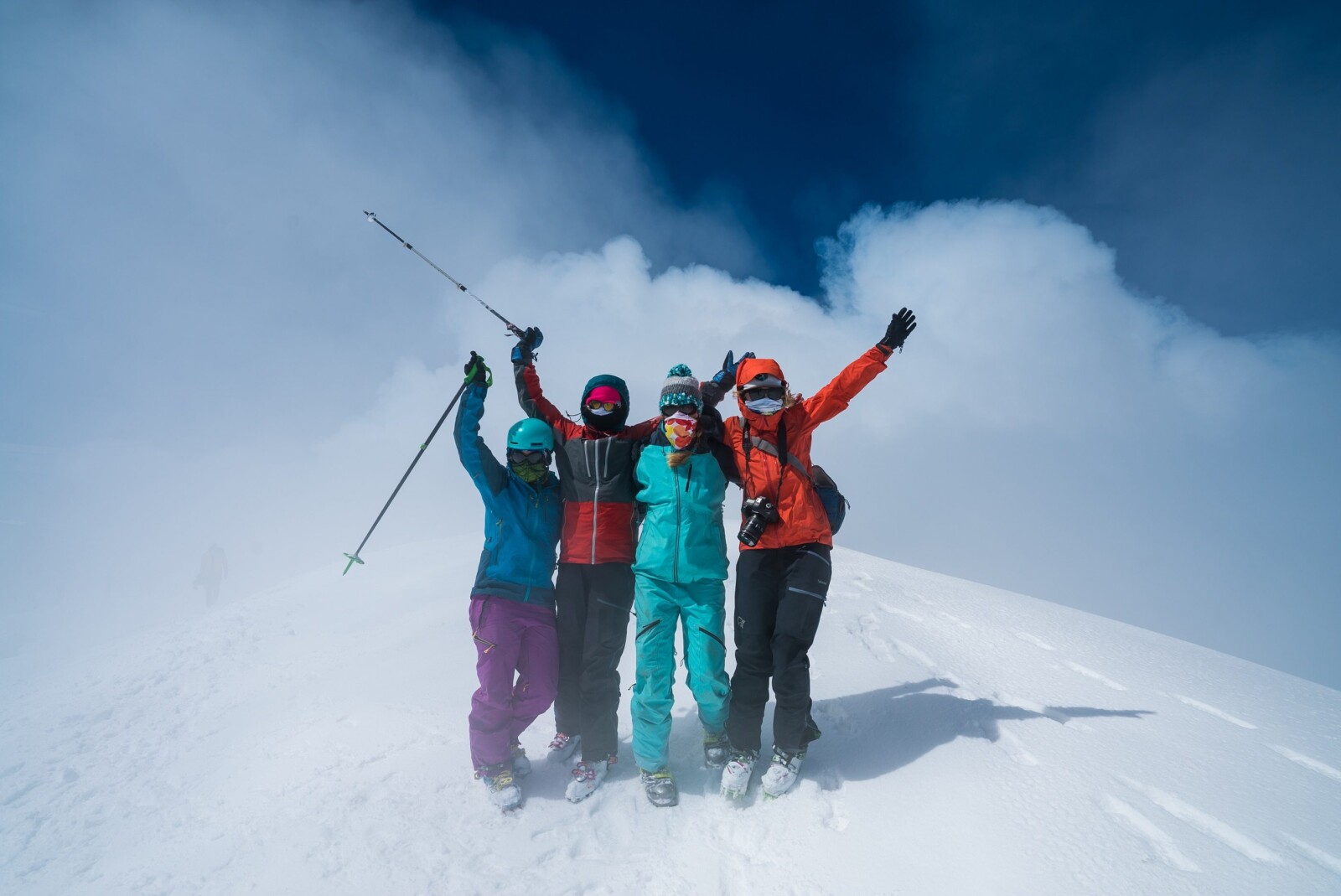
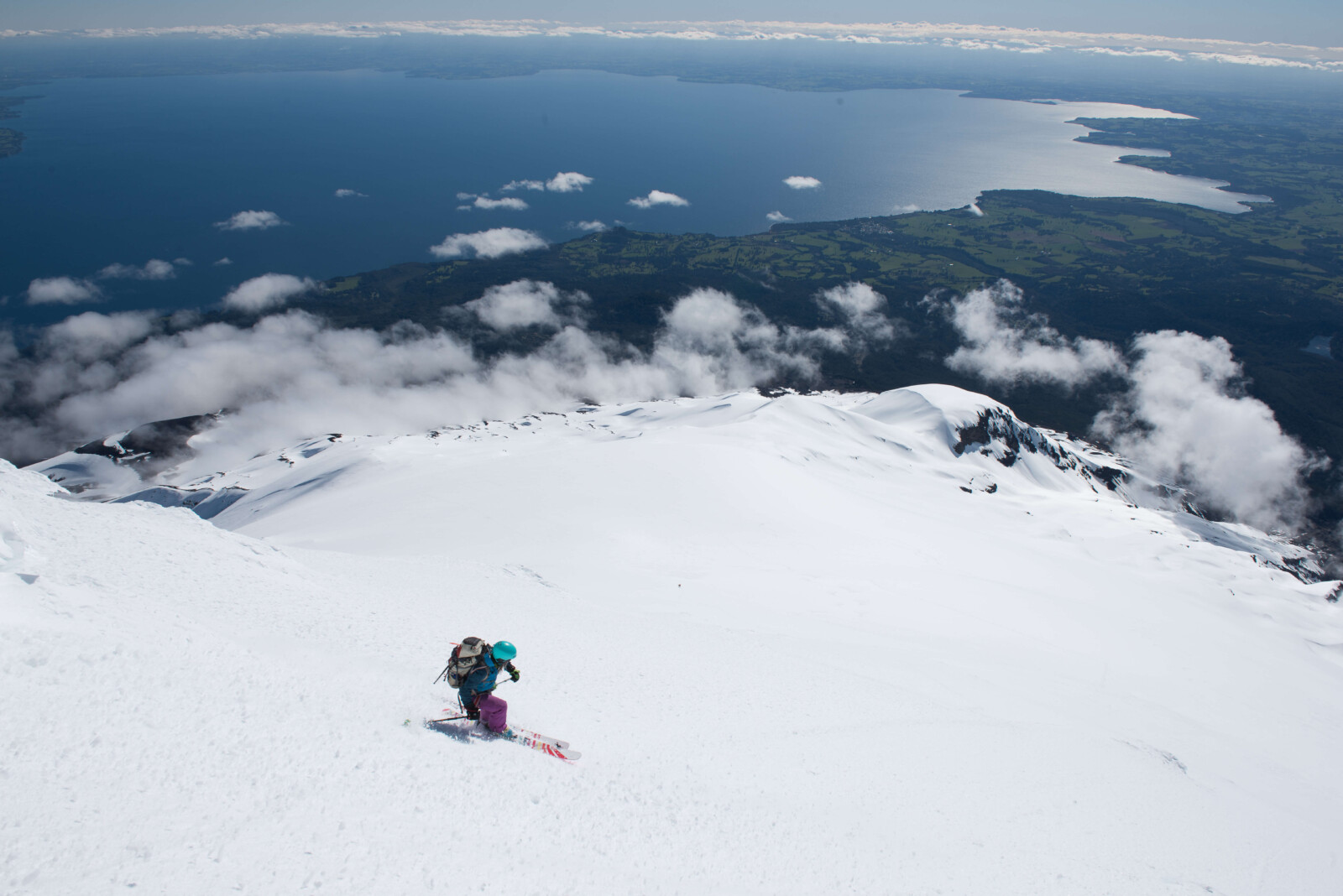
Most North American skiers hang up their boots in April. The ones who can’t — who are already watching forecasts in August and counting weeks until opening day — this trip is built for them. October in Chile’s Lake District puts you on four active volcanoes with real vertical and real conditions, right before your home season opens. For a sense of the landscape, the Conguillío National Park UNESCO Biosphere Reserve (whc.unesco.org) surrounding Volcán Llaima is one of the most spectacular volcanic environments on the continent.

Four Objectives. One Expedition.

Volcán Lonquimay — 9,288 ft / 2,831 m  Our opening objective. Access through Corralco Ski Resort allows efficient elevation gain before transitioning to touring mode across Lonquimay’s broad upper slopes. Smooth corn snow and wide volcanic terrain set the tone for everything that follows.

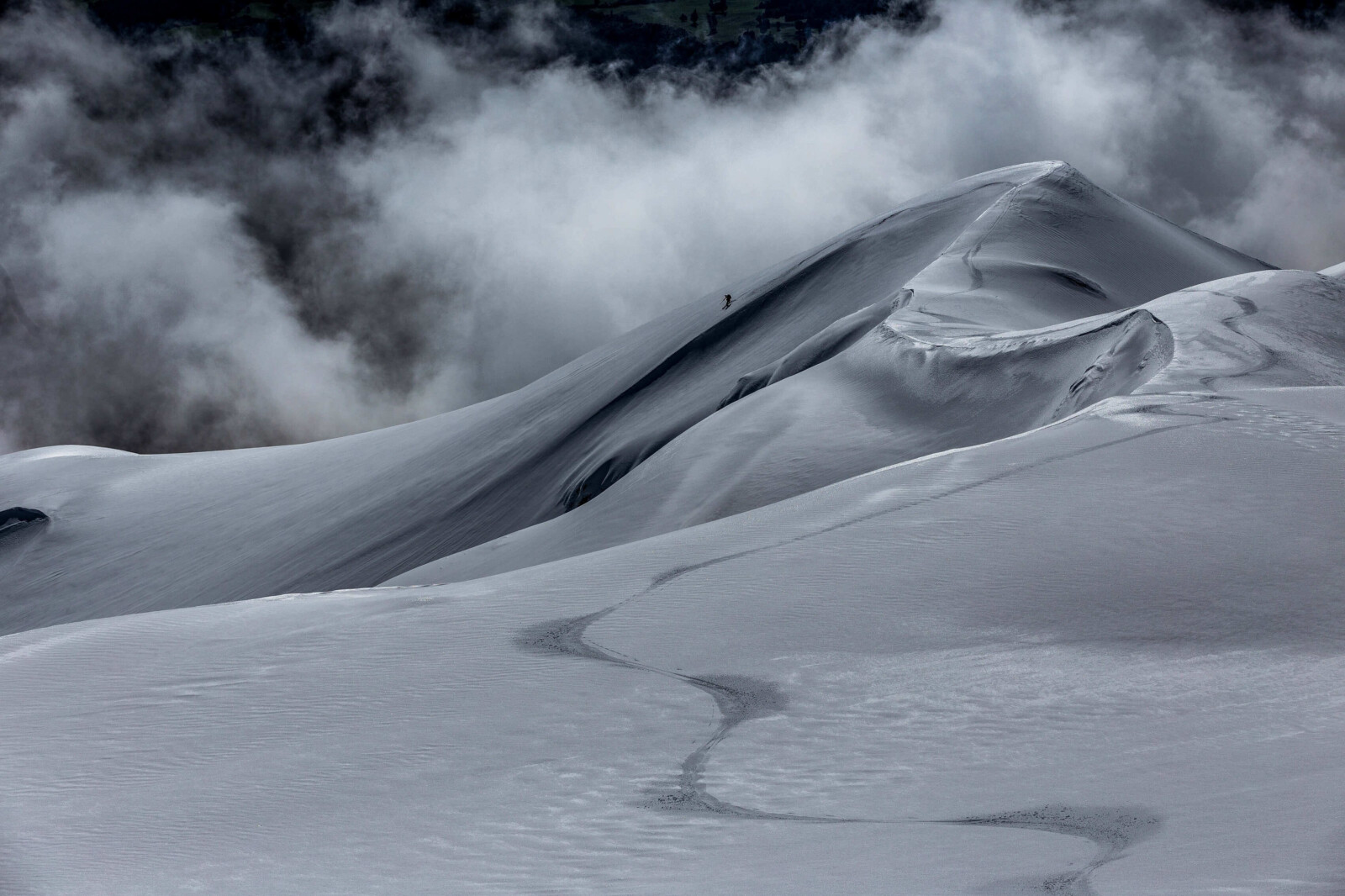
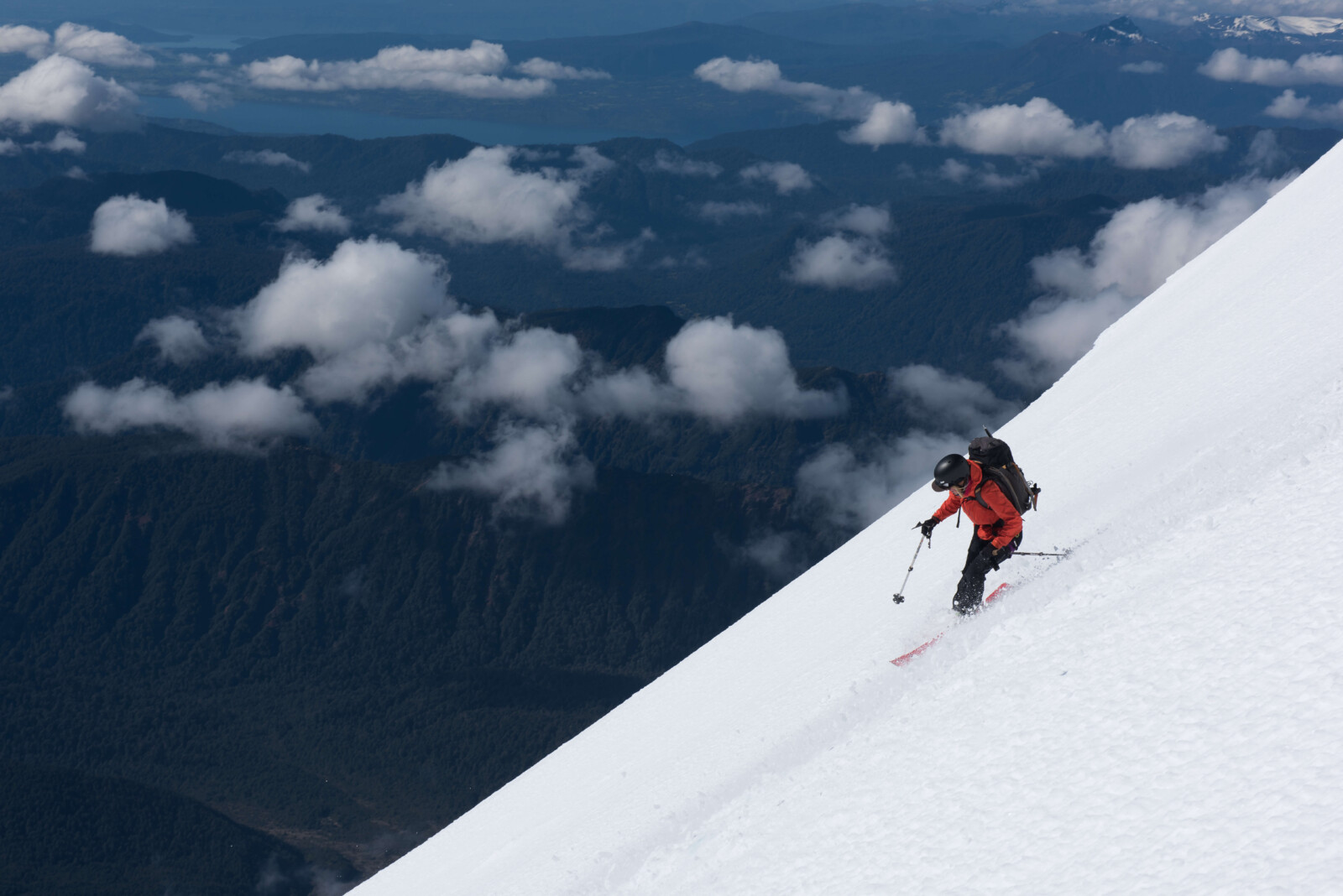
Volcán Llaima — 10,255 ft / 3,125 m  The giant of the region. Rising above ancient lava fields, old-growth forests, and glacial lakes, Llaima is often the biggest performance day of the expedition. With over 5,000 vertical feet of descent available from the summit cone, this is where the skiing earns its reputation.

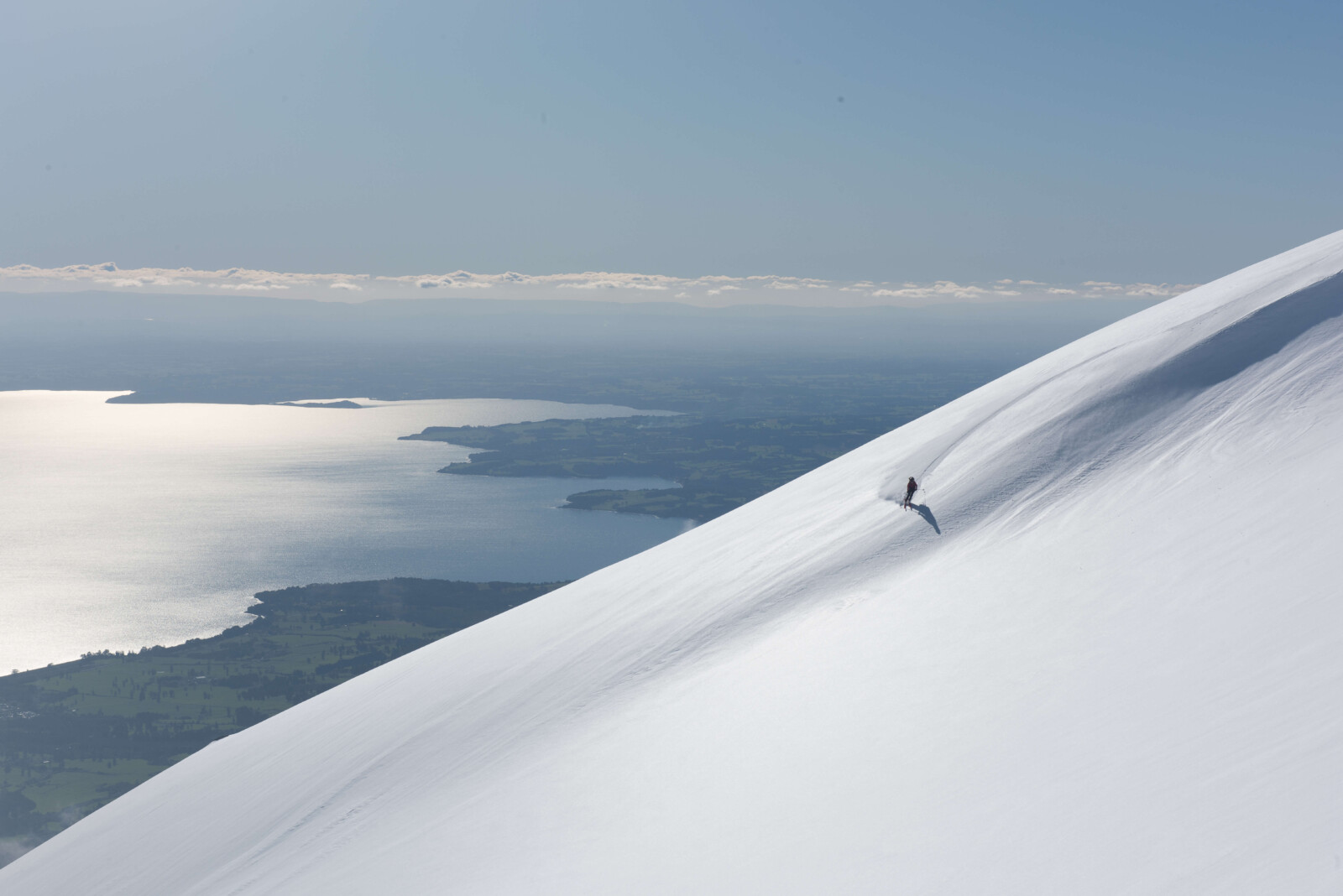
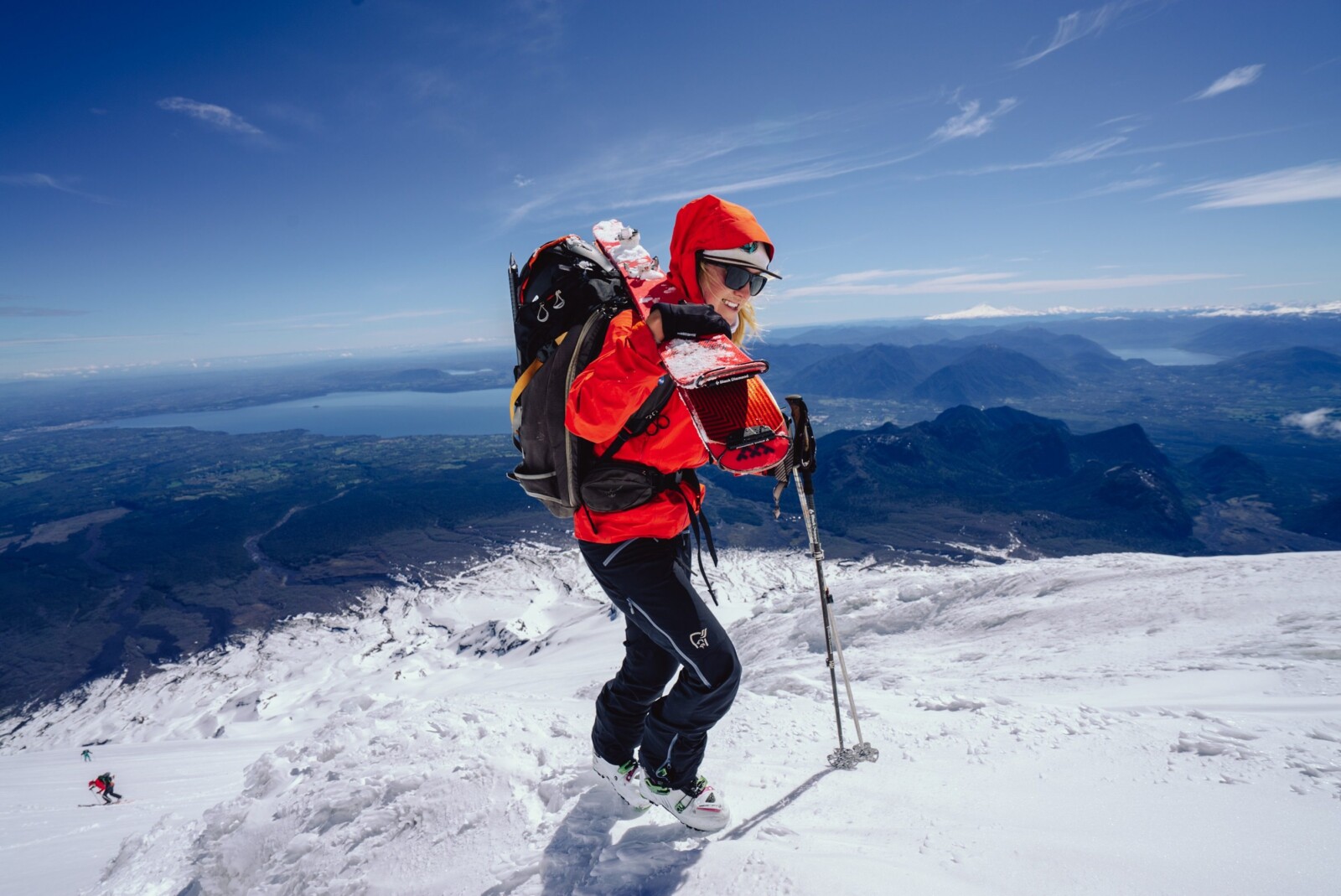
Volcán Villarrica — 9,341 ft / 2,847 m  The icon. An active stratovolcano with a glowing crater rim — one of the most recognizable backcountry ski objectives on the continent. You ski directly off an active volcanic cone with panoramic views across the entire Lake District.

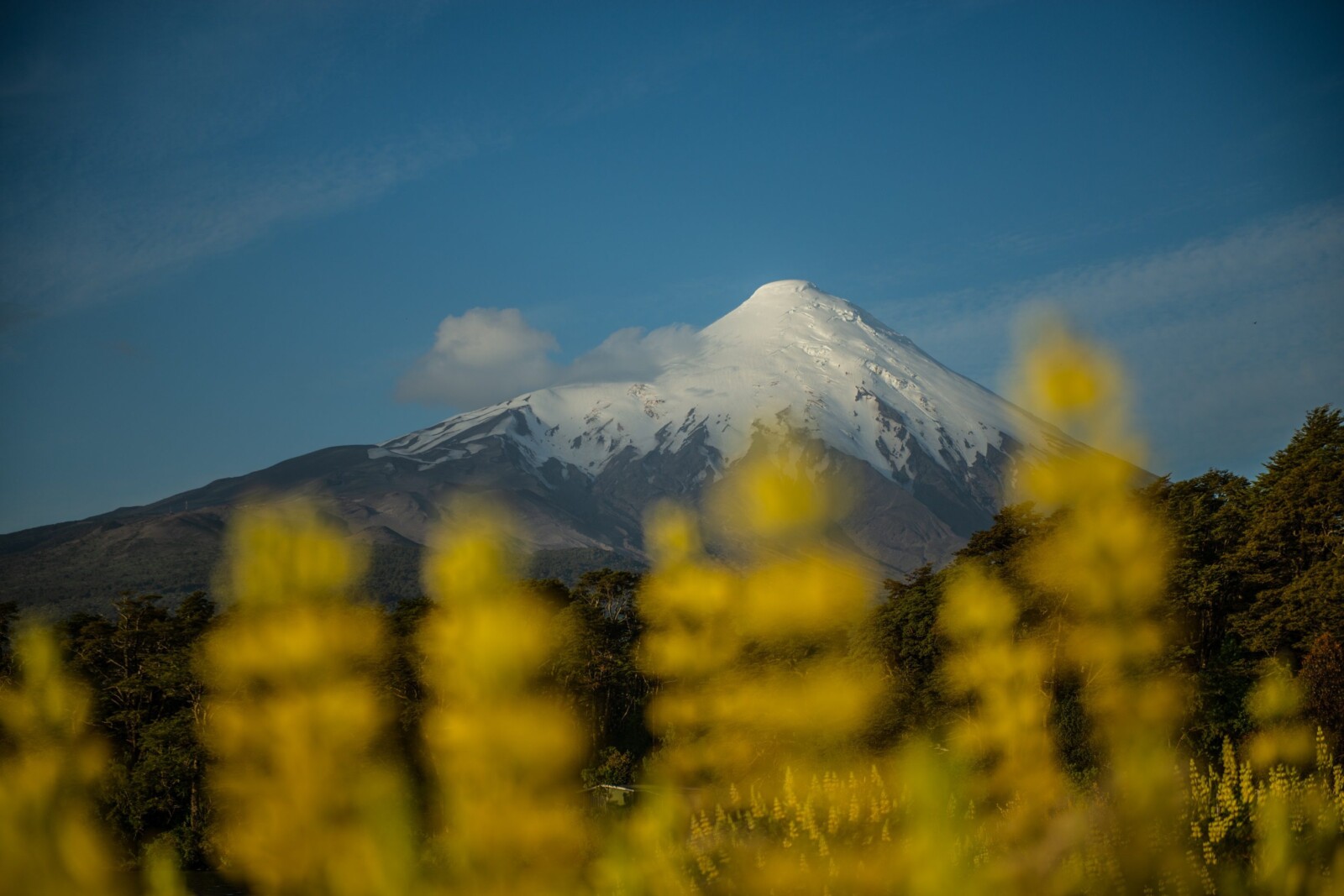
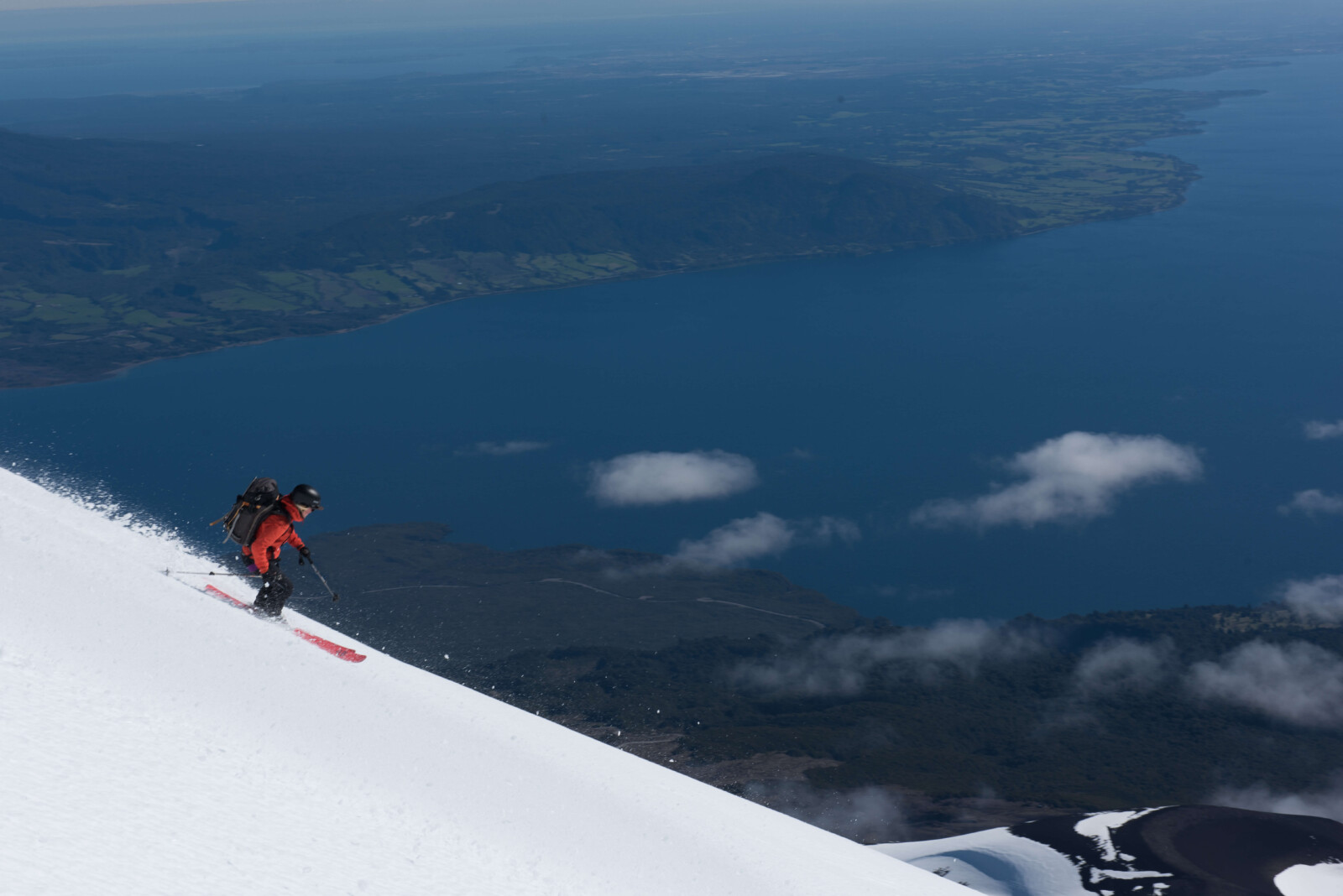
Volcán Osorno — 8,701 ft / 2,652 m  The grand finale. Osorno’s symmetrical, glacier-draped profile is one of the most photographed peaks in all of Patagonia. Long, sustained descents over glaciated terrain with sweeping views across Lago Llanquihue and the Chilean Andes.

Small Teams. Real Leadership.

Six clients. Two guides. That’s not a marketing line — it’s how this trip has to work. On volcanic terrain with variable snow, moving weather, and technical summit approaches, a small team is a faster team. We make decisions quickly, adjust on the fly, and access lines that a larger group simply can’t reach safely. The 3:1 ratio means your guides actually know how you ski — your fitness, your technique, where you’re strong and where you need support — before the hard days arrive.

Designed by Guides Who Have Been There

Willie and Damian Benegas built this program from decades of high-altitude expedition experience — Everest, Aconcagua, Denali, Cho Oyu — and the same philosophy that drives every Benegas Brothers program: small teams, real objectives, and no shortcuts on safety or logistics. Every trip runs under that standard. Our guides are selected for their technical skill, mountain judgment, and the ability to lead real expeditions — not just follow a fixed route. For a full breakdown of what this demands of participants, see the Is This Trip for Me? section.

Responsible Stewardship

We approach Chile’s volcanic landscapes with deep respect for the mountains, the environment, and the indigenous Mapuche communities who have called this land home for centuries. Villarrica — Rukapillán, the great spirit’s house to the Mapuche people — and the surrounding peaks are sacred ground. Our programs are designed to leave every zone we visit cleaner than we found it. We manage all expedition waste carefully, operate responsibly within national park boundaries, and hold our teams to a high standard of environmental conduct in the field.

8 Days  ·  Temuco · Malalcahuello · Conguillío · Pucón · Puerto Varas

This itinerary is a guide, not a contract. Weather, snow conditions, and team readiness always drive final decisions. What follows is how a great week typically unfolds.

Arrive at Temuco Airport (ZCO) where our team meets you for the transfer south to Malalcahuello — a quiet mountain village beneath the volcanoes of the Araucanía region and the perfect launch point for the expedition. Approximately 56 miles / 1.5 hours from Temuco. After hotel check-in, we conduct a full gear review, discuss current mountain and snow conditions, and complete a trip briefing over dinner. This evening sets the tone: organized, focused, and ready to ski.

Overnight: Hotel, Malalcahuello

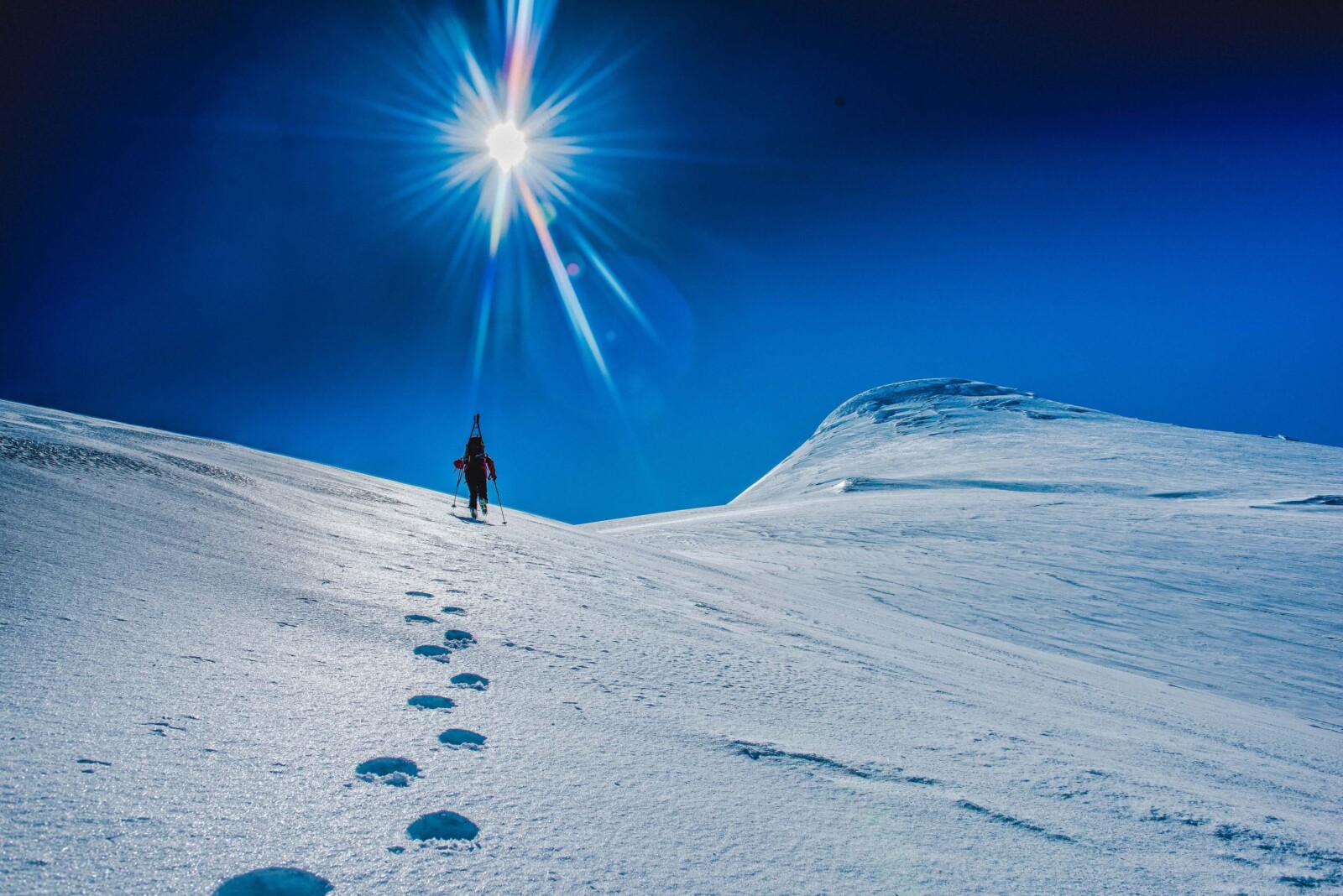
We begin with lift-assisted access through Corralco Ski Resort before transitioning to skins and climbing toward the summit crater. Lonquimay’s northeast face offers sustained 35–45 degree slopes over classic volcanic terrain: wide, open, and consistently reliable. The surrounding landscape of ancient araucaria forests and views of seven volcanoes makes this an immediate highlight.

Vertical: 4,000–5,000 ft. Optional evening recovery at local mineral hot springs.

Overnight: Hotel, Malalcahuello

Early departure for the biggest objective of the week. Llaima rises dramatically above Conguillío National Park — a UNESCO Biosphere Reserve of ancient lava fields, glacier-fed lakes, and old-growth araucaria forests. The ski descent from the summit cone is among the most impressive in South America: steep, sustained, and deeply rewarding. After skiing, we transfer south to Pucón.

Vertical: 5,000+ ft. Transfer after skiing: Llaima → Pucón, approximately 75 miles / 2 hours.

Overnight: Hotel, Pucón

A deliberate recovery day built into the schedule. Pucón sits on the shore of Lago Villarrica with the smoking cone of Villarrica Volcano rising directly above. Relax at the hotel, explore town, visit the Termas Geométricas hot springs, or choose an optional activity. The rhythm of this expedition is intentional: push hard, recover well, push again.

Overnight: Hotel, Pucón

One of the signature days of the trip. Villarrica is one of the most active volcanoes in South America, with a glowing lava lake visible from the crater rim — gas masks are used at the summit. We ascend via the north face, skin to the crater rim, and descend over 5,300 vertical feet through broad volcanic snowfields, natural lava half-pipes, cornices, and wind lips back to the valley.

Vertical: ~5,380 ft / 1,640 m.

Overnight: Hotel, Pucón

We drive south through the heart of Chile’s Lake District toward Puerto Varas — one of the most beautiful towns in Patagonia. The road takes us through farmland, dense native forest, and along the shores of glacier-fed lakes, with views of Calbuco and Osorno growing larger on the horizon.

Drive: Pucón → Puerto Varas, approximately 211 miles / 4 hours.

Overnight: Hotel, Puerto Varas

The grand finale. Osorno’s perfectly symmetrical glaciated cone rises above Lago Llanquihue and the emerald waters of Lago Todos los Santos — one of the iconic images in all of Patagonia. A gondola provides efficient access before we transition to touring mode for the upper mountain. Long sustained descents over glaciated terrain with panoramic views across the southern Andes.

Vertical: 3,500+ ft. Drive to mountain: Puerto Varas → Osorno Ski Center, approximately 37 miles / 1 hour.

Overnight: Hotel, Puerto Varas

Transfer to El Tepual International Airport (PMC) in Puerto Montt for departure flights — approximately 12 miles / 25 minutes from Puerto Varas. From Puerto Montt, connect back to Santiago for your international flight home.

Total road trip: approximately 441 miles south through the Chilean Andes — covering four volcanic regions, two national parks, and some of the most spectacular mountain scenery in South America.

A progressive road trip through four active volcanoes in southern Chile — backcountry ski touring, summit ascents, and long sustained descents in a remote and dynamic mountain environment. This page helps you make an honest assessment of whether you are ready.

Technical

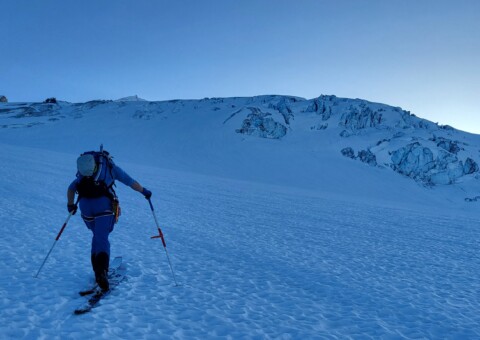
This is not a groomed run. The volcanoes demand real skiing — variable snow, steep terrain, and changing conditions throughout the day. You need to be able to link controlled turns on slopes up to 45 degrees without hesitation. Early morning starts mean firm, icy volcanic slopes before the sun hits.

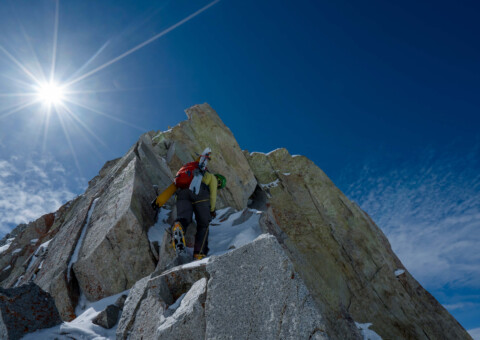
Ice axe and crampons are standard equipment on several sections — not optional extras. If you have never used an ice axe and crampons while moving on steep snow, this is not the trip to learn for the first time. Skiers must be competent on a variety of terrain and snow conditions, with basic snow climbing experience and the ability to follow guide instruction in technical terrain.

Experience

A minimum of 15 days of backcountry ski touring in varied conditions and steep terrain is required — real touring with skinning uphill, efficient transitions, and skiing consequential terrain. Resort skiing, no matter how advanced, does not substitute for time in the backcountry.

Mountaineering certification is not required, but basic snow climbing skills are. You should know how to self-arrest, move confidently on firm snow with crampons, and respond to guide instruction in technical terrain. Skiers who have toured in the Cascades, the Rockies, Alaska, the Alps, or similar backcountry environments are typically well-prepared.

Fitness

Excellent physical condition is not a suggestion — it is a requirement. Expect summit days with 4,000 to 5,000 vertical feet of climbing, back-to-back days of hard output, and long hours moving in cold, demanding terrain. Start training seriously at least three to five months before departure: uphill cardio with a loaded pack, leg and core strength, and back-to-back endurance sessions. Arrive strong. The fitter you are, the more you will get out of every single day.

Altitude

The volcanoes range from approximately 8,700 to 10,255 feet — moderate altitude by mountaineering standards, but enough to affect performance if you arrive unprepared. Most healthy, fit skiers adapt well with the progressive structure built into the itinerary.

Not Sure?

Contact us directly. We will review your background, suggest preparation steps, and give you an honest answer about whether Chile is the right challenge for you now — or what it will take to get there. We would rather have that conversation early than send someone underprepared into the mountains.


Patagonia Volcanoes Backcountry Ski Expeditions: Questions?

Here are some answers to frequently asked questions about backcountry skiing in Patagonia, Chile.

Yes. For all our international expeditions, Travel Medical & Evacuation Insurance is mandatory. This coverage includes emergency mountain evacuation (such as helicopter extraction) and international medical care in the event of an accident or illness during the trip.
We also highly recommend Trip Cancellation Coverage, which protects your investment if you must cancel due to illness or other unforeseen circumstances.
We suggest considering Ripcord, which offers comprehensive policies that include both Travel Medical & Evacuation Insurance and optional Trip Cancellation Coverage.

To embark on this adventure, you would need prior backcountry touring experience, advanced downhill skiing skills, and excellent physical fitness. You should also be confident in your uphill touring skills and systems. During our expedition in Chile, we may encounter a wide range of high-mountain snow conditions, from easy “hero” snow to more challenging conditions at different elevations and times. In terms of fitness, be prepared for days ranging from 4,000 to 5,000 vertical feet (1,200-1,500 m).

We have tried going on this trip at different times in the past, and we have found that late September to October is the best time for stable weather. Generally, the later you go, the better the weather gets, but the snowlines also start to rise. This means that you may need to walk in trail shoes while carrying your skis or snowboards on your back (depending on the year).

When skiing in spring, we should consider the melt-freeze conditions. It’s best to time our ascents so we can ski on sun-softened corn. on the descent. If we ski on corn off the top of a volcano, it’s likely that the lower flanks may be too soft, but that’s all part of the grand equation of spring skiing. We’ve experienced excellent powder skiing in this region before, as well as everything in between

For skis, we recommend choosing something with a waist size of 90-105mm. While you can opt for a wider ski, this will result in less edge hold. Conversely, a narrower ski will provide less flotation. Based on our experience, we believe that the sweet spot for this trip is a waist size of 95-100mm. As for ski length, this is a personal preference.
As for the board, it is a split board that you already know and love. It provides good edge hold but is not specifically designed for powder.

Basic ski mountaineering skills will be taught along the way, with some added tools to help us feel more secure while skinning or bootpacking.

Before embarking on a group ski touring trip, we recommend gaining confidence in your gear and uphill travel abilities by completing at least one season of ski touring (10-20 days), unless you prefer a private trip.

Of course! You are welcome to take a rest day whenever you feel like it. There are plenty of great activities you can enjoy during your downtime, such as visiting hot springs, going on guided river adventures like SUP or pack rafting, skiing (when the lifts are operating), hiking, and horseback riding.

We always consider customs. Custom trips make up more than 50% of our groups. Please reach out to learn more!

Engaging in outdoor adventure activities inherently involves some level of risk, which is essential to the nature of these pursuits. However, enlisting the services of a professional guide is an excellent strategy for managing and reducing these risks. Activities such as skiing and climbing come with what is known as “inherent risk.” This type of risk, by definition, cannot be eliminated, even by a professional. It’s an integral aspect of mountain sports. Should you wish to delve deeper into this topic, we welcome you to contact our office for a more detailed discussion.

Most international travelers fly into Santiago (SCL), then connect domestically to Temuco (ZCO) at the start of the trip. At the end, fly out of Puerto Montt (PMC) back to Santiago. Book early — domestic fares fill during peak season.

A 25% deposit ($1,250) is required, of which 10% ($500) is a non-refundable booking fee. Refund schedule: 121+ days: payments refunded less $500 booking fee; 91–120 days: 50% of payments beyond the booking fee refunded; 61–90 days: 25% refunded; 60 days or less: no refund. No refunds for illness, injury, poor fitness, insufficient skills, missed flights, or voluntary withdrawal.

Absolutely. More than half our programs run as private departures. Contact us at climbing@benegasbrothers.com with your group size, preferred dates, and goals — we’ll build a proposal around your team.

Passport & Entry Requirements

All participants must travel with a valid passport with at least six months of validity remaining and at least two blank pages for entry stamps. Citizens of the United States, Canada, the European Union, the United Kingdom, and most Western nations do not require a visa to enter Chile for tourism. Upon arrival you will receive a Tourist Card (Tarjeta de Turismo) valid for up to 90 days — keep this card, you must return it when you depart. You may also be asked to show proof of onward travel on arrival.

Chilean Customs — Read This Before You Pack

Chile enforces some of the strictest agricultural customs regulations in the world. The following are prohibited or heavily restricted:

  • Fresh fruits and vegetables of any kind
  • Meat products — including jerky, dried, cured, and canned
  • Honey and bee products; seeds, soil, and untreated wood products
  • Raw nuts, dried fruits, rice, dried beans, and whole peppercorns

This matters directly for skiers. Many travelers pack energy bars, trail mix, nut-based snacks, or dried meat in their kit bags. These items are subject to confiscation or fines if not declared. The practical solution: buy your expedition snacks, energy gels, and mountain food in Chile. Temuco, Pucón, and Puerto Varas all have well-stocked supermarkets and outdoor stores.

Rescue Insurance — Required

Rescue insurance is required for all participants without exception. These costs can reach $300,000 or more in remote volcanic terrain. We recommend Global Rescue (globalrescue.com) — they mobilize helicopters, rescue teams, and transport directly to your location. No deductibles, no co-pays. Backcountry skiing, ski mountaineering, and mountaineering are explicitly covered. Global Rescue also offers a Comprehensive Travel Protection option that combines rescue and travel coverage in one policy.

Travel Insurance — Strongly Recommended

A standard travel insurance policy will not cover ski mountaineering activities — verify your policy explicitly covers backcountry skiing and mountaineering before purchasing. Look for coverage that includes trip cancellation and interruption, travel delay, emergency medical expenses, and baggage loss.

Early Departure

If you need to leave early — injury, illness, or personal emergency — transfer costs to the nearest airport ($100–$200+ USD) are not included in your program. No refunds are issued for illness, injury, poor fitness, personal emergency, or voluntary withdrawal. This is exactly why trip interruption insurance matters.

You will fly into Santiago, Chile (SCL) — your international gateway. From there, connect domestically to Temuco (ZCO) at the start of the trip. At the end, fly out of Puerto Montt (PMC) back to Santiago for your international departure.

Domestic Flights & Baggage

LATAM and JetSmart both operate the Santiago–Temuco and Puerto Montt–Santiago routes. Book early — fares fill quickly during peak season. Budget approximately $70–$200 USD for domestic baggage fees depending on your carrier:

  • LATAM: ski equipment checked as special baggage, approximately $100 USD per flight
  • JetSmart: oversized/overweight sports bags, approximately $35 USD per flight

Always book baggage online at time of ticket purchase — airport fees are always higher. Pack your ski boots in your carry-on bag — this is non-negotiable. Boots are the hardest piece of equipment to replace on the road.

Santiago Airport Connection

If connecting domestically at SCL, allow at least 3 hours between your international arrival and your domestic departure to clear customs, collect luggage, and re-check. LATAM and Sky Airline operate from the main international terminal. JetSmart and other low-cost carriers may operate from a different terminal — confirm when booking.

Ground Transport

The BBE team coordinates pickup at Temuco upon arrival. Ground transport between all volcano zones is included in your expedition package. Full route: Temuco → Malalcahuello → Conguillío → Pucón → Puerto Varas → Puerto Montt.

8 nights lodging throughout the expedition are included — double occupancy (single supplement available on request). Accommodations follow the expedition route and are consistently comfortable, clean, and appropriate for an active expedition. Expect local hostels or lodge-style accommodations with private rooms, hot showers, Wi-Fi, drying areas for ski gear, and breakfast included at most stops.

By Zone

  • Malalcahuello (Days 1–2): hotel beneath the Araucanía volcanoes — direct access to Corralco and Lonquimay
  • Pucón (Days 3–5): hotel on the shore of Lago Villarrica, with Villarrica Volcano rising directly above — excellent restaurants, hot springs, and services
  • Puerto Varas (Days 6–7): one of the most beautiful towns in Patagonia, on the shore of Lago Llanquihue with direct views of Osorno

Pre- & Post-Expedition Nights

Accommodations before and after the expedition dates are not included. If arriving early or departing late, we recommend staying in Temuco, Puerto Varas, or Pucón. Santiago offers a wide range of hotels for international arrival nights. Contact us for recommendations.

This expedition involves glacier travel and steep volcanic slopes. The right gear is part of your safety margin — arrive with your own properly fitted equipment. 

Skis

90–105mm waist width is the sweet spot for volcanic spring terrain — enough flotation, enough edge hold. Rockered or all-mountain touring skis perform best. Avoid narrow race skis or heavy powder-specific skis.

Avalanche Safety — Required

  • Avalanche beacon — 3-antenna digital beacon required
  • Avalanche probe — collapsible, 240cm minimum
  • Avalanche shovel — collapsible with metal blade

Mountaineering Equipment — Required

  • Ice axe — standard mountaineering length appropriate to your height
  • Crampons — 10 or 12-point, compatible with your ski boot soles
  • Helmet — ski or climbing helmet acceptable

Layering System

  • Base layer — moisture-wicking, wool or synthetic (2 sets)
  • Mid layer — fleece or lightweight down jacket
  • Insulation layer — down or synthetic puffy jacket
  • Shell — waterproof/windproof jacket and pants (Gore-Tex or equivalent)
  • Gloves — liner gloves + mid-weight ski gloves + heavyweight mittens
  • Hats — sun hat, warm hat, balaclava; neck gaiter or buff
  • Ski goggles — bring an extra lens or backup pair

Pack & Other Essentials

  • Day pack 20–30L with hip belt; reusable water bottle or hydration system — 2L minimum
  • Sunscreen SPF 50+ and lip balm — volcanic terrain at altitude reflects UV heavily
  • Headlamp with extra batteries; personal first aid kit; gaiters

What BBE Provides

All group mountaineering safety equipment including ropes, pickets, and group first aid supplies. You do not need to bring technical climbing hardware.

The Daily Rhythm

Most ski days begin with an early departure — often before sunrise on bigger objectives. We move when the snow and weather are right. A typical day: early breakfast, drive to the objective, full ski day on the mountain, drive to lodging, dinner at a local restaurant, evening debrief. Your guides will brief the team each evening on the plan for the following day so there are no surprises in the morning.

Food & Nutrition

All breakfasts and dinners are included and served at local restaurants. We accommodate all dietary requirements including vegetarian and vegan — contact us in advance. Drinks and alcohol are not included. Lunches and mountain snacks are your personal responsibility — budget approximately $15–$25 USD per day. Purchase your mountain food locally in Chile rather than bringing snacks from home — Chilean customs has strict restrictions on nuts, dried fruit, energy bars, and meat products.

Weather & Conditions

Late September through October is the optimal window. Southern Chile’s Lake District has a heavy maritime snowpack — expect deep, consolidated snow by late September and reliable spring corn conditions through October. Windchill on summit ridges can be significant even on clear, sunny days. Temperatures at elevation range from approximately -6°C to +10°C (21°F to 50°F). Recommended weather tools: Windy.com (ECMWF model) for the big picture; Meteoblue for specific summit forecasts; Mountain-Forecast.com as backup. Your guides use all three daily.

How Guides Make Daily Decisions

Summit days require three things to align: good weather, manageable avalanche conditions, and skiable snow. Guides monitor all three daily and make go/no-go decisions based on current conditions — not the original schedule. A cancelled summit due to weather does not generate a refund — it means your guide made the right call.

Rest Days & Hot Springs

If you need a rest day at any point, take it. Pucón in particular offers excellent options for down days: hot springs, lift-accessed skiing, guided river adventures, hiking, and horseback riding. Evening soaks after hard summit days are part of the experience and excellent for recovery. Hot springs visits are optional and at personal cost — typically $20–$50 USD per visit.

Currency

Local currency: Chilean Peso (CLP). Credit cards (Visa and Mastercard) are widely accepted in Temuco, Pucón, and Puerto Varas. In mountain zones and smaller villages, cash is often the only option — withdraw what you need before leaving each major town. Chilean ATMs charge steep fees for foreign cardholders — make fewer, larger withdrawals. Always choose Chilean pesos at the ATM, not USD. Best exchange rates are at Casas de Cambio in Santiago city center — not at the airport or hotels.

Tipping

  • Guides: $10–$20 USD per person per day is a reasonable standard for excellent multi-day guided service — a group tip at the end of the expedition is the most common approach
  • Local support staff / drivers: $10–$20 USD per day
  • Restaurants: 10% is customary — often already included as ‘propina’ on the bill; confirm before adding extra

Tip in Chilean pesos whenever possible — foreign currency is difficult for local staff to exchange.

Personal Budget Estimate Beyond Trip Cost

  • Domestic flights (Santiago ↔ Temuco / Puerto Montt ↔ Santiago): $200–$500 USD round trip
  • Domestic baggage fees: $70–$200 USD depending on carrier
  • Mountain lunches & snacks: $15–$25 USD per day
  • Pucón free evening dinner (Day 4): $15–$40 USD
  • Hot springs (optional): $20–$50 USD per visit
  • Guide gratuities: $80–$160 USD total for 8 days
  • Rescue & travel insurance: $150–$400 USD

More than half our programs run as private departures. Your group, your dates, your pace — the same four volcanoes, the same professional leadership, built entirely around your team.

Who Private Expeditions Are For

  • Groups of 3–6 skiers who want dedicated guiding on their own schedule
  • Teams wanting to focus on one or two specific volcanoes for a more in-depth experience
  • Climbers wanting extended itineraries covering additional peaks in the Lake District
  • Combined climbing and skiing objectives for mixed alpinism
  • Those wanting Willie or Damian Benegas personally on the expedition

Custom Objectives

The optimal private season runs late September through early November. We can tailor the route to your team’s experience level — from single-volcano deep dives to extended programs combining additional peaks and mixed alpinism objectives.

How to Inquire

Email climbing@benegasbrothers.com with: preferred travel dates or date range, number of skiers, experience level of each participant (skiing background and any mountaineering experience), specific objectives or volcanoes of interest, and any scheduling constraints. We will respond within 48 hours with availability, a proposed itinerary, and pricing.

Expedition Cost: $5,000 USD per person

Price Includes

  • 7 days of guided backcountry skiing on four iconic Chilean volcanoes
  • 8 nights lodging (double occupancy) — from Malalcahuello to Puerto Varas
  • All breakfasts and dinners per the Day-by-Day itinerary
  • All ground transportation between volcano zones
  • National park entry fees and volcano access permits
  • Professional expedition leadership by Benegas Brothers Expeditions

Price Does NOT Include

  • International flights to and from Chile
  • Domestic flights within Chile (Santiago → Temuco / Puerto Montt → Santiago)
  • Excess and ski equipment baggage fees on domestic flights
  • Lunches on the mountain and personal snacks
  • Dinners in Pucón on the recovery day (Day 4)
  • Alcoholic beverages and drinks at meals
  • Hot springs visits (optional, personal expense)
  • Gratuities for guides and local staff
  • Rescue and travel insurance (required)
  • Activities outside the program itinerary
  • Single room supplement (available on request)

Single Occupancy Upgrade

Available at additional cost — contact us for current pricing.

Both departures are timed for the optimal window — Corralco Ski Resort is open through mid-October, weather windows stabilize through the first week of October, and spring corn conditions are at their best on the upper volcanoes.

2026 Season Departures

Departure 1 — Late September 2026  ·  Now Booking

Departure 2 — Early October 2026  ·  Now Booking

Expedition Fee: $5,000 per person

Deposit & Payment

A deposit of 25% of the total trip price ($1,250 per person) is required to reserve your spot. Of that deposit, 10% ($500) is a non-refundable booking fee regardless of when you cancel. Final payment is due 120 days before departure. Reservations made within 120 days of departure require full payment at booking.

Cancellation Policy

  • 121+ days before departure: payments refunded less the $500 non-refundable booking fee and any unrecoverable costs already incurred
  • 91–120 days: 50% of payments beyond the booking fee refunded
  • 61–90 days: 25% of payments beyond the booking fee refunded
  • 60 days or less: no refund

No refunds are issued for illness, injury, altitude illness, poor fitness, insufficient skills, missed flights, voluntary withdrawal, weather delays, or removal for unsafe conduct. All cancellations must be submitted in writing. Travel insurance covering trip cancellation and interruption is strongly recommended.

Guide Authority

BBE guides have final authority on all safety and operational decisions including turnaround times, route changes, weather holds, and evacuation. Guide decisions do not create refund rights.

Private & Custom Expeditions

More than half our programs run as private departures. Minimum 3 skiers, maximum 6. Same four volcanoes, same professional leadership, built entirely around your group, your dates, and your objectives. Contact us at climbing@benegasbrothers.com for a custom quote.

Ski Mountaineering in Patagonia, Chile

Embark on an extraordinary adventure on our Patagonia Volcanoes Backcountry Ski expeditions and explore the thrilling heights of Chile's snow-capped volcanoes.

Book Trip
Location:
Patagonia, Chile
Group:
6 People
Duration:
8 Days
Skill:
Intermediate
Activities:
Ski mountaineering, splitboarding, skiing
Pricing

Pricing is a typical estimate, final quote will be provided after receiving your inquiry.

Ski Mountaineering in Patagonia, Chile

Embark on an extraordinary adventure on our Patagonia Volcanoes Backcountry Ski expeditions and explore the thrilling heights of Chile's snow-capped volcanoes.