Global Expeditions South America

Ecuador: High Altitude Mountaineering School

Build alpine skills on Cayambe, Cotopaxi, and Chimborazo. Cultural immersion included.

8 days + 7 days (Chimborazo Extension) Group: 4 people From $3,700 per Person

Most summit trips give you a peak. This one gives you a foundation. The Benegas Brothers Ecuador Mountaineering School is a full progression program — technical instruction, progressive acclimatization, glacier travel, and multiple major summits built into one of the most efficient mountaineering experiences available anywhere in the world. Ecuador offers the perfect balance of real expedition climbing and clean logistics, making it one of the smartest investments you can make before committing to Aconcagua, Denali, or the greater Himalayan ranges — more at uphillatlete.com for training context.

Three Objectives. One Expedition.

Cayambe — 18,996 ft / 5,790 m  ·  The Core Objective

The school is built around Cayambe — one of the finest training peaks in the Andes and the only glaciated mountain sitting directly on the equator. This is not a background climb. It is the technical centerpiece of the program: two full days of glacier instruction followed by a true alpine summit push. Crampon movement, ice axe technique, self-arrest, crevasse awareness, rope-team travel, snow anchors — all of it gets built here, on real terrain. The summit push begins at midnight under headlamp. The sunrise over the Andes from 18,996 feet is the reward.

Cotopaxi — 19,347 ft / 5,897 m  ·  The Performance Climb

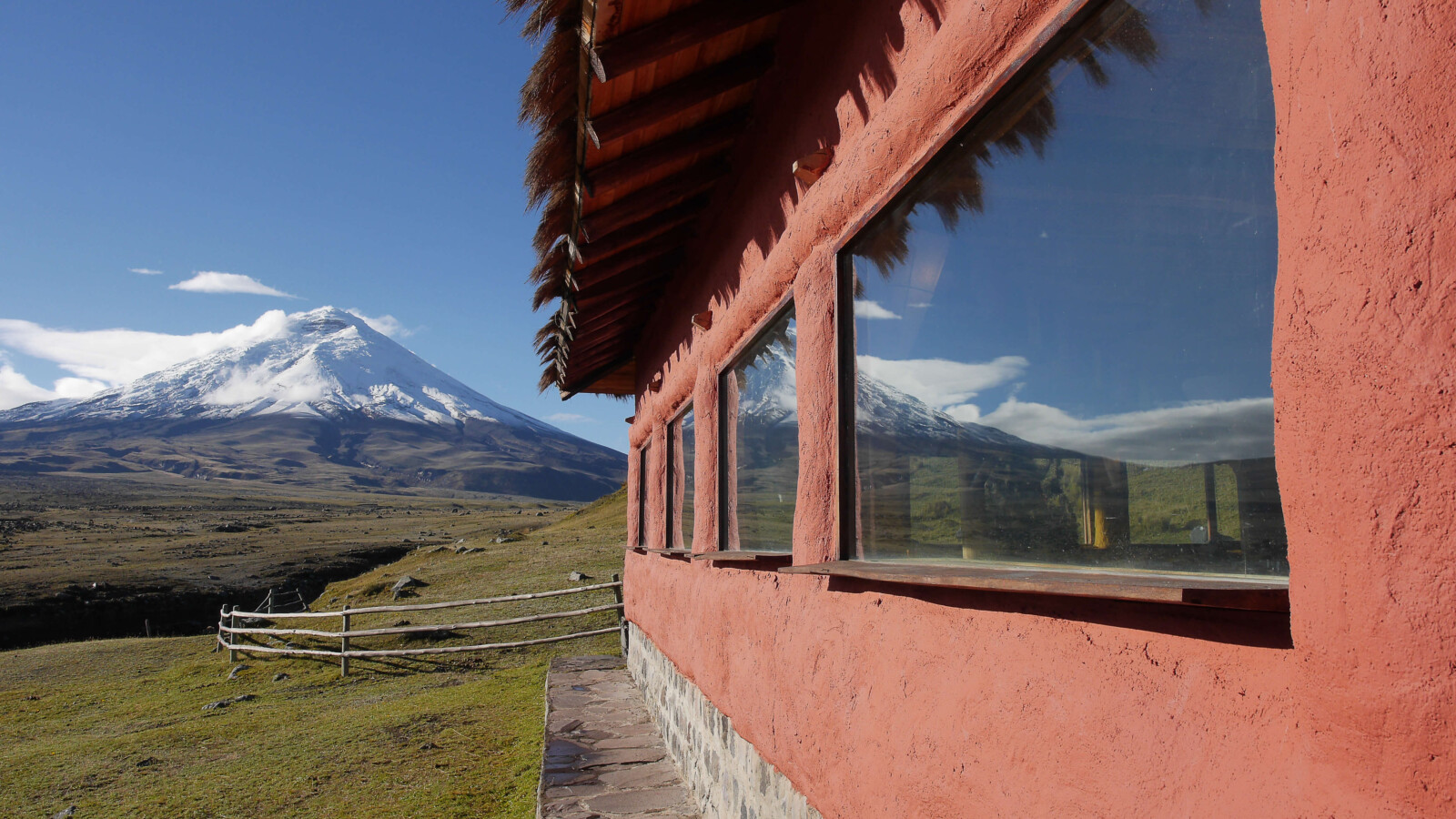
Cotopaxi is one of the most iconic glaciated volcanoes in the world — a perfect cone rising above Cotopaxi National Park, draped in glacier, and deeply serious above 17,000 feet. Everything built on Cayambe gets tested on bigger terrain. The route climbs steadily from the refuge through crevassed glacier to the crater rim at 19,347 feet — one of the great high-altitude ascents in the Americas.

Chimborazo — 20,564 ft / 6,268 m  ·  The Grand Finale

The closer. Chimborazo rises to 20,564 ft and, due to Earth’s equatorial bulge, its summit is the farthest point from the center of the Earth — farther than Everest. The route climbs steep glaciated terrain from El Castillo High Camp through crevasse fields and icy seracs before gaining the upper ridge and the summit. The views stretch across every range climbed in the weeks prior.

Small Teams. No Exceptions.

We intentionally limit group size — not as a selling point, but because it is the only way real coaching works in the mountains. When a team is small, your guide can watch your crampon footwork on steep ice, catch a technique issue before it becomes a problem on the summit ridge, and adjust the pace for where you are that day. Our guide team holds IFMGA certification — the highest internationally recognized standard in the profession — verified at ifmga.info. In Ecuador, our guides also hold the national ASEGUIM certification.

Why Ecuador

Ecuador makes this kind of program possible. Glaciated volcanoes, mountain huts, serious altitude, and technical terrain — all within short driving distances of each other. You spend your time where it counts: training, climbing, recovering, and building real altitude experience. For North American climbers with eyes on Aconcagua, Denali, or the greater ranges, Ecuador is one of the smartest investments you can make before committing to a longer expedition.

You leave this program with more than summit photographs. Glacier movement, rope-team systems, cold management, expedition nutrition, layering strategy, and mountain decision-making — these skills travel with you to every range you ever climb. A great resource on this training philosophy is the American Alpine Club (americanalpineclub.org).

Is This for You?

  • First-time international mountaineers ready for real technical terrain and real altitude
  • Fit adventurers seeking a climbing school that builds genuine skills — not just summit selfies
  • Experienced hikers ready to step up to crampons, ice axes, and roped glacier travel
  • Anyone building toward Aconcagua, Denali, or Himalayan objectives
  • Climbers who want small-team, personal-attention guiding from IFMGA-certified professionals

See the Is This Trip for Me? section for full fitness and experience requirements.

14 Days  ·  Quito → Cayambe → Cotopaxi → Chimborazo → Quito

This itinerary is a guide, not a contract. Acclimatization, weather, and team readiness always drive final decisions.

The Ecuador Climbing School’s foundation is education. Each day of the expedition, you’ll be hands-on with new lessons and experiences to add to your climbing tool kit. If you’ve been up a few peaks in the past, this is the perfect chance to brush the rust off and sharpen the skills you’ve already accumulated.
Our itinerary begins with learning how to acclimatize efficiently. Touring the majestic city of Quito and climbing a peak that towers above it in the first couple of days allows us to understand how our bodies react at altitude as we prepare for our first significant climb.

Arrive in Quito, Ecuador’s high-altitude capital sitting at 9,350 feet in the Andean highlands. Our team meets you at Mariscal Sucre Airport (UIO) and transfers you to a comfortable hotel in the city — approximately 30–45 minutes. Before you even reach the hotel, the altitude has already started working. After settling in, we review the full expedition plan and discuss what to expect as your body begins adapting to elevation. Rest, hydrate, early dinner.

Overnight: Quito hotel

Today we move through one of South America’s great cities. Quito’s colonial center is a UNESCO World Heritage Site — baroque churches, open plazas, and rooftop viewpoints with the volcanoes rising on every horizon. In the afternoon, your guides walk you through equipment organization, hydration and recovery strategy at altitude, and the basics of high-altitude physiology — what happens to your body above 10,000 feet and how to work with it, not against it.

Overnight: Quito hotel

Active acclimatization begins on Rucu Pichincha, a volcanic peak rising directly above Quito. A scenic cable car (Teleférico) handles much of the elevation gain — from 9,350 ft to 13,451 ft / 4,100 m in 10 minutes — before we transition to foot travel toward the summit at 15,413 ft / 4,698 m. This is where the climbing education begins: uphill movement efficiency, pacing and breathing systems, and mountain decision-making on terrain where the lessons stick.

Overnight: Quito hotel

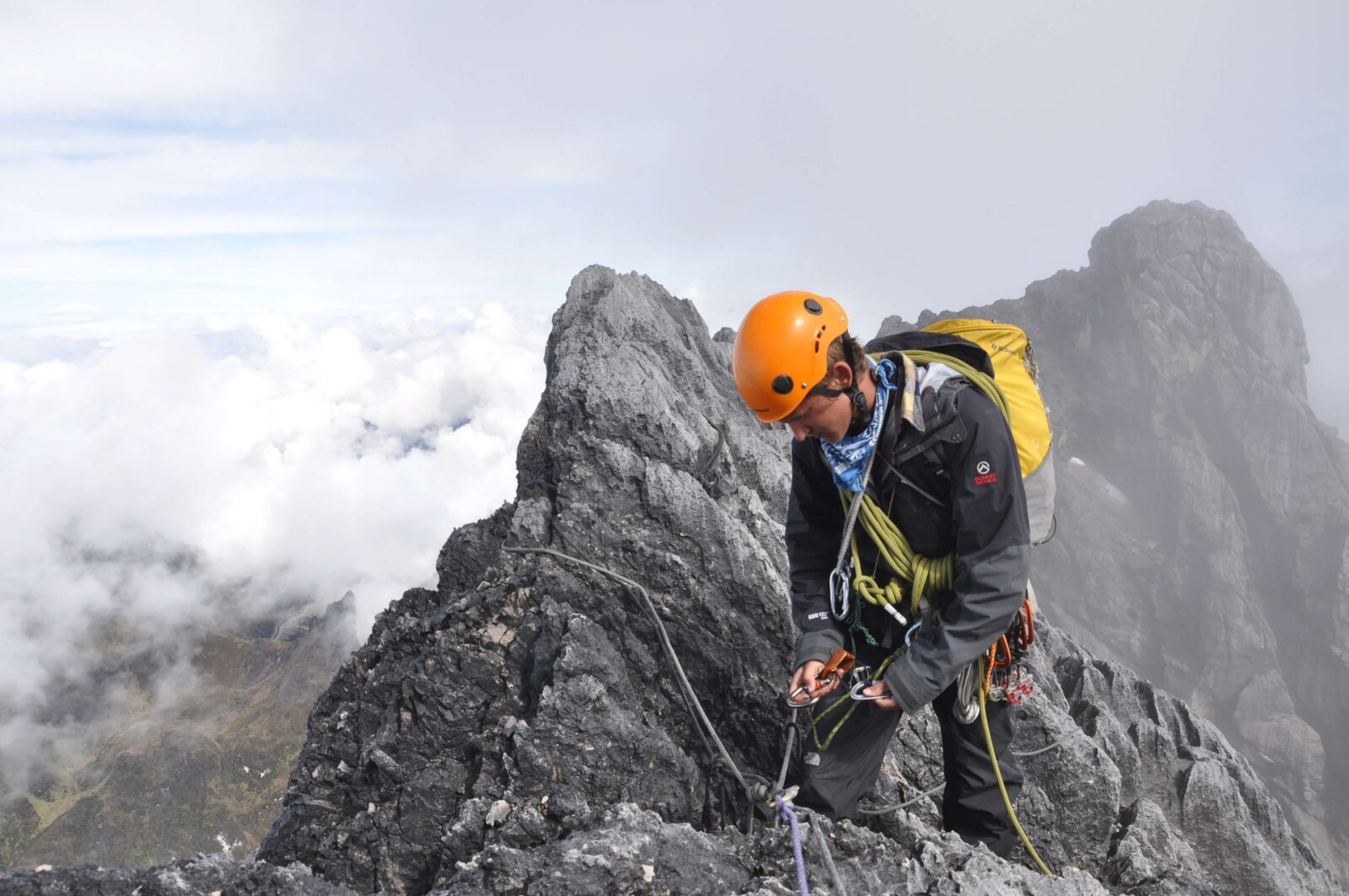
Topics covered: moving skills, climbing techniques, belay techniques, rappelling, rope management.

Leaving Quito, we drive north through the Ecuadorian Andes toward Cayambe — approximately 45 miles / 2 hours. The approach road climbs through high paramo grasslands and into the mountain’s lower slopes, arriving at Yanacocha Refuge — our base for the next phase. The afternoon is for rest, acclimatization, and a final equipment check. We may drive to the base of Cayambe for a quick acclimatization hike. 

Overnight: Yanacocha Refuge, Cayambe lower slopes


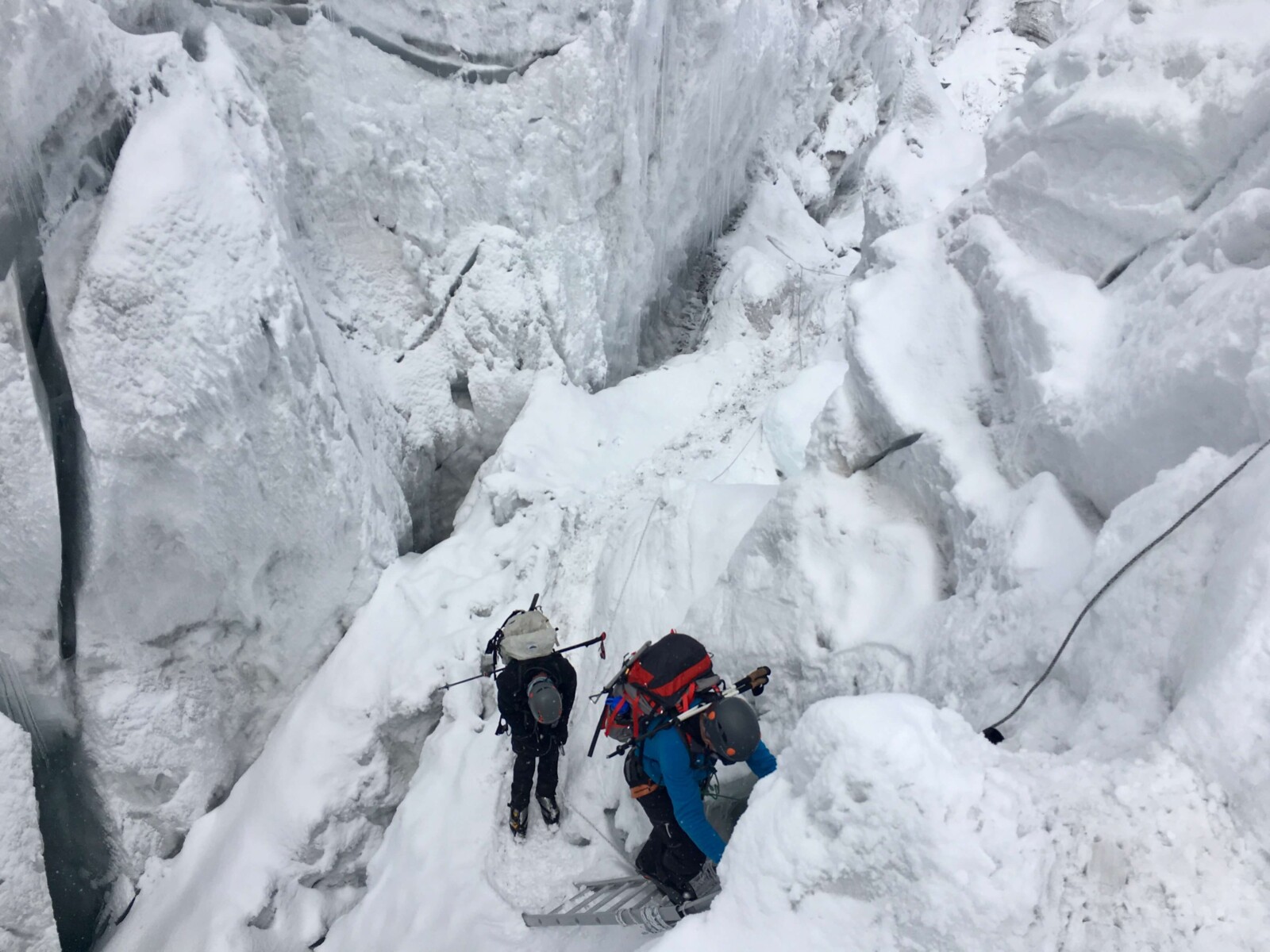
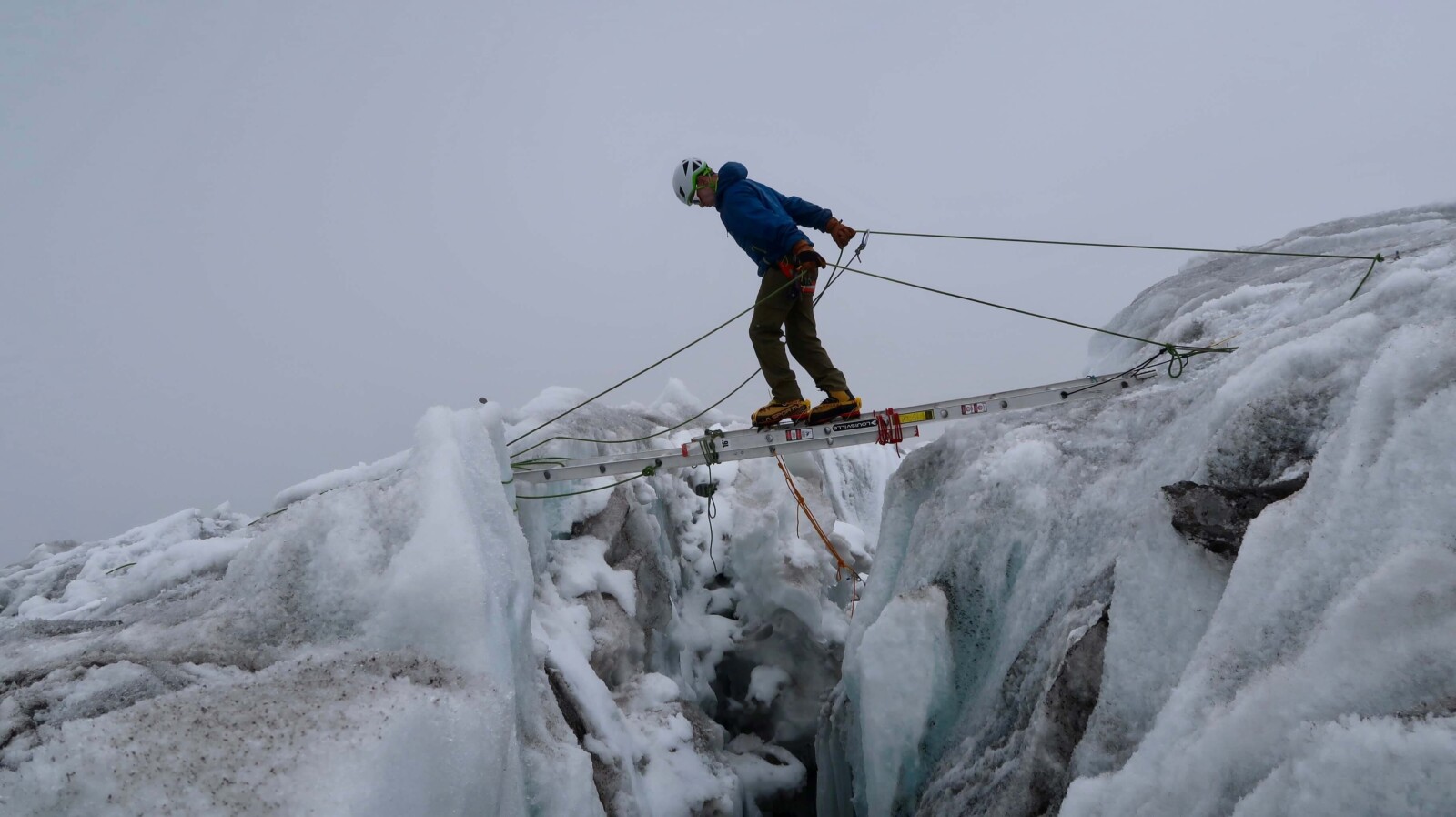
We move higher onto Cayambe’s glacier for our first true mountaineering training day. Under direct guide supervision: ice axe technique and self-arrest, crampon footwork on flat and angled terrain, movement efficiency on steep snow. In the afternoon we transition into glacier travel — crevasse terrain and how to read it, rope spacing for a functional climbing team, and snow anchors for protection and descent. By the end of the day you have moved on a real glacier, used the tools correctly, and started to understand the rhythm of alpine movement.

Topics covered: equipment care, the “art” of packing, acclimatizing strategies, physiology of altitude, and recognizing AMS, HAPE, and HACE.

Overnight: Yanacocha Refuge


A second training session on Cayambe’s glacier to reinforce what was built yesterday and add more advanced systems. Depending on team progress: belayed movement on steeper terrain, anchor building, rope transitions, and crevasse rescue fundamentals. By midday we return to the refuge for a critical rest window. Afternoon: summit pack systems, altitude illness recognition (AMS, HAPE, HACE) — understanding the warning signs is not optional information. Early to bed. The alarm comes early.

Overnight: Cayambe Lodge


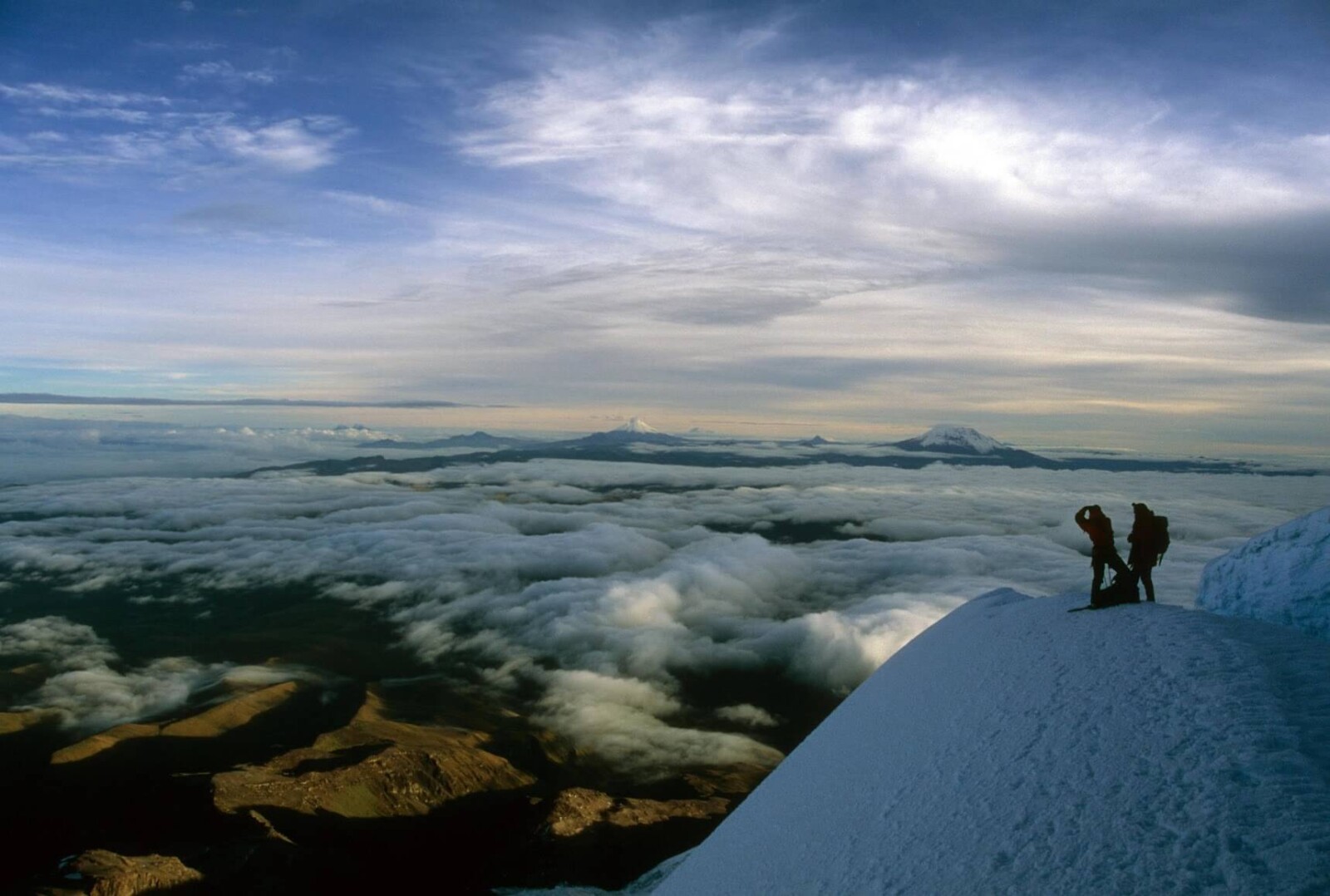
Around midnight we rise for hot drinks and final preparations. Under headlamp light we begin climbing through volcanic rock and onto Cayambe’s glacier. As we gain altitude the terrain grows more complex — crevassed glacier, steepening slopes, route decisions that matter. This is where everything from the previous two training days becomes real. At 18,996 ft / 5,790 m, Cayambe is a serious and proud achievement — for many climbers, a life-defining first major alpine summit. From the top, Cotopaxi, Antisana, and Chimborazo rise across the Ecuadorian Andes in every direction. After safe descent, we drive back to Quito — approximately 45 miles / 2 hours.

Overnight: Quito hotel (or depart for core program conclusion)

Those continuing the extension travel south toward Cotopaxi National Park — approximately 56 miles / 2 hours. The volcano announces itself long before you arrive — a perfect cone rising above the high Andean plateau, glaciated and unmistakable. We settle into our lodge beneath the mountain and prepare for the next climb. A short afternoon hike on the lower slopes accelerates acclimatization.

Overnight: Tambopaxi Lodge or similar, Cotopaxi zone

We hike onto Cotopaxi’s lower glacier and revisit the core systems from Cayambe with sharper intent. Rope-team movement on more technical terrain, advanced crampon technique on steeper ice, glacier rescue systems, and summit strategy. Every climber arrives at this day with real experience from Cayambe — we use that foundation and build on it. By afternoon, the team is technically prepared and mentally ready to attempt the summit.

Overnight: Cotopaxi Refuge (José Rivas)  ·  15,748 ft / 4,800 m

We begin early, climbing under the stars toward Cotopaxi’s glacier. The route ascends steadily on snow and ice, gaining the crater rim at 19,347 ft / 5,897 m. Cotopaxi is widely regarded as one of the world’s great high-altitude climbs — for its beauty, its scale, and the dramatic volcanic setting rising above ancient lava fields. After the summit, we descend carefully and transfer to Hacienda La Cienega for a well-earned rest — approximately 30 minutes from the park.

Overnight: Hacienda La Cienega

We drive south along Ecuador’s famous Avenue of the Volcanoes toward Chimborazo — approximately 90 miles / 2.5 hours. The road passes a continuous parade of volcanic peaks — Tungurahua, Altar, Carihuairazo — before Chimborazo’s massive bulk fills the horizon. We rest and prepare. The mountain deserves full attention tomorrow.

Overnight: Lodge or hacienda, Chimborazo region

We transfer to Chimborazo’s upper mountain and hike to El Castillo High Camp, positioned beneath glaciated slopes and towers of volcanic ice. Guides scout the route and finalize strategy based on current conditions. Eat early, pack carefully, and rest. The summit push begins in the middle of the night.

Overnight: El Castillo High Camp, ~16,400 ft / ~5,000 m

The final climb is the most demanding of the expedition. We begin in darkness and ascend steep glaciated terrain, weaving through crevasse fields and icy seracs before gaining the upper ridge and pushing toward the summit at 20,564 ft / 6,268 m. Due to Earth’s equatorial bulge, Chimborazo’s summit is the farthest point from the center of the Earth. The views stretch across every Andean range and every volcano climbed in the weeks prior. After summit, we descend carefully to high camp and continue to the lodge.

Overnight: Lodge, Chimborazo region

After breakfast we make the long drive back to Quito — approximately 155 miles / 4 hours. A farewell dinner in the city marks the end of the expedition. You leave Ecuador with more than summit photographs — the glacier movement, rope systems, altitude management, and decision-making built here travel with you to every mountain you ever climb. Flights depart late evening or the following morning.

Overnight: Quito hotel

The Ecuador Mountaineering School is a real mountaineering program — not a guided hike with crampons. You will learn to move on glaciers, travel on a rope team, and manage your body across multiple days at altitude on Ecuador’s three highest and most demanding volcanoes. Preparation, attitude, and fitness are central to your success and enjoyment.

Technical Skills

No prior glacier experience is required — but you need to be willing to learn and capable of applying new skills quickly on real terrain. By summit day on Cayambe, you will have had two full training days on the glacier. By Cotopaxi, those skills will be refined. By Chimborazo, they will be tested on the most serious terrain of the program.

If you have prior glacier experience from the Cascades, Alps, or similar environments, you are well positioned. If this is your first time on technical mountain terrain, you need excellent fitness and a genuine commitment to the instruction process.

Fitness

You need excellent cardiovascular endurance, leg strength, and the ability to sustain effort across consecutive demanding days at altitude. Chimborazo summit day alone involves 3,200 ft / 975 m of gain starting above 16,400 ft / 5,000 m in darkness and cold. Start training at least 3–5 months before departure:

  • Uphill hiking with a loaded pack — most specific preparation for this program
  • Running, cycling, or sustained cardio for aerobic base
  • Back-to-back endurance days — the program runs consecutive summit objectives
  • Core and leg strength for sustained steep ascent

Altitude

You will be arriving in Quito at 9,350 ft / 2,850 m on Day 1 and progressing to 20,564 ft / 6,268 m by Day 13. Prior altitude experience above 12,000–14,000 ft is helpful but not mandatory — the program builds acclimatization progressively. The two training days on Cayambe’s glacier and the rest days between objectives are not optional extras; they are what makes the upper mountain possible.

Summit Day Reality

  • Midnight or earlier starts on all three summit objectives
  • 4–6 hours to the summit depending on the peak and your pace
  • Summit temperatures: −10°C to −25°C (-14°F to −13°F) with wind, depending on peak
  • Cold, dark, physically demanding — and genuinely worth every step

No. The program begins with two full days of glacier instruction on Cayambe before the summit attempt. If you are willing to learn and commit to the training days, you can develop the technical skills needed. What you cannot develop in two days is fitness — arrive physically prepared.

It is a serious mountaineering progression with three major summits across 14 days. Each peak is more demanding than the last. Summit days are physically challenging — midnight starts, 4–6 hours of climbing, temperatures below -15°C, and the sustained effort that high altitude demands. Climbers who arrive well-trained and approach the instruction seriously consistently perform well.

Cayambe: 18,996 ft / 5,790 m. Cotopaxi: 19,347 ft / 5,897 m. Chimborazo: 20,564 ft / 6,268 m — the highest point in Ecuador and the farthest point from the center of the Earth due to the equatorial bulge.

Maximum 4 climbers per team. This is not a commercial group tour — it is a small-team mountaineering school where your guide knows your crampon footwork, your pacing, and your altitude response by name.

Rescue insurance is mandatory — you cannot start the program without proof of coverage. Your policy must cover technical mountaineering and glacier travel to 6,268 m / 20,564 ft including helicopter evacuation. We recommend Global Rescue. Standard travel policies typically exclude these activities — read your policy carefully.

Yes. The Cayambe summit on Day 7 is the conclusion of the core program. Climbers who want just the glacier school and one major summit can depart on Day 7 evening or Day 8 morning. The Cotopaxi and Chimborazo extension is optional for those who want to keep building.

One of the best in the world. Ecuador combines altitude, glacier movement, technical objectives, and expedition rhythm in a compact program. The skills built here — crampon technique, rope systems, altitude management, pacing strategy — transfer directly to larger objectives. Clients regularly leave Ecuador and head to Aconcagua within the same season.

Deposits are non-refundable. Final payments are due 120 days before departure. Refund schedule: 120+ days: partial refund less unrecoverable costs; 90–119 days: partial refund reviewed individually; less than 90 days: no refund. All cancellations must be submitted in writing. Travel insurance covering trip cancellation is strongly recommended.

Passport & Entry

US, Canadian, EU, and UK citizens do not require a visa for Ecuador — up to 90 days for tourism. Passport must have 6+ months of validity remaining and 2+ blank pages. Have a printed or digital return ticket ready — Ecuadorian immigration occasionally requests proof of onward travel.

Rescue Insurance — Required

Rescue insurance is required for all participants. You cannot start the program without proof of coverage. Your policy must cover technical mountaineering and glacier travel to 20,564 ft / 6,268 m including helicopter evacuation. We recommend Global Rescue (globalrescue.com). Standard travel policies typically exclude mountaineering activities — verify explicitly.

Altitude Medication

Acetazolamide (Diamox) can aid acclimatization and reduce AMS symptoms. Requires a prescription. Consult your doctor before departure.


Travel & Planning

Your gateway is Mariscal Sucre International Airport (UIO), Quito — the world’s second-highest capital city at 9,350 ft / 2,850 m. You will feel the altitude the moment you land. All program objectives are accessible from Quito by ground — no domestic flights required.

Recommended Airlines

  • American Airlines: direct from Miami (MIA) and Dallas (DFW)
  • United Airlines: direct from Houston (IAH)
  • LATAM Airlines: connecting via Lima (LIM) — good from LAX and JFK
  • Copa Airlines: connecting via Panama City (PTY)
  • Avianca: connecting via Bogotá (BOG)

Arrive a day early if possible — an extra acclimatization night in Quito before the program is always worth it. Allow a minimum of 3 hours before departure on the return flight — factor in Quito traffic.

All lodging throughout the program is included and arranged by BBE. You do not book anything separately.

  • Days 1–3: Comfortable hotel in Quito — 9,350 ft / 2,850 m
  • Days 4–7: Yanacocha Refuge, Cayambe lower slopes
  • Days 8–9: Tambopaxi Lodge or similar, Cotopaxi zone
  • Day 9 summit night: Cotopaxi Refuge (José Rivas) — 15,748 ft / 4,800 m  ·  Dormitory-style, meals available, summit departures midnight–1am
  • Day 10: Hacienda La Cienega, 30 minutes from Cotopaxi
  • Day 11: Lodge or hacienda, Chimborazo region
  • Day 12 summit night: El Castillo High Camp — ~16,400 ft / ~5,000 m  ·  Summit departures 11pm–1am
  • Day 13–14: Lodge returning to Quito

Rooms are double occupancy. Single supplement available on request at additional cost — contact us in advance to arrange.

Mountaineering Boots — Most Critical Item

Stiff, double-insulated mountaineering boots compatible with step-in crampons. Hiking boots are not appropriate. Models that work: La Sportiva G5 Evo, Nepal Cube, Scarpa Phantom 6000, Scarpa Mont Blanc Pro. Break them in thoroughly before arrival — new boots on a summit attempt are a blister and injury waiting to happen.

Technical Equipment

  • 12-point rigid or semi-rigid crampons, step-in or hybrid, compatible with your boots — anti-balling plates recommended
  • Ice axe — 60–70 cm technical mountaineering axe; you must know how to self-arrest with it
  • Mountaineering harness — adjustable leg loops, must fit over full mountain layers
  • Helmet — mandatory on all technical terrain
  • Headlamp — primary and backup, lithium batteries only; summit starts at midnight

Layering System

Summit temperatures: −15°C to −25°C (-5°F to −13°F) with wind on Chimborazo. Build your layers:

  • Base layer: moisture-wicking synthetic or merino — no cotton
  • Mid layer: fleece or light insulation jacket
  • Insulation: down jacket — mandatory
  • Hard shell: waterproof/windproof jacket and pants — your outer layer in storms
  • Expedition mitts and liner gloves; balaclava and warm hat; goggles; gaiters; sunscreen SPF 50+
  • Backpack 30–40L for summit day; trekking poles for acclimatization hikes; 2L water minimum

Acclimatization Days

Morning depart from lodging. Four to five hours on the mountain at 4,000–5,000 m / 13,000–16,400 ft. Training hikes, crampon technique, rope work. Return mid-afternoon. Hot meal. Evening briefing. Early sleep. These days do more for your summit odds than any single summit day.

Summit Day Rhythm

  • Late afternoon: drive to refuge; gear inspection
  • 5–7pm: early dinner — eat even if you are not hungry
  • 7–8pm: lights out — sleep will be difficult; rest is still valuable
  • 11pm–midnight: wake-up; dress in layers; eat a light snack
  • Midnight–2am: depart for summit
  • 4–6 hours: summit push depending on peak and conditions
  • 2–3 hours: descent back to refuge or trailhead

The midnight start takes advantage of frozen, firm snow on the glaciers — safer, faster, and more predictable than afternoon conditions.

Food & Nutrition

All breakfasts and dinners included. We accommodate vegetarian, vegan, and most dietary requirements — contact us in advance. Lunches and mountain snacks are personal responsibility — approximately $10–20 USD per day. Stock up in Quito before heading to the mountains. Hydrate minimum 2 liters per day on rest days; more on summit days.

Hot Springs

The Papallacta hot springs — located at 10,800 ft / 3,300 m east of Quito — are among the finest in South America. An evening soak after a hard objective is excellent for recovery. Optional, personal cost: $8–15 USD per visit.

Currency

Ecuador is fully dollarized — you arrive with USD and spend USD. No currency exchange required. ATMs are widely available in Quito and major towns. In mountain zones, carry cash. Bring small bills — local vendors rarely have change for large denominations.

Personal Budget

  • Mountain lunches & snacks: ~$10–20 USD per day
  • Quito meals on free days: $10–30 USD per person at local restaurants
  • Papallacta hot springs (optional): $8–15 USD per visit
  • Quito cultural activities: $5–15 USD per activity

Gratuities

Gratuities for guides, high-altitude porters, and local support staff are not included. General benchmark: $10–20 USD per guide per day, $5–10 USD per porter per trip.

Custom private programs are at the core of what we do. More than half of our Ecuador programs run as private departures.

What Changes on a Private Program

  • Dates: you choose when to go
  • Group size: minimum 2 climbers, maximum 6; pricing adjusts
  • Peak selection: build the summit list around your goals and timeline
  • Pace: objectives adapt to your team’s acclimatization and performance
  • Skills focus: deeper instruction time for teams building technical competency

Summit Objectives Available

  • Illinizas Norte — 16,818 ft / 5,126 m: training and acclimatization objective, non-glaciated
  • Cayambe — 18,996 ft / 5,790 m: more technical, fewer crowds, directly on the equator
  • Cotopaxi — 19,347 ft / 5,897 m: Ecuador’s most popular high glacier peak
  • Chimborazo — 20,564 ft / 6,268 m: highest peak in Ecuador; capstone objective for strong teams
  • Antisana — 18,874 ft / 5,753 m: limited access, outstanding glacier climbing, serious objective

Ecuador pairs well with other BBE destinations — Aconcagua preparation in Argentina, ski mountaineering in Chile, or Bolivia. Contact us to start planning.

Program Pricing

Contact BBE directly for current pricing. The program fee covers all core logistics from arrival to departure.

Price Includes

  • IFMGA / ASEGUIM-certified guiding for all 14 days
  • Private transportation and all airport transfers in Ecuador
  • All lodging: Quito hotels, mountain lodges, haciendas, and summit refuges
  • All meals as listed in the day-by-day itinerary (breakfasts and dinners)
  • Group climbing equipment: ropes, anchors, and safety gear

Price Does NOT Include

  • International flights to/from Quito
  • Personal climbing equipment (boots, crampons, ice axe, harness, helmet)
  • Travel and rescue/evacuation insurance (required)
  • Meals not listed in the itinerary (lunches and personal snacks: ~$10–20 USD/day)
  • Gratuities for guides and local staff
  • Extra hotel nights outside the itinerary
  • Hot springs, cultural activities, personal expenses

Personal Budget Estimate Beyond Program Fee

  • International flights (roundtrip): $300–$800 depending on origin
  • Rescue insurance — required (Global Rescue): ~$360/year
  • Travel insurance — recommended: $150–$400
  • Personal gear (boots, crampons, ice axe): $500–$2,000 if purchasing
  • Mountain lunches & snacks (14 days): ~$200–$280
  • Guide gratuities: $200–$400
  • Hot springs & personal expenses: $150–$300
  • Emergency reserve: $300–$500

The Ecuador Mountaineering School operates during Ecuador’s two primary climbing seasons: June through September (main dry season) and December through February (secondary dry season). Teams are capped at 4 climbers.


Season Overview

  • June–September: main dry season — best overall window; primary program season
  • December–February: secondary dry season — also good, particularly for Chimborazo
  • March–May: heavy rainy season — we avoid scheduling during this window
  • October–November: transitional — variable; requires flexibility


Payment Policy

A deposit is required to reserve your place. Final payment is due 120 days before departure. Payment by wire transfer, ACH, or credit card.

Cancellation Policy

  • 120+ days prior: partial refund less unrecoverable costs
  • 90–119 days prior: partial refund reviewed individually
  • Less than 90 days: no refund

All cancellations must be submitted in writing. Travel insurance covering trip cancellation is strongly recommended.

Private Expeditions

Private departures available year-round for groups of 2–6 on your schedule — custom dates, peak selection, and guide assignments. Contact climbing@benegasbrothers.com to start the conversation.

Book Trip
Location:
Ecuador
Group:
4 people
Duration:
8 days + 7 days (Chimborazo Extension)
Skill:
Introductory
Activities:
Expeditions
Dates:

November 22 – November 29, 2025

(Extension through December 5, 2025)

February 7 – February 14, 2026

(Extension through February 20, 2026)

April 5 – April 12, 2026

(Extension through April 18, 2026)

May 31 – June 7, 2026

(Extension through June 13, 2026)

November 22 – November 29, 2026

(Extension through December 5, 2026)

Pricing

Pricing is a typical estimate, final quote will be provided after receiving your inquiry.

Related Trips