Global Expeditions Chile South America

Ojos del Salado Expedition

Climb the world’s highest volcano in less than two weeks!

13 Days $7,400

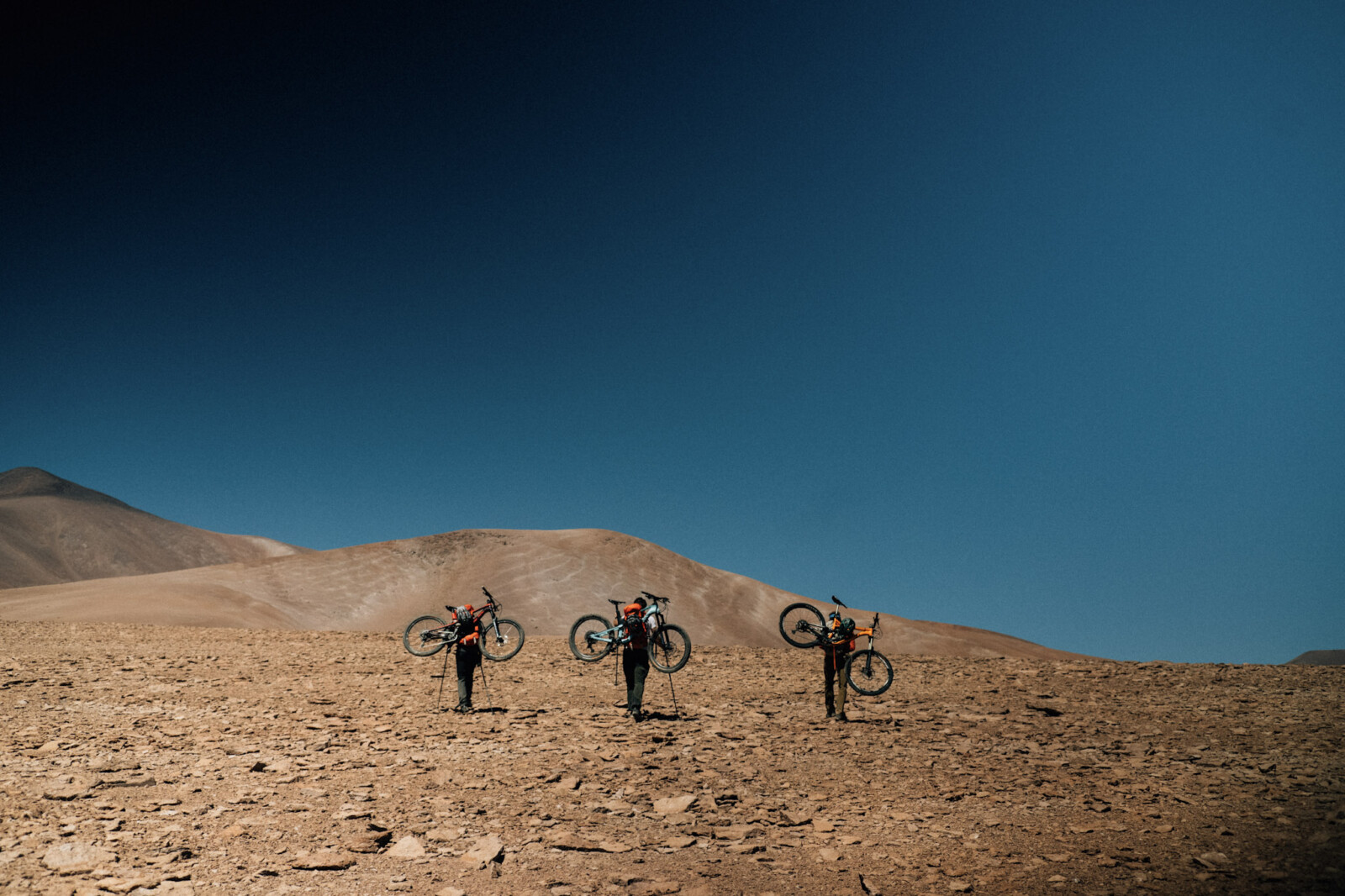
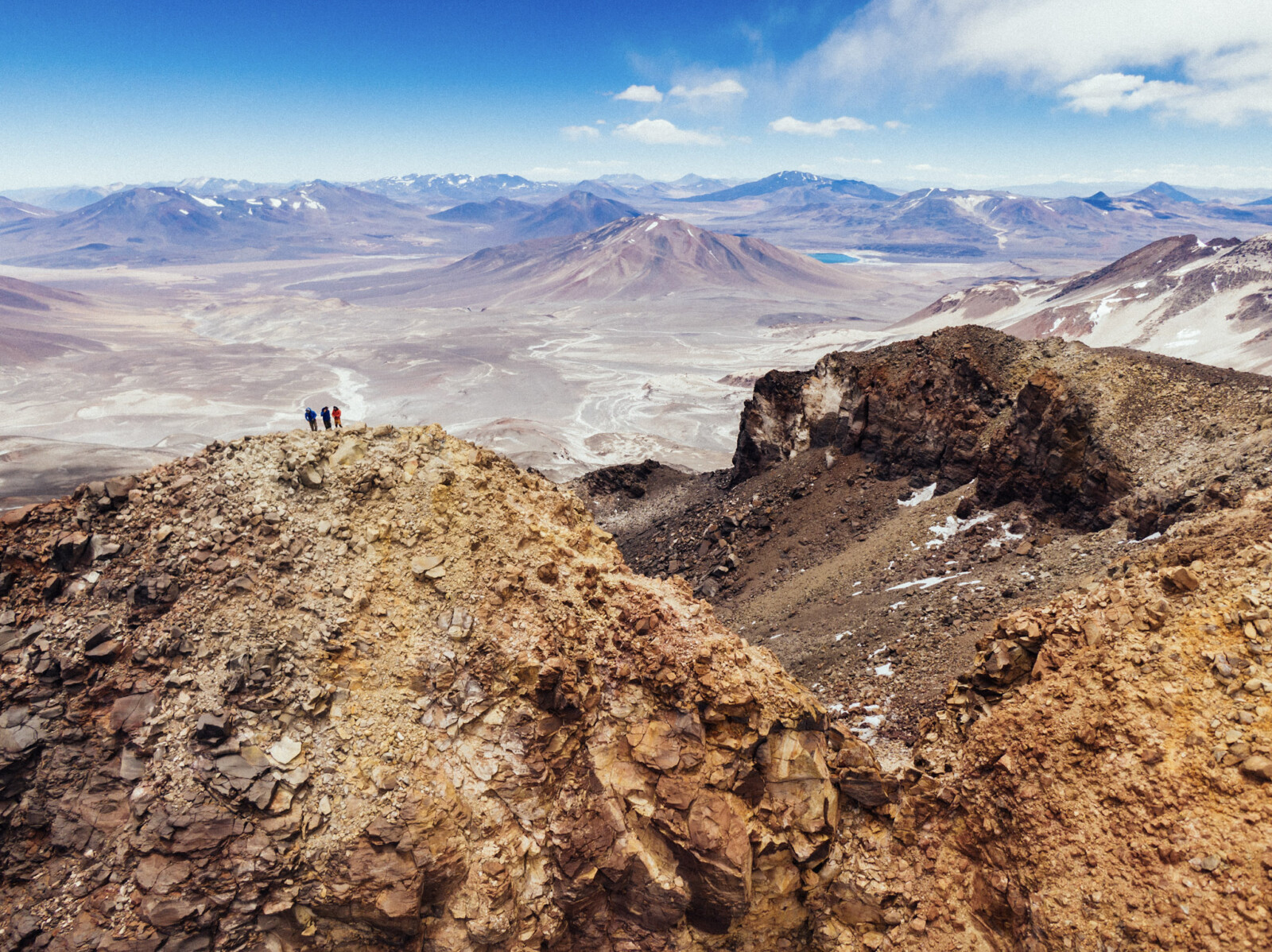
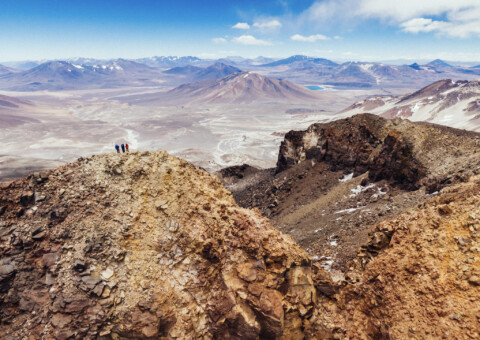
At 6,893 m / 22,615 ft, Nevado Ojos del Salado is the highest active volcano on earth. It rises from Chile’s Atacama Desert — the driest place on earth — surrounded by flamingo lagoons, volcanic hot springs, salt flats, and a crater lake at 6,390 m that is the highest body of water in the world. It is the second highest mountain in the Western Hemisphere, one of the Volcanic Seven Summits, and the only serious high-altitude summit on earth where you drive a 4WD vehicle to within 1,000 meters of the top. More background on the mountain and the DIFROL permit system can be found at difrol.gob.cl.

That last fact changes everything about who this mountain is for.

The Mountain

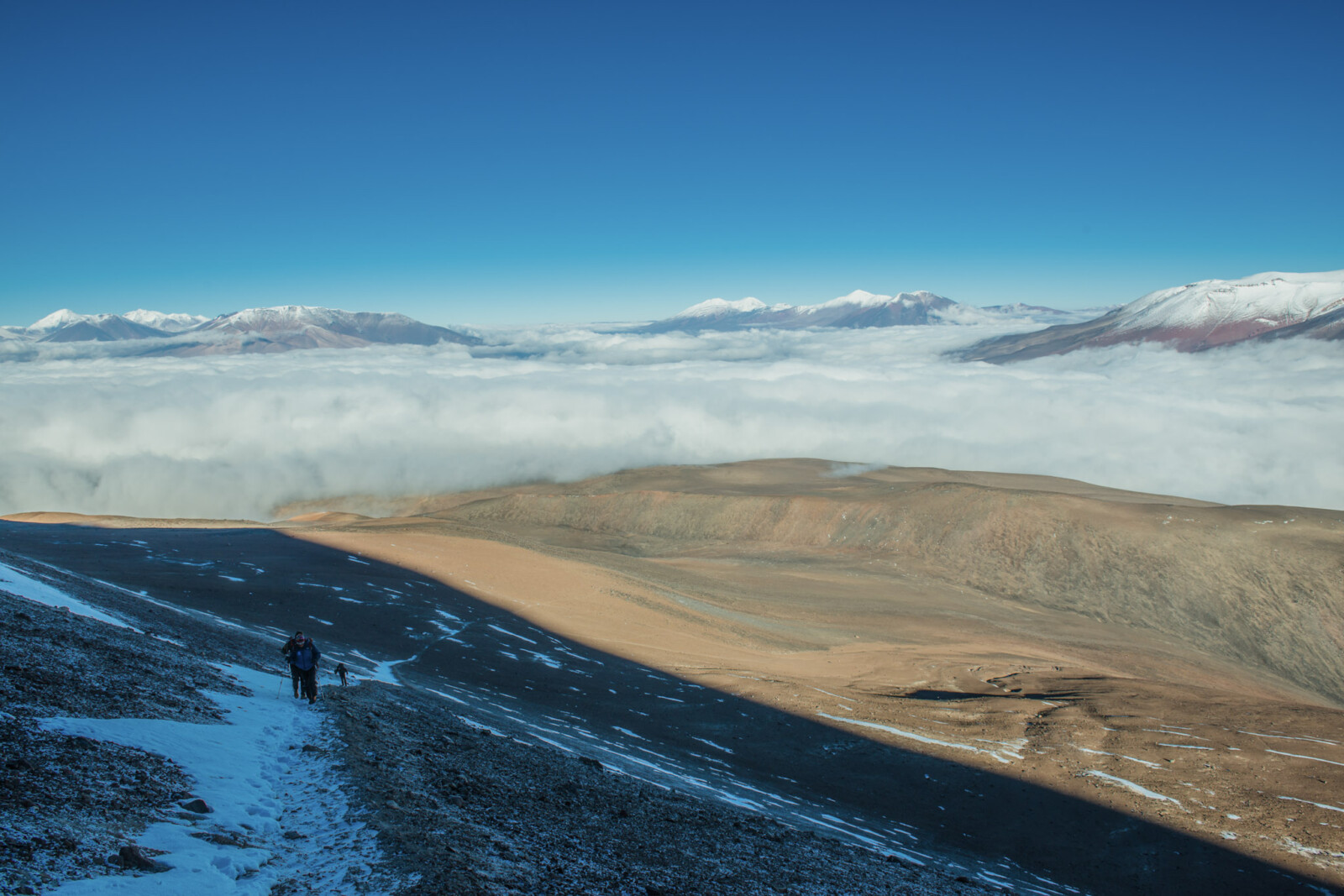
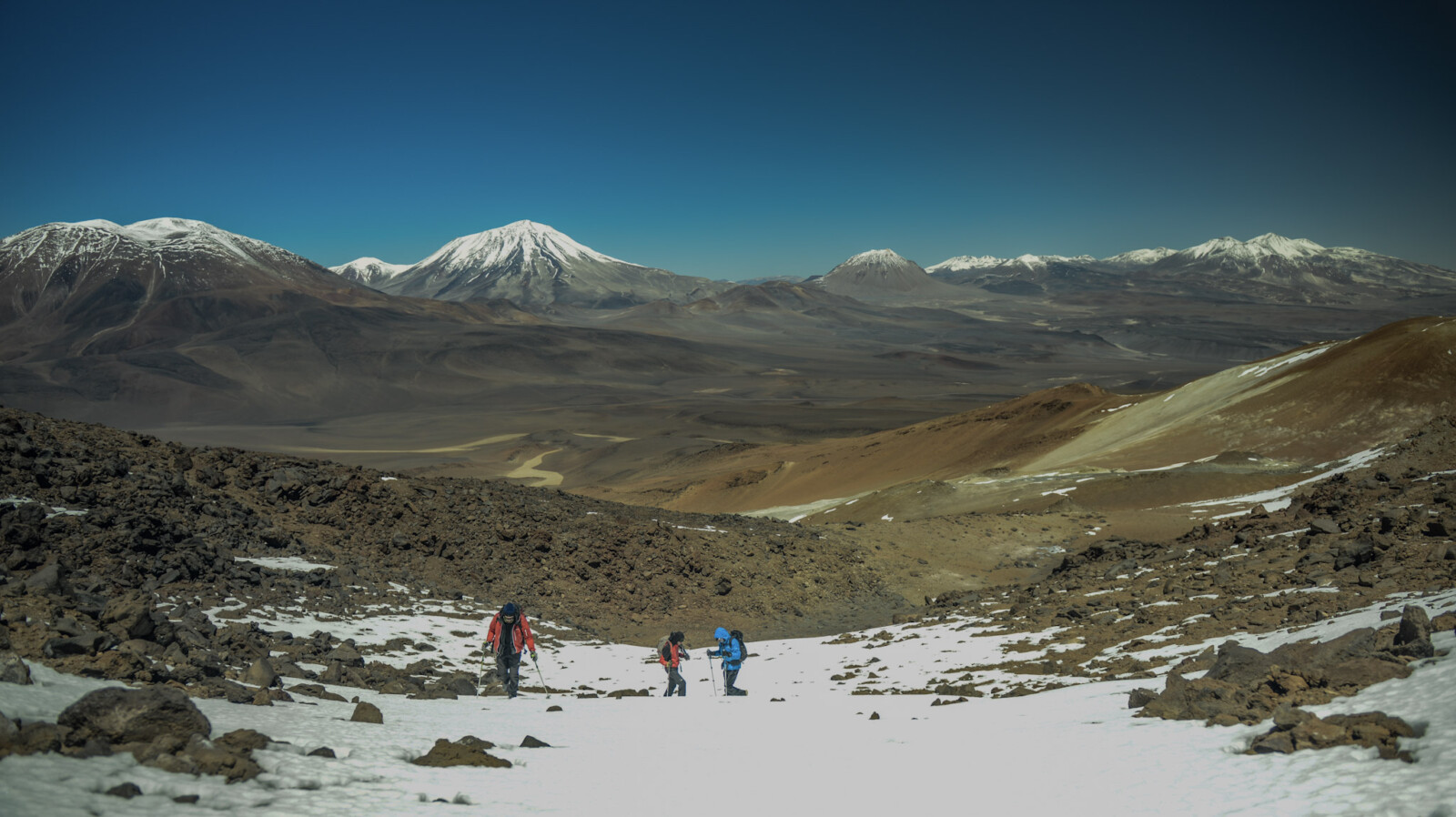
Ojos del Salado is primarily non-technical. No glacier travel. No ropes on the approach. The final 30 meters to the true summit involve basic rock scrambling with a fixed rope in place. What makes it serious is the altitude — at nearly 7,000 meters, every human body is working with roughly 45% of sea-level oxygen. The acclimatization strategy is what determines whether you summit. On this expedition it is built into the overland route itself. By the time you step out of the vehicle at Tejos Refuge at 5,825 m, you have been sleeping progressively higher for eleven days.

Two Ways In — One Expedition

The Overlander

You drive to remote places. You know self-sufficiency in extreme environments. You have probably slept in your rig at some trailhead 200 miles from the nearest town and thought: this is exactly where I want to be. You have never thought of yourself as a mountaineer — but when you hear that you can drive a 4WD through the Atacama Desert to 5,300 m and then walk to the summit of the world’s highest active volcano, something clicks. Ojos del Salado is the overland objective that most of your community has never heard of. After you go, they will.

The First Ascent Climber

You are serious about the outdoors. Trail running, ultramarathons, backcountry skiing, long surf missions — you have real physical credentials. But you have never been on a high-altitude expedition. You decided at some point that you wanted to do something that required months of real preparation, a team you could trust, and a summit that most people will never stand on. Kilimanjaro is done. You want to know what comes next. Or this is your first serious objective and you want it done properly. The expedition is identical for both profiles. What differs is which sentence makes you want to go.

The Overland Route

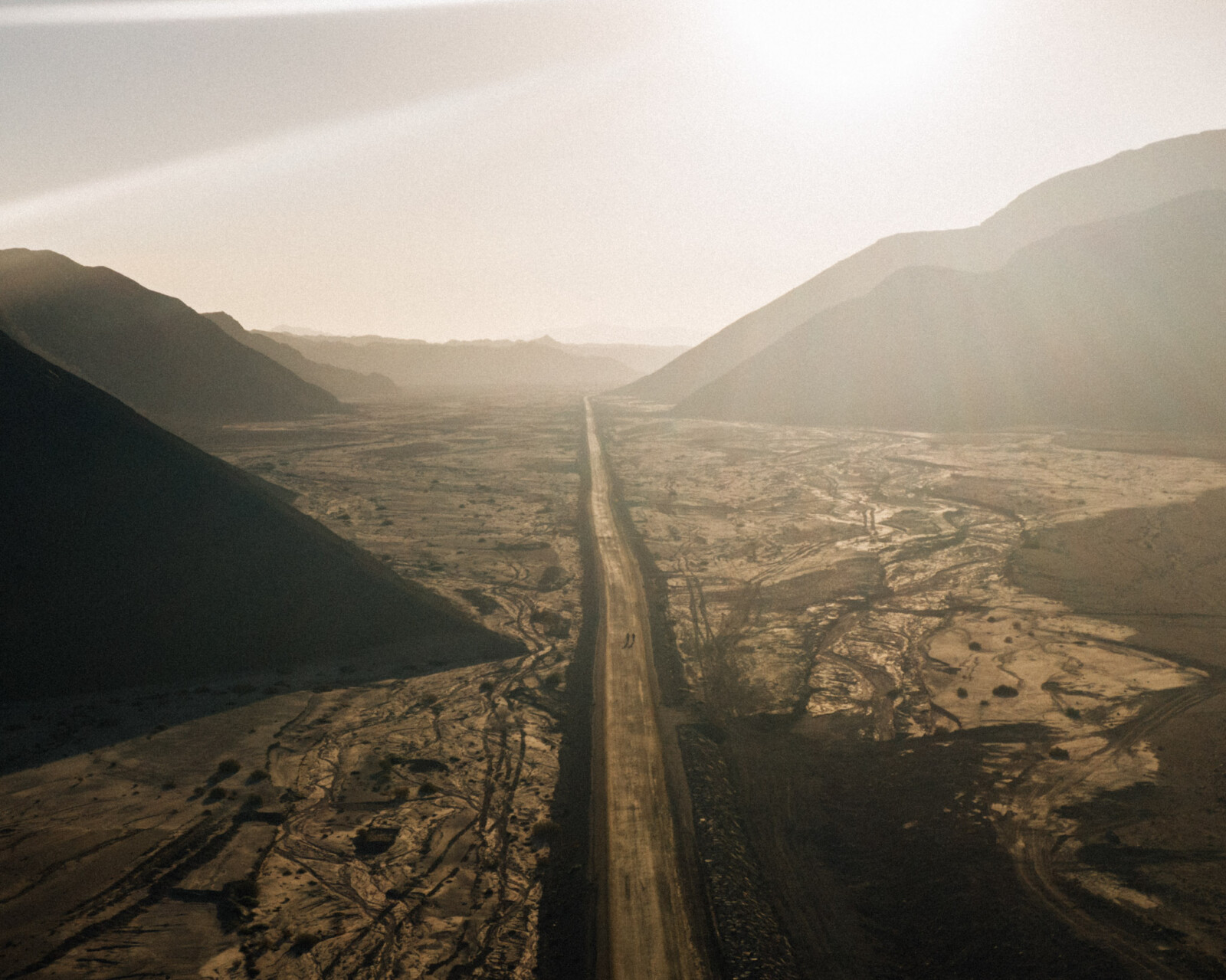
The drive to Ojos del Salado is not a logistics delivery to a trailhead. It is the expedition. The route climbs from Copiapó through desert valleys, salt flats, and volcanic terrain to the altiplano — one of the highest plateaus on earth. Every camp is more remote and more spectacular than the last. Full details are in the Day-by-Day Itinerary.

  • Laguna Santa Rosa at 3,760 m — a flamingo lagoon that turns pink at dusk
  • Laguna Verde at 4,340 m — a volcanic hot spring glowing emerald green in the desert
  • Atacama Refuge at 5,300 m — one of the highest road-accessible camps on the planet
  • Tejos Refuge at 5,825 m — the highest permanently installed hut in the world. End of the road.
  • Ojos del Salado summit at 6,893 m — the world’s highest active volcano

The BBE Approach

At Benegas Brothers Expeditions, we have been guiding at extreme altitude for 35 years — Everest, Aconcagua, and the world’s highest peaks. We bring that knowledge to the overland format without changing the standards. Our guides manage the acclimatization strategy, the daily pacing, and the summit call. The mentorship starts the day you book — training guidance, gear consultation, and regular check-ins in the months before departure. By the time you arrive in Copiapó, you are already prepared.

Why Four Clients

Every departure is capped at four clients. The guide knows each person individually — their pace, their adaptation, their limits. Summit calls are made with full knowledge of the team. The overland experience is fundamentally diminished by a large convoy. Four is the right number. See Is This Trip for Me? for full experience and fitness requirements.

14 Days  ·  Copiapó → Atacama Desert → Ojos del Salado → Copiapó

Fourteen days built around one principle: give your body the time it needs to adapt while moving through one of the most extraordinary landscapes on earth. The acclimatization is the journey. The summit is where the journey ends.

Arrive at Copiapó Airport (CPO). Private transfer to hotel. Meet your guide team. Full expedition briefing, vehicle orientation, gear check. Tonight: good dinner, early sleep. The Atacama starts tomorrow.

Sleeping altitude: ~300 m / 985 ft

Final resupply day. Water drums filled. Food packed. Vehicles loaded and checked. A short afternoon shakedown drive outside the city. This is the last day with a supermarket, an ATM, and reliable cell service. Use it.

Sleeping altitude: ~300 m / 985 ft

The city disappears within minutes. The Atacama takes over — vast, dry, completely silent. The road climbs into desert terrain. Valle Chico at 3,050 m is a small green valley with a stream running through it. First camp. First night at altitude. The acclimatization has begun.

Sleeping altitude: 3,050 m / 10,007 ft

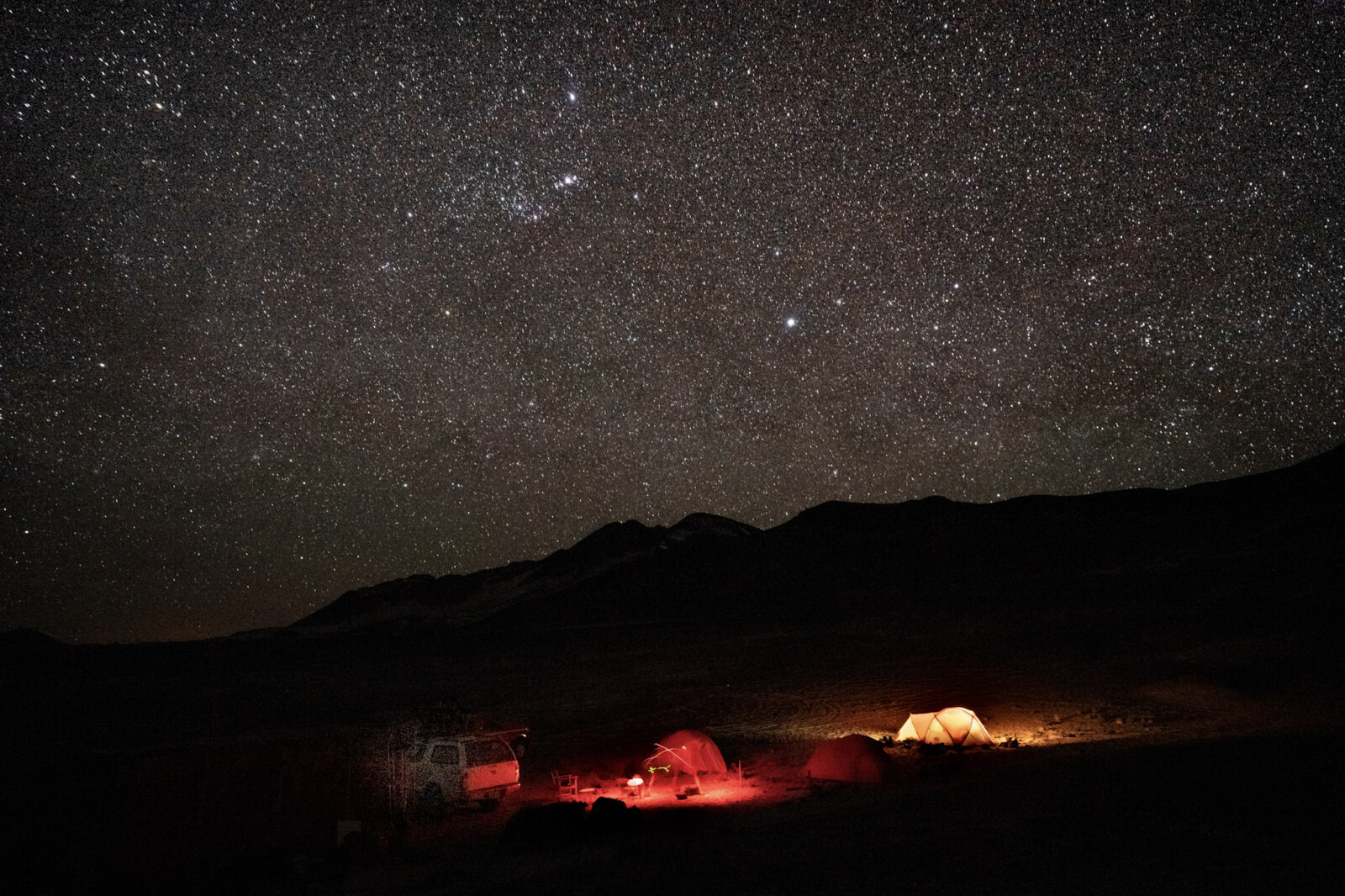
The altiplano opens up as we gain altitude. Laguna Santa Rosa appears without warning — a flamingo lagoon at 3,760 m that turns pink at dusk. Short acclimatization walk in the afternoon. Cook dinner as the sky cycles through orange, deep blue, and stars.

Sleeping altitude: 3,760 m / 12,336 ft

The vehicles stay. We walk. Cerro Siete Hermanos at 4,880 m is the first serious altitude push — the moment your body understands what this environment actually is. Climb high, sleep low. Return to the flamingo lagoon. This is the principle that makes the summit possible.

Sleeping altitude: 3,760 m / 12,336 ft  ·  Max: 4,880 m / 16,010 ft

Back in the vehicles. The road climbs to 4,340 m and Laguna Verde — a volcanic hot spring glowing emerald green against the desert rock. One of the most visually extraordinary camps in South America. The hot springs are 39°C. You have earned them.

Sleeping altitude: 4,340 m / 14,240 ft

The most important day of the expedition. Cerro Mulas Muertas at 5,400 m is above the summit of Kilimanjaro. The vehicles wait. By the time you return to Laguna Verde and cook dinner, you are ready for the mountain above.

Sleeping altitude: 4,340 m / 14,240 ft  ·  Max: 5,400 m / 17,717 ft

A deliberate rest day. Short walk, hydration, food, gear check. Hot springs again if you want them. The altiplano stretches to every horizon. Tomorrow the vehicle carries you higher.

Sleeping altitude: 4,340 m / 14,240 ft

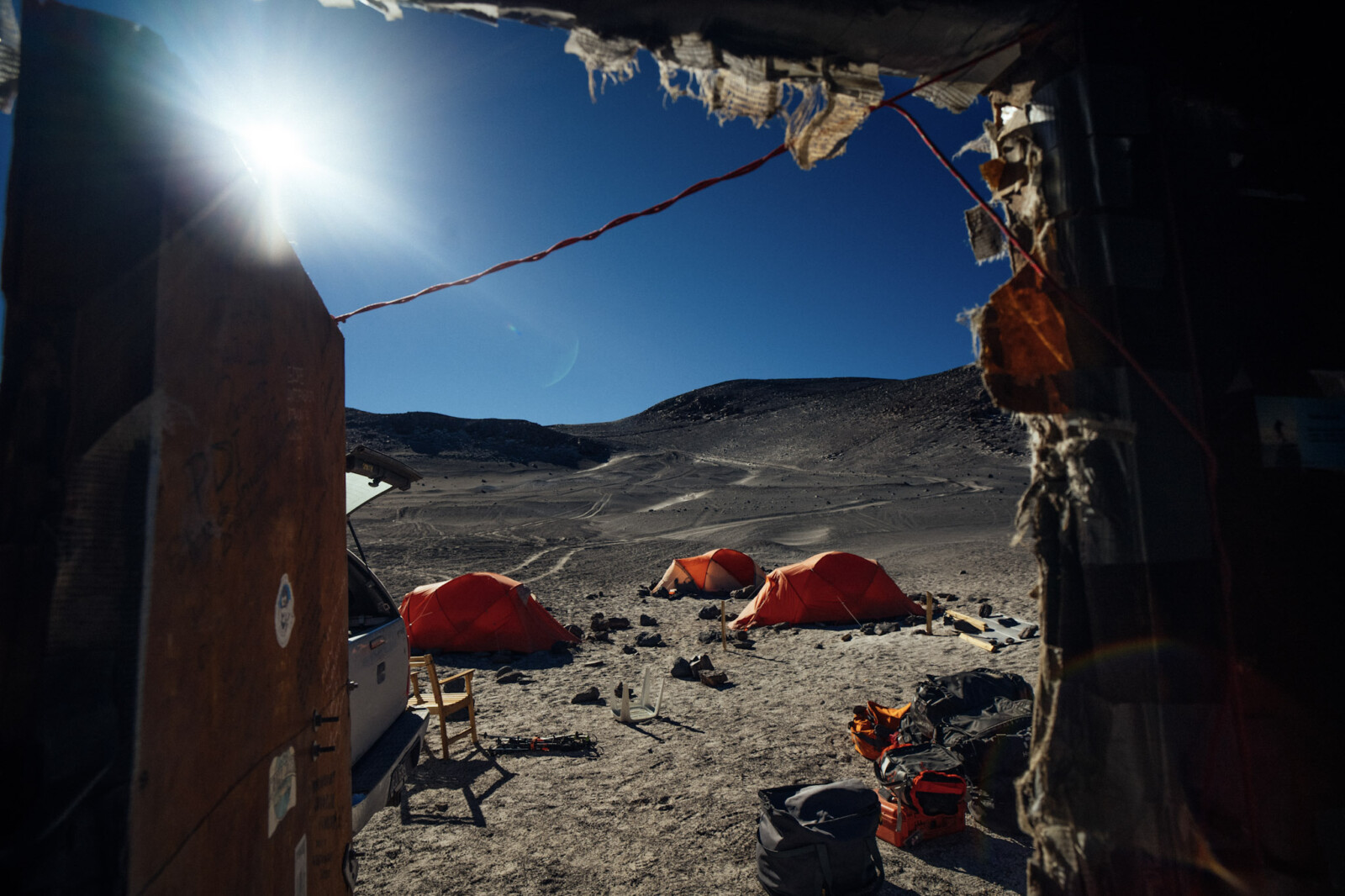
The road gets serious. Rocky, loose, narrow in places. This is 4WD terrain at altitude. The reward: Atacama Refuge at 5,300 m — one of the highest road-accessible camps on the planet. Ojos del Salado fills the sky directly ahead. The mountain is no longer distant.

Sleeping altitude: 5,300 m / 17,388 ft

We drive as high as the road allows, then carry loads on foot to Tejos Refuge at 5,825 m — the highest permanently installed hut in the world, and the end of the road. You have now been higher than any mountain in Africa or North America. Return to sleep at Atacama Refuge.

Sleeping altitude: 5,300 m / 17,388 ft  ·  Max: 5,825 m / 19,111 ft

Final rest before the summit push. Eat well. Drink four liters of water. Organize your summit pack in the afternoon. Get to sleep as early as possible. Tomorrow begins before midnight.

Sleeping altitude: 5,300 m / 17,388 ft

Drive to Tejos Refuge in the afternoon. Rest, eat, pack summit gear. Midnight start. We move through the high desert in darkness — headlamp light and the sound of your own breathing. The route follows volcanic scree and rock toward the upper mountain. Slow. Deliberate. Following your guide. The final 30 meters to the true summit are basic rock scrambling — fixed rope in place. From 6,893 m — the summit of the world’s highest active volcano — the vehicles are visible far below on the altiplano. The crater lake glows at 6,390 m. Both Chile and Argentina are visible. We descend all the way to Atacama Refuge.

Sleeping altitude: Atacama Refuge: 5,300 m / 17,388 ft  ·  Max: 6,893 m / 22,615 ft

Weather reserve. Wind on Ojos del Salado can close the summit without warning. This day ensures a second window if needed. If summit has been achieved, it is a full recovery day before the long drive out.

Sleeping altitude: 5,300 m / 17,388 ft

The long drive back down through the altiplano to Copiapó. The Atacama unscrolls in reverse — familiar now in a way it was not two weeks ago. Hotel. Hot shower. Proper dinner. Tonight you tell the story. Services conclude in Copiapó. Bahía Inglesa Pacific coast and Santiago extensions available — contact us at booking.

Sleeping altitude: ~300 m / 985 ft

An honest answer. Not a sales pitch.

Fitness — Non-Negotiable

Summit day is 12–16 hours of continuous movement at extreme altitude. At 6,893 m your body functions with roughly 45% of sea-level oxygen. You should arrive capable of:

  • Sustained uphill hiking for 6–8 hours with a daypack on consecutive days
  • Functioning well in cold conditions — temperatures on summit night reach -15 to -20°C
  • Managing effort over many hours without full recovery between days

Start at least four months before departure. Six is better. Prioritize: back-to-back long days with a loaded pack, uphill endurance, night hiking (summit starts at midnight — train in the dark), and cold exposure.

What You Don’t Need

  • Prior high-altitude experience — the 14-day route builds it
  • Technical mountaineering skills — no ice axe, no crampons, no glacier travel on this route
  • A climbing resume — this expedition does not require one

What the Summit Day Actually Feels Like

  • Midnight start: the alarm goes before midnight; dress in every layer; the stars at this altitude are unlike anything you have seen from a roadside camp
  • Hours in the dark: slowly and deliberately following your guide; headlamp light and the sound of your own breathing; altitude makes everything slower — that is correct and it is the only way to do this
  • The scramble: the final 30 meters are rock with a fixed rope; hands and feet; not technically demanding for a prepared person — at this altitude, after hours of walking, it requires full focus
  • The summit: 6,893 m; the vehicles are visible far below; the crater lake glows; the Atacama stretches to every horizon; both countries are visible
  • The descent: long, controlled, and necessary — summit day is only halfway when you reach the top

Responsible Stewardship

The Atacama is a fragile, extraordinary environment. Single-use plastic is prohibited in Chilean national parks. Reusable water bottles — minimum 2 liters — are required. We follow strict Leave No Trace standards and ask all clients to do the same.

Yes. This expedition is built for exactly that person. The 14-day format with two acclimatization peaks and deliberate rest days gives your body the time it needs to adapt from sea level to nearly 7,000 meters. Most of our clients on this program have never been above 4,000 m before Day 1. Contact us before booking and we will have an honest conversation about your background.

No. Our fully equipped expedition 4WD vehicles handle the entire overland route. If you want to bring your own rig, contact us to discuss a private departure — we have done this and can provide full vehicle specifications, tire requirements, and fuel logistics for the route.

The drivable road reaches Tejos Refuge at approximately 5,825 m / 19,110 ft — one of the highest road-accessible points on earth. The road from Laguna Verde to Atacama Refuge is rough dirt requiring 4WD and good clearance. Above Atacama, the road to Tejos requires careful navigation. Our drivers know every meter of it.

No. The route is non-technical — no ice axe, no crampons, no glacier travel. The final 30 meters to the true summit are basic rock scrambling with a fixed rope. What you need is fitness, good acclimatization built into the 14-day route, and the willingness to follow your guide on summit day.

A DIFROL permit from Chile is required to access the Ojos del Salado climbing zone. We manage all permits for the expedition. Applications require passport details submitted at least one month before departure — we request these at booking.

Mandatory. Your policy must cover helicopter evacuation from remote Atacama terrain up to 7,000 meters. Most standard plans cap at 3,000 m. We recommend Global Rescue (globalrescue.com). Send your certificate before departure.

20% deposit secures your spot; balance due 120 days before departure. Refund schedule: 120+ days: full refund less unrecoverable costs; 90–119 days: partial refund reviewed individually; fewer than 90 days: no refund. All cancellations in writing.

Possibly. Private departures with client vehicles require advance planning for fuel logistics, tire specs, and vehicle preparation at altitude. Contact us to discuss — this is not a simple add-on but we have done it and can scope it with you.

Passport & Visa

U.S. passport holders do not require a visa for Chile for stays under 90 days. Other nationalities should confirm requirements before booking. Your passport must be valid for at least six months beyond your travel dates.

DIFROL Climbing Permit

Managed entirely by BBE. We submit applications at least one month before departure. Passport details required at booking.

Rescue Insurance — Mandatory

Your policy must cover: remote adventure travel in extreme desert terrain, high-altitude trekking and hiking to 7,000 meters, emergency helicopter evacuation from remote Atacama terrain, and a minimum $300,000 USD combined medical and evacuation coverage. We recommend Global Rescue (globalrescue.com) — purchase within 14 days of your deposit and send your certificate before departure.

All clients fly into Copiapó Airport (CPO), connecting through Santiago (SCL). Domestic Santiago → Copiapó flight: approximately 1.5 hours — book early, seats fill during season. Arrive one full day before Day 1. Send your proposed flight itinerary to us before purchasing tickets.

The Vehicles

All vehicles are 4WD with appropriate clearance and tire specification for high-altitude desert terrain. Fuel is carried in drums for the full route — no fuel stops above Copiapó. Water is carried in drums. Recovery gear and spare tires are on all vehicles. Our drivers have run this route many times.

  • Days 1–2: Hotel in Copiapó
  • Day 3: Camp, Valle Chico — 3,050 m
  • Days 4–5: Camp, Laguna Santa Rosa — 3,760 m
  • Days 6–8: Camp, Laguna Verde — 4,340 m
  • Days 9–11: Camp, Atacama Refuge — 5,300 m
  • Day 12: Camp, Atacama Refuge (after summit descent)
  • Day 13: Camp, Atacama Refuge (spare day)
  • Day 14: Hotel, Copiapó

Clothing — Extreme Temperature Range (30°C to -20°C)

  • Lightweight base layers for warm desert hiking days
  • Mid-layer insulation for camp evenings above 3,000 m
  • Heavy down jacket for high camp and summit night
  • Waterproof windproof shell jacket and pants
  • Warm hat, balaclava, neck gaiter; heavyweight gloves and liner gloves for the upper mountain
  • Wool or synthetic hiking socks — multiple pairs, no cotton

Equipment

  • Sleeping bag rated to -25°C / -13°F — do not underestimate the cold at 5,000+ m
  • Trekking poles — essential for hiking days and the long descent
  • Headlamp with spare lithium batteries — summit starts at midnight
  • Glacier glasses or goggles — UV is extreme at altitude in the Atacama
  • Reusable water bottles — minimum 2 liters (single-use plastic prohibited in Chilean national parks)

What you do NOT need: ice axe, crampons, harness, or technical mountaineering equipment.

  • Driving days: long routes on dirt roads through extraordinary terrain; your job is to stay hydrated and rested for the hiking days
  • Acclimatization days: vehicles stay at camp; we hike; these are the days that make the summit possible
  • Camp life: fully supported by our crew; hot meals prepared, hot drinks on arrival at every camp

Hydration is the single most important daily discipline. The Atacama dehydrates faster than almost any other environment on earth. Four liters per day minimum — every day, not just the hiking days.

Copiapó has ATMs and credit card access. Above the city, there is nothing to buy. Bring all cash before leaving. USD bills printed 2013 or later, crisp condition.

  • Guide team: $300–$400 USD total gratuity
  • Drivers and cook crew: $150–$250 USD total
  • Meals in Copiapó / Santiago: $80–$150 USD
  • Personal snacks: $50–$100 USD


Private departures on custom dates are available throughout the season, including the option to run the route in your own overland vehicle. Options:

  • Private group in BBE vehicles with guide team
  • Private departure in your own overland vehicle — contact us to scope requirements
  • 1:1 private expedition with Willie or Damian Benegas

Contact us at climbing@benegasbrothers.com

Expedition Fee: $7,200 USD per person

Includes

  • Full expedition 4WD vehicles and expert drivers
  • IFMGA-certified BBE mountain guide
  • All in-country transportation and fuel logistics
  • Hotel accommodations per the itinerary
  • DIFROL climbing permits — fully managed
  • All expedition meals including camp cooking
  • Water logistics for the full route
  • Group camping equipment
  • Emergency oxygen, satellite communications, rescue plan
  • Pre-expedition preparation: training plan, gear consultation, check-ins
  • Summit certificates

Does NOT Include

  • International flights to/from Santiago
  • Domestic Santiago → Copiapó flights
  • Travel and rescue insurance (mandatory)
  • Personal gear and clothing
  • Tips for drivers, crew, and guides
  • Meals and drinks in Copiapó or Santiago
  • Extensions and personal expenses

Full Budget Estimate

  • Expedition fee: $7,200
  • International flights to Santiago: $700–$1,400
  • Santiago → Copiapó domestic flight: $100–$250
  • Rescue insurance (mandatory): $300–$500 / yr
  • Travel insurance (recommended): $200–$400
  • Personal gear & clothing: $400–$1,200
  • Gear rentals in Copiapó (if needed): $100–$300
  • Tips — drivers and crew: $150–$250
  • Tips — guides: $300–$400
  • Meals in Copiapó / Santiago: $80–$150
  • Personal snacks: $50–$100
  • Emergency cash reserve: $300–$500

Essentials total (fee + flights + insurance + tips): ~$9,000–$10,500

Typical total with gear and personal costs: ~$9,500–$12,000

Season: December through March. Expeditions are limited to 4 clients per departure. Spots fill well in advance of peak season dates.

2026–2027 Expedition Dates

Dec 1 – Dec 14, 2026  ·  Open  ·  Early season — stable conditions

Dec 27, 2026 – Jan 9, 2027  ·  Open  ·  Holiday season departure

Jan 17 – Jan 30, 2027  ·  Open  ·  Prime summit window

Feb 8 – Feb 21, 2027  ·  Open  ·  Late season


Payment Policy

20% deposit to secure your spot. Balance due 120 days prior to departure. Payment via wire transfer, ACH, or credit card.

Cancellation Policy

  • 120+ days: full refund less unrecoverable costs
  • 90–119 days: partial refund reviewed individually
  • Fewer than 90 days: no refund

Optional Extensions

  • Bahía Inglesa Pacific coast — 2 to 3 nights before or after
  • Santiago city stay — 2 to 4 nights
  • Atacama Desert extended exploration — custom
Climb the world’s highest volcano in less than two weeks!

Our Ojos del Salado Expedition blends efficient acclimatization, intimate knowledge of the Atacama region, and world-class guidance from Benegas Brothers Expeditions.

Book Trip
Location:
Chile
Duration:
13 Days
Skill:
Intermediate
Dates:

February 8 – Friday, February 20, 2026

February 22 – Friday, March 6, 2026

Pricing

Pricing is a typical estimate, final quote will be provided after receiving your inquiry.

Climb the world’s highest volcano in less than two weeks!

Our Ojos del Salado Expedition blends efficient acclimatization, intimate knowledge of the Atacama region, and world-class guidance from Benegas Brothers Expeditions.