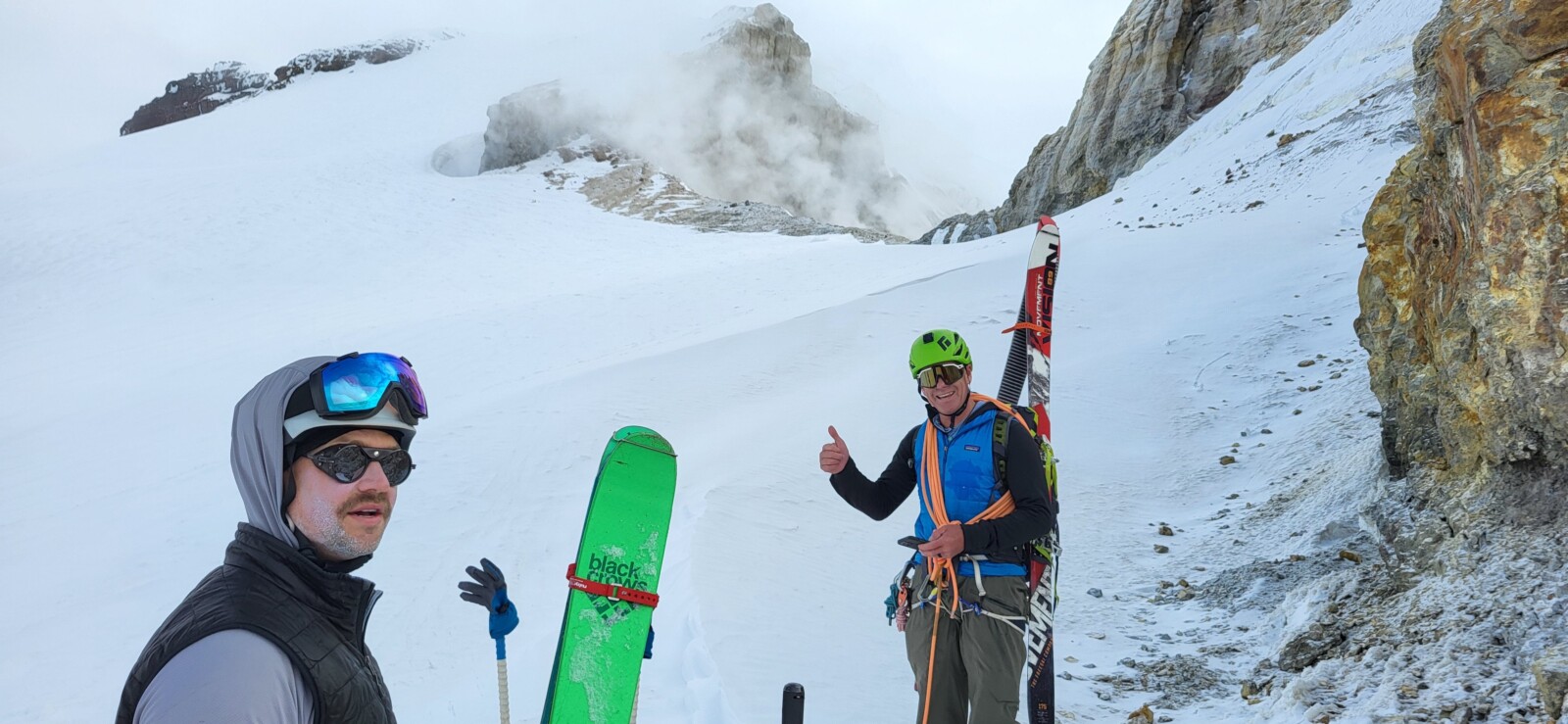
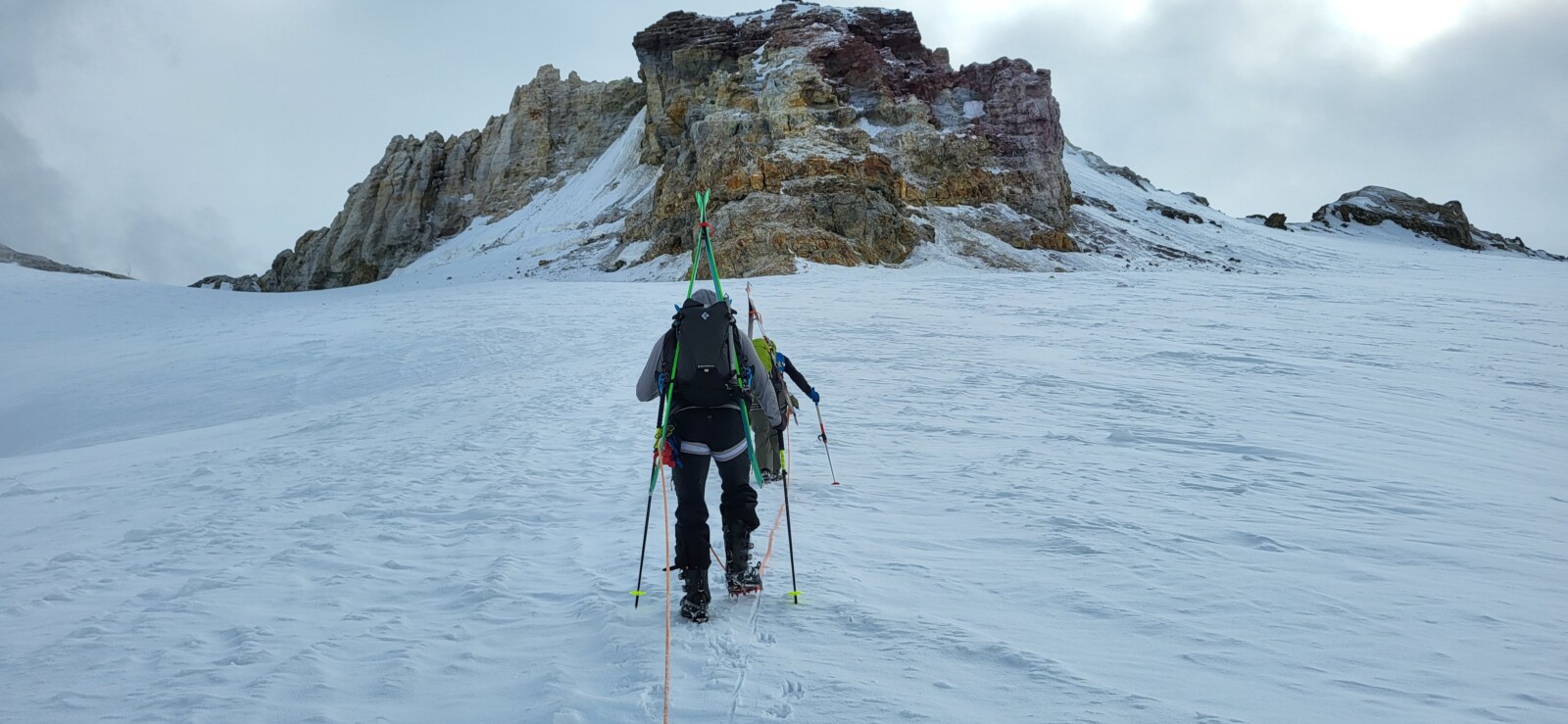
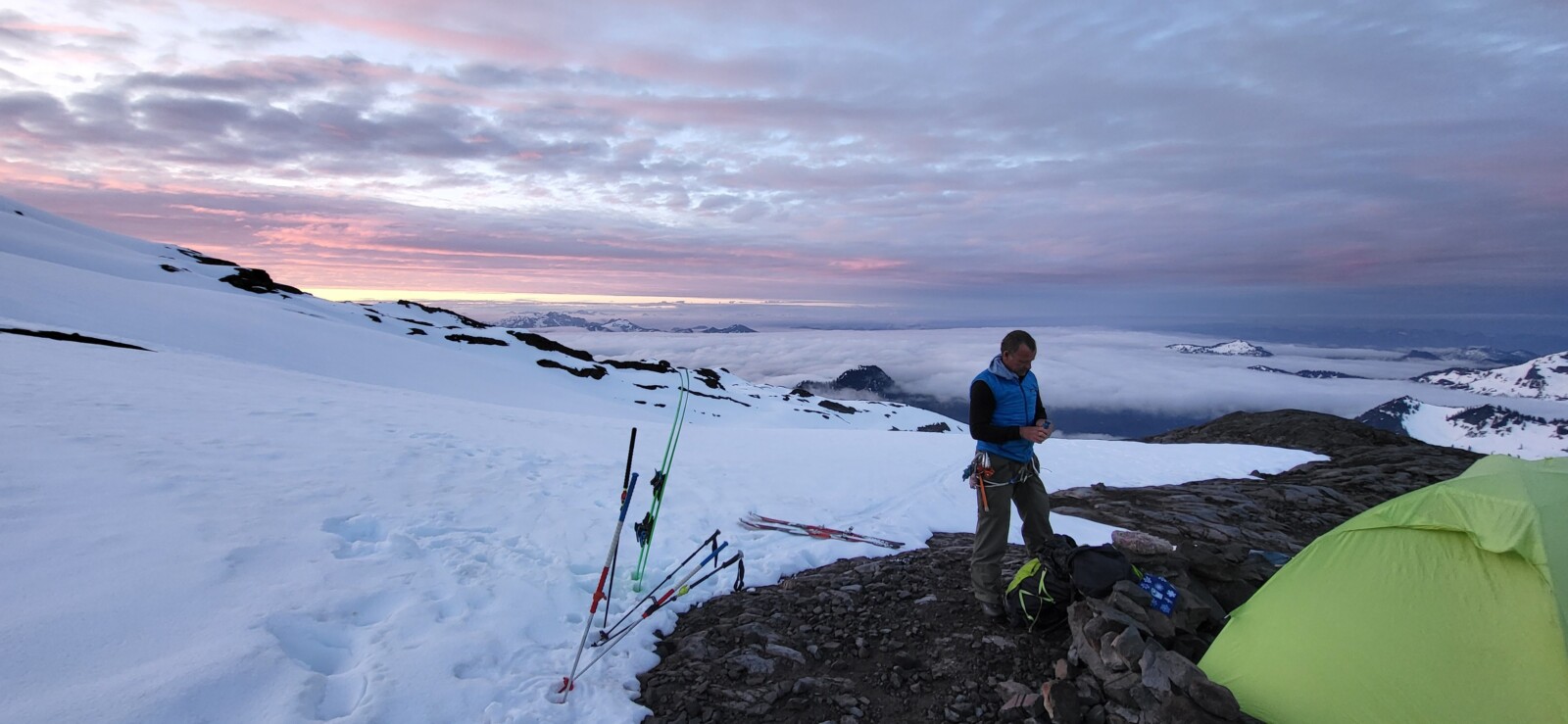
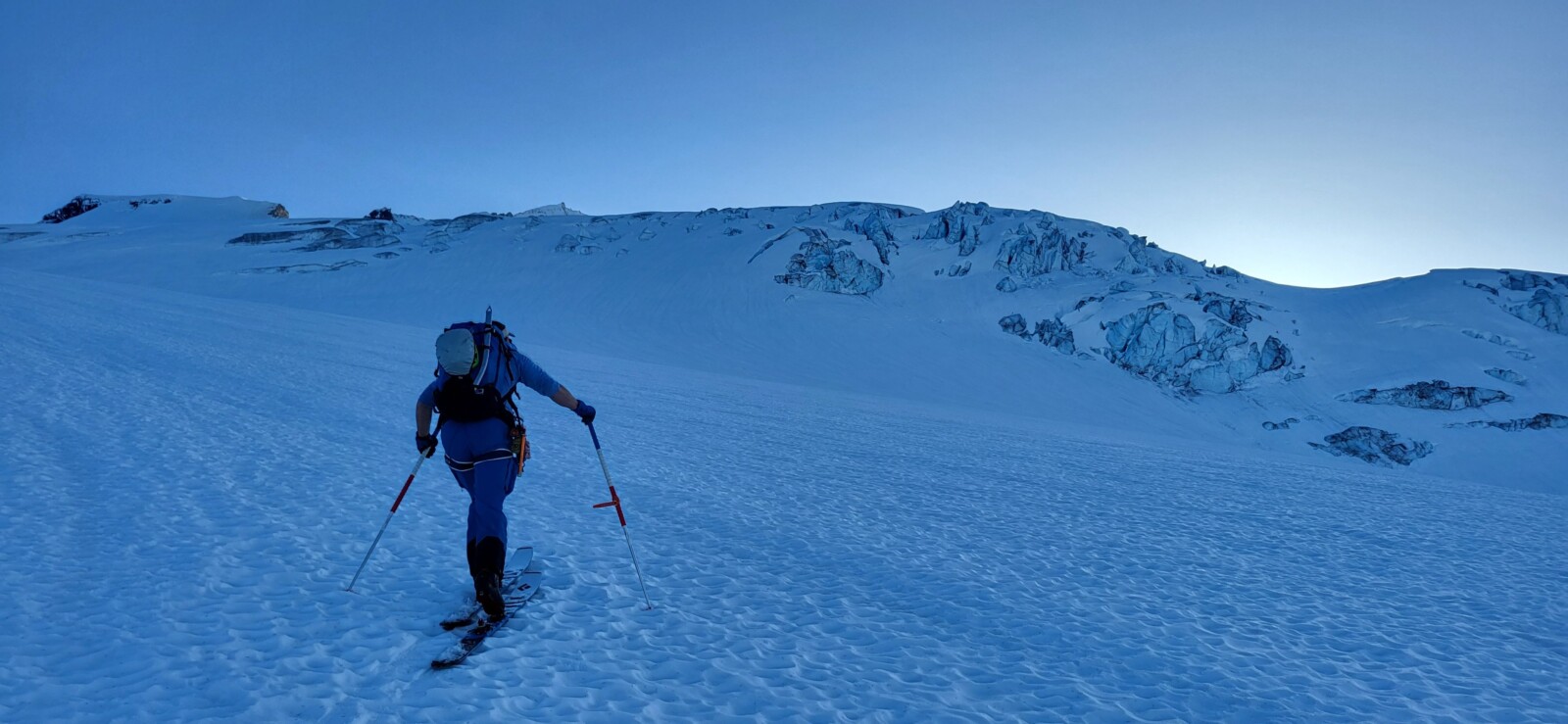
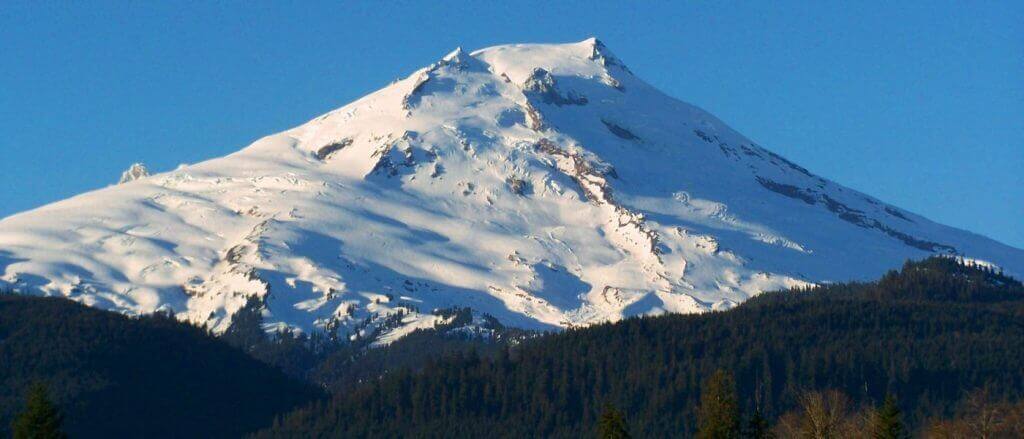
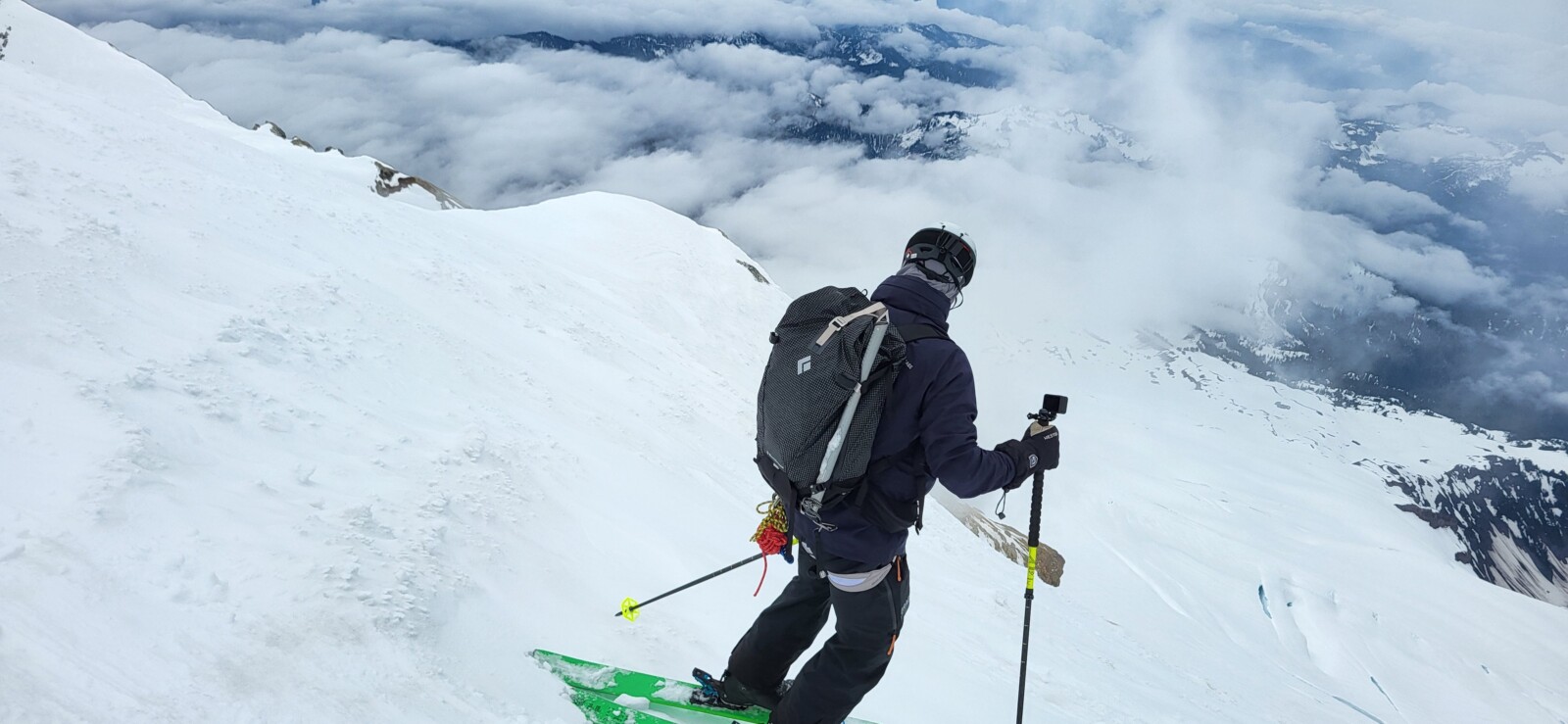
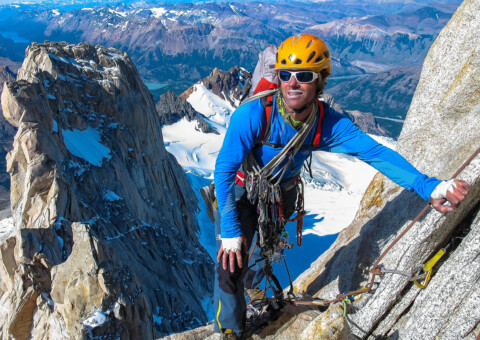
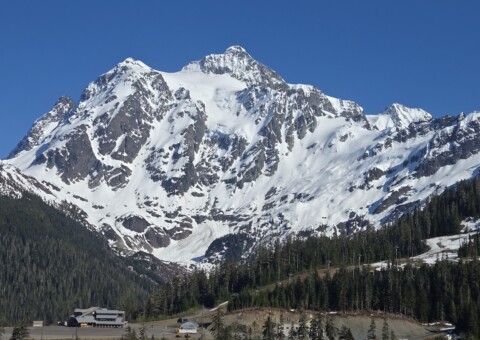
Climb one of North America’s most iconic glaciated peaks: Mount Baker, known to the Lummi Nation as Komo Kulshan — ‘The Great White Watcher.’ This 3-day ascent is ideal for beginner and intermediate climbers looking for a true mountaineering experience on a heavily glaciated active volcano with big terrain and unforgettable scenery.
This program is operated exclusively by Wasatch Mountain Guides (WMG) — a professional mountain guiding service co-owned by IFMGA Mountain Guide Willie Benegas, who brings over 30 years of high-level guiding experience to every program.
One Mountain. Three Routes.
Mount Baker offers three primary glacier routes accessible to guided teams — Coleman-Deming, Easton, and Squak. All three reach the same summit at 10,781 ft / 3,286 m via sustained glacier travel on one of the most heavily glaciated volcanoes in the contiguous United States. The route your guide selects is determined by current mountain and road conditions at the time of your climb — snowpack depth, crevasse development, trailhead accessibility, and seasonal weather patterns all factor in. No single route is inherently superior to the others; each offers a distinct and rewarding experience on real glaciated terrain.
The Routes
Coleman-Deming · Trailhead: Heliotrope Ridge, 3,670 ft / 1,119 m
The most direct ascent from the north side of the mountain. The approach climbs steeply through old-growth forest to the edge of the Coleman Glacier, then up Hogsback Ridge to high camp at approximately 5,890 ft / 1,795 m. From camp, the route ascends the Coleman and Deming glaciers, navigating crevasse zones and serac bands before finishing on the Roman Wall — the steepest section of the route — and onto the summit plateau. Panoramic views of the North Cascades, Mount Rainier, and the San Juan Islands from the top. The Coleman-Deming is generally the most interesting and varied of the three routes, with more direct glacier character and a classic North Cascades feel.
Easton Glacier · Trailhead: Schreibers Meadow, 3,200 ft / 975 m
One of the mountain’s most popular routes, accessed from the south side via the Railroad Grade trail — a long, scenic lateral moraine walk through open meadows before the route turns onto the glacier. The Easton offers wide, steady snow slopes and excellent glacier travel, making it particularly well-suited for teams building glacier travel fundamentals. Less steep than the Coleman-Deming’s Roman Wall, but longer in overall distance at approximately 16 miles / 25.7 km round trip with around 7,600 ft / 2,317 m of total elevation gain. Views include the Twin Sisters Range, the Black Buttes, and distant North Cascades peaks. The Easton connects with the Squak route beneath Sherman Crater on the upper mountain. Best for early season due to the bergshrund that can develop later in summer.
Squak Glacier · Trailhead: Schreibers Meadow, 3,200 ft / 975 m
The least trafficked of the three routes — sharing the Schreibers Meadow trailhead with the Easton but diverging north toward the Squak Glacier via the Scott Paul Trail. Shorter than the Easton on the approach but steeper on the glacier itself — wide, consistent snow slopes climb to a high camp near the Sulphur Moraine at approximately 6,960 ft / 2,122 m before the route merges with the Easton just below Sherman Crater. The Squak provides a more remote feel with fewer other parties, excellent glacier travel on steady terrain, and sweeping views of the surrounding North Cascades. Well-named after the Nooksack people who assisted Edward Coleman on his first ascent of Baker in 1868.
Route Selection — How It Works
Your guide confirms the route approximately 48–72 hours before your program start date, based on:
- Trailhead road conditions — SR-542 (Heliotrope Ridge) and access roads to Schreibers Meadow have different snow clearance timelines; road closures earlier in season can make Coleman-Deming inaccessible
- Current snowpack and crevasse development — the bergshrund on the Easton can create significant navigation challenges in mid-to-late season; crevasse zones on all routes vary week to week
- Party size and experience level — the Coleman-Deming’s steeper terrain and more varied glacier character suit teams with prior experience; the Easton and Squak’s steadier slopes are often preferred for first-time glacier climbers
- Weather forecast — the north-facing Coleman glacier and south-facing Easton/Squak can have meaningfully different conditions on the same day
All three routes involve the same core experience: real glacier travel, crevasse navigation, rope team management, crampon technique, and a summit at 10,781 ft / 3,286 m on one of the great glaciated volcanoes of the Pacific Northwest. The destination is always the same. The path is always excellent.
Trip Highlights
- Operated by Wasatch Mountain Guides — co-owned by IFMGA Guide Willie Benegas
- Access to three of Baker’s main glacier routes — best route selected for your dates and conditions
- Comprehensive glacier travel and mountaineering training included on Day 2
- Maximum 2 climbers per guide — genuine personal attention throughout
- Available as a 2-day or 3-day program (contact us for the 2-day option)
- Natural stepping stone to Rainier, Mexico, Denali, Aconcagua, and larger objectives
For a full week of technical glacier instruction before the summit, see the Mount Baker 6-Day Mountaineering Course. For a more complex mixed objective on Baker’s neighbor, see Mount Shuksan — Fisher Chimneys Route.