Global Expeditions Antarctica

Mount Vinson

2 months Group: 4 people

Despite a relatively easy technical grade, climbing Mount Vinson is tough in all other respects. Temperatures of -40°C / -40°F are likely to be encountered and climbers should be both psychologically and physically prepared for this. The remote situation and harsh conditions provide the real challenge of a Mount Vinson expedition. However, for those who can meet this challenge, we can promise an experience that will be much more than just another mountain.

Mount Vinson is a technically straightforward climb with a few steep 40-degree sections of snow climbing. As an expedition experience, climbing Vinson can be likened to the top 10,000 ft / 3,048 m of a major 8,000-meter Himalayan peak — with the cold and commitment, but without the altitude.

The Last Great Wilderness

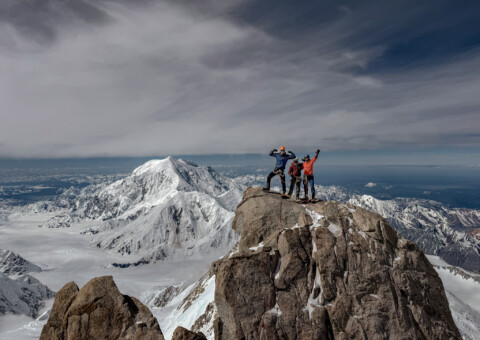
The Ellsworth Mountains are so remote and isolated that if they did not contain the highest mountain in the continent, they would have only been visited by a handful of intrepid explorers. Antarctica is the world’s last great wilderness and remains virtually completely undeveloped and unpopulated due to the hostility of its climate. It is a land of extremes and epitomizes the very idea of remoteness, harshness, and isolation. But it is also extraordinarily beautiful — and those who are drawn by Antarctica’s mystique can be richly rewarded with experiences and panoramas powerful enough to alter a person’s whole perspective.

In the early days of its exploration, Antarctica was a forcing ground for bravery and endurance. Such qualities are synonymous with its explorers — Scott, Amundsen, Shackleton, and Oates. Even now, apart from a few scientific research stations, Antarctica would remain the domain of such people were it not for Vinson Massif.

The Mountain

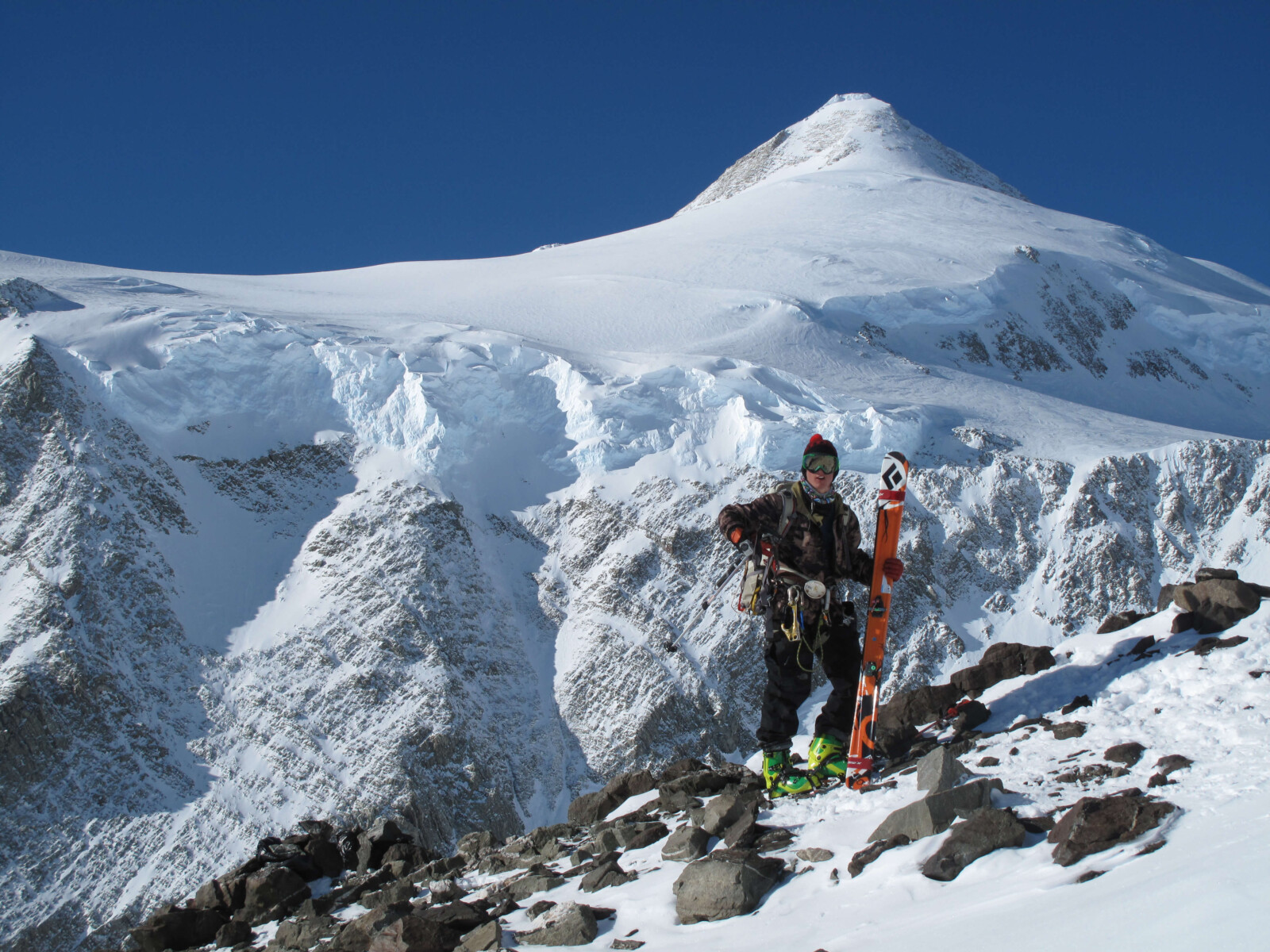
Mount Vinson stands at 16,050 ft / 4,892 m and is the highest point on the Antarctic continent — and one of the coveted Seven Summits. It lies deep in the interior of West Antarctica, in the Sentinel Range of the Ellsworth Mountains, approximately 700 nautical miles / 1,300 km from the South Pole. The mountain was first summited on December 18, 1966 — remarkably recent given its prominence — and remained infrequently visited for years due to the extreme logistical challenges of reaching it. Today, access is made possible exclusively through ALE — Antarctic Logistics & Expeditions, the only logistics provider operating flights into this remote region. For details on ALE’s operations, see antarctic-logistics.com.

The Route — Branscomb Shoulder

The standard ascent follows the Branscomb Shoulder Route — the only regularly climbed line on the mountain. From Vinson Base Camp at 6,900 ft / 2,100 m on the Branscomb Glacier, the route climbs the gradual lower glacier to Low Camp at 9,000 ft / 2,743 m, then ascends steeply via fixed ropes on 35–45 degree snow slopes up the northern end of Branscomb Ridge to High Camp at 12,400 ft / 3,780 m. The final push climbs the summit plateau via a broad ridge for 3,650 ft / 1,112 m of gain over 9 miles / 14 km round trip. The summit views stretch across the Ellsworth Range and the Ronne Ice Shelf — one of the great panoramas available to any mountaineer on earth.

The BBE Approach

At Benegas Brothers Expeditions, we have been guiding at extreme altitude and in extreme environments for over 35 years. Vinson sits at a relatively modest altitude, but the environment surrounding it is among the most demanding on the planet. Cold injury prevention, equipment management at extreme temperatures, and the psychological demands of true remoteness require the same expert attention we bring to Everest and Aconcagua. Our IFMGA-certified guides operate under the same philosophy here as everywhere: small teams, real preparation, and genuine personal attention.

With a maximum of four climbers per team, every participant has direct, consistent access to guide leadership throughout the expedition — no averaging, no crowd management, no one left behind.

We are not actively booking fixed departures at this time but welcome custom and private expedition inquiries. See the Dates & Prices section for details on how to begin planning.

~18 Days  ·  Punta Arenas, Chile → Union Glacier, Antarctica → Vinson Base Camp → Summit → Return

Weather is the controlling factor on all Antarctic expeditions. Flights are weather-dependent at every stage. The itinerary below reflects a standard sequence — actual timing is always dictated by Antarctic conditions. Extra weather days are built into the program and should be expected.

Days 1–3: Arrive Punta Arenas, Chile  ·  Sea level  ·  PUQ — Presidente Carlos Ibáñez del Campo International Airport

Arrive in Punta Arenas — the southernmost city of significance in the world, on the Straits of Magellan in Chilean Patagonia. This is the staging point for all Antarctic expeditions operated by ALE. Two to three days are spent here for gear checks, group briefings, and ALE logistics orientation. You will complete all ALE documentation, undergo a safety briefing, and weigh and check in all expedition baggage. The 50 lb / 22.7 kg personal gear limit for the Ilyushin IL-76 flight to Antarctica is strictly enforced — no exceptions. Store ‘city’ clothes and unneeded items at the hotel. Explore Punta Arenas — the old wool port has genuine character, good restaurants, and a fascinating Antarctic heritage in its museums.

Overnight: Hotel, Punta Arenas

Day 4: Fly Punta Arenas → Union Glacier, Antarctica  ·  2,600 ft / 793 m  ·  ~4.25 hr flight

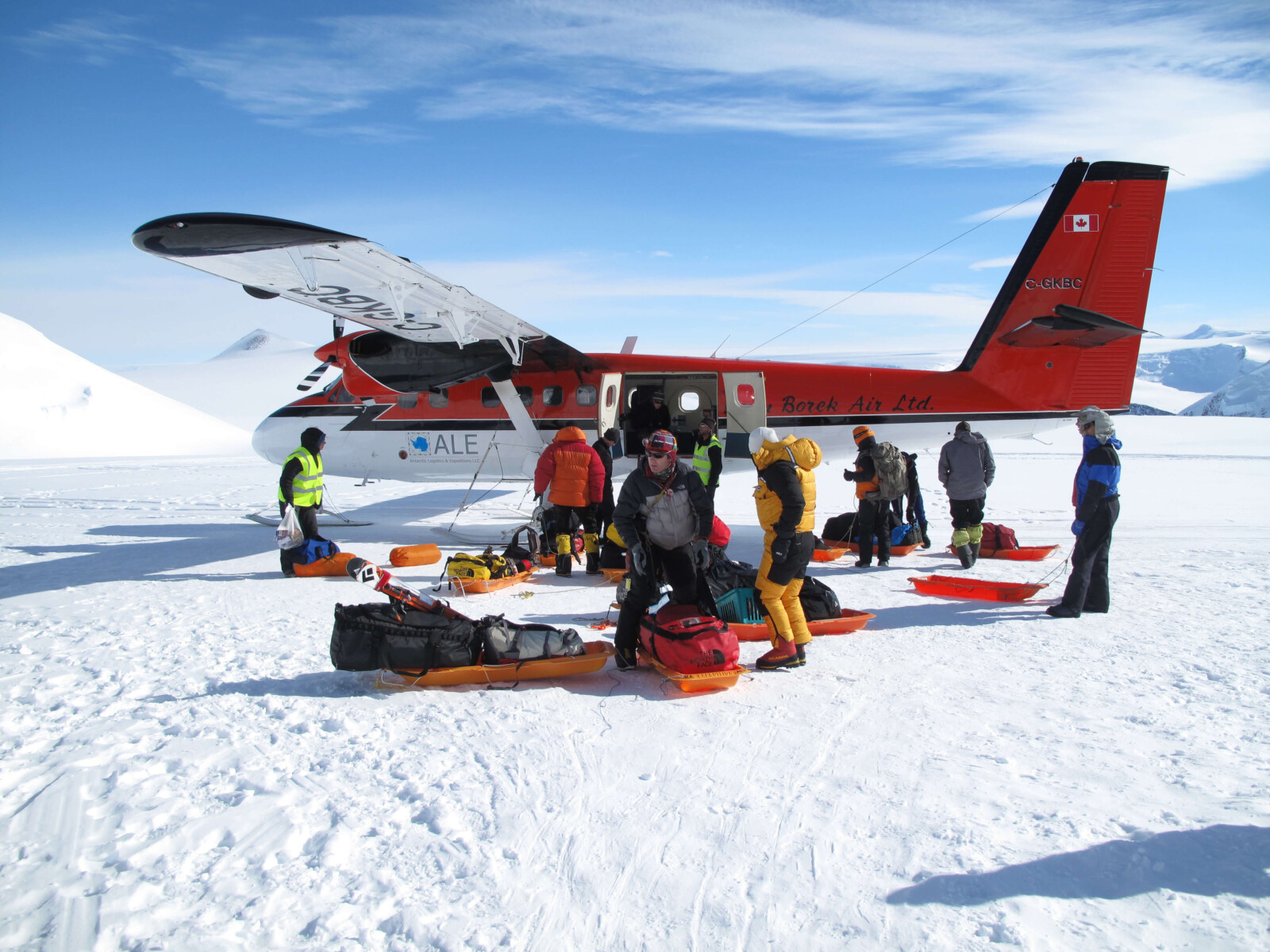
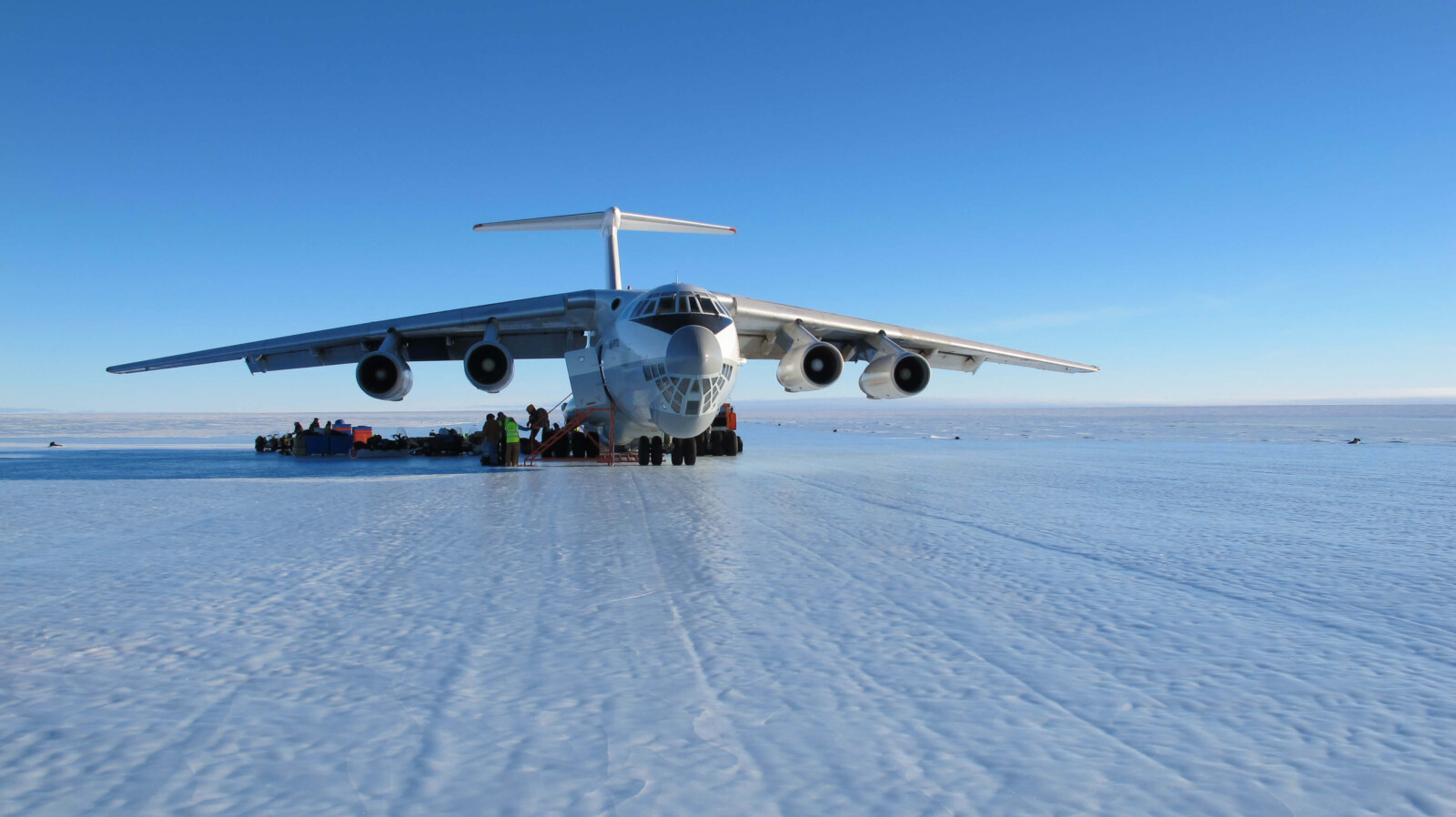
When weather permits departure, you will be notified approximately two hours before pickup. Dressed in expedition layers for the cold arrival, we proceed to the airport and board ALE’s Ilyushin IL-76 TD cargo jet — a heavy-lift aircraft originally designed for remote Soviet logistics. The flight covers approximately 2,600 miles / 4,200 km over the Drake Passage and into the interior of West Antarctica, landing on ALE’s blue-ice runway at Union Glacier. From Union Glacier Camp — ALE’s private logistics hub and the only camp of its kind in Antarctica — we transfer our equipment to a ski-equipped De Havilland DHC-6 Twin Otter for the final one-hour flight to Vinson Base Camp at 6,900 ft / 2,100 m on the Branscomb Glacier.

Overnight: Vinson Base Camp — 6,900 ft / 2,100 m

Day 5: Base Camp Acclimatization & Preparation  ·  6,900 ft / 2,100 m

Rest and recover after several days of travel. In the quiet surroundings of Vinson Base Camp, we begin to appreciate the extraordinary scale and silence of the Antarctic interior. Guides conduct a final gear inspection, review rope systems and crampon technique, and orient the team to the route ahead. The 24-hour daylight of the Austral summer means you can climb at any hour — sleep schedules adjust to Antarctic rhythm.

Overnight: Vinson Base Camp — 6,900 ft / 2,100 m

Day 6: Carry to Low Camp / Base Camp to Low Camp  ·  Gain: +2,100 ft / +640 m  ·  Distance: 5.5 miles / 9 km  ·  4–6 hrs

We follow the gradual rise of the Branscomb Glacier toward Low Camp at 9,000 ft / 2,743 m. The gentle terrain is ideal for sled-hauling — we distribute group equipment across sleds to lighten pack loads. Crevasse hazard is present on this section; we travel roped throughout. Depending on conditions and team performance, we may overnight at Low Camp or cache equipment and return to Base Camp to sleep lower.

Overnight: Low Camp: 9,000 ft / 2,743 m  ·  or return to Base Camp

Days 7–8: Low Camp — Carry to High Camp / Acclimatization  ·  Low Camp: 9,000 ft / 2,743 m  ·  High Camp: 12,400 ft / 3,780 m

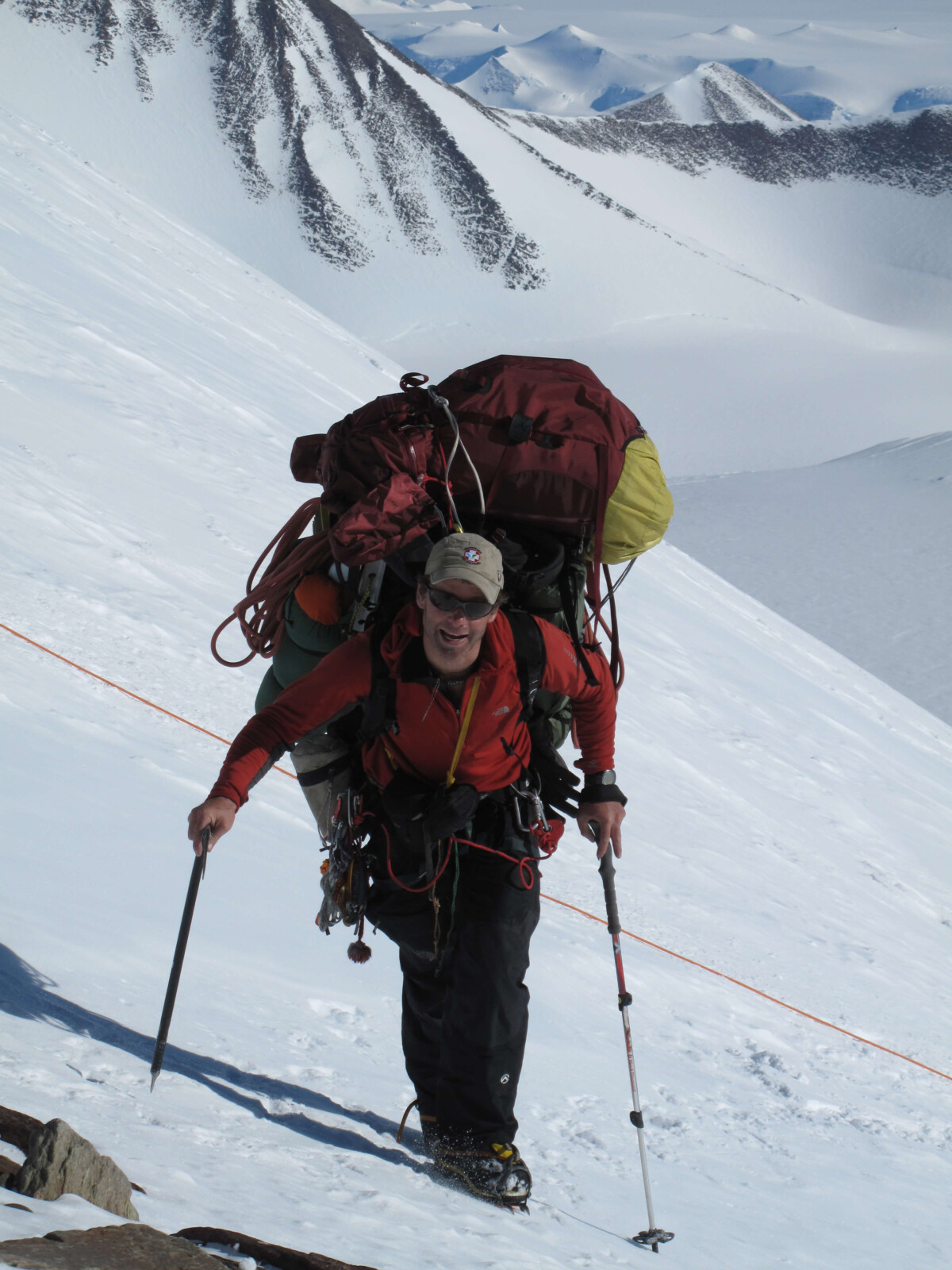
From Low Camp we ascend the steeper upper section of the route — the broad spur at the northern end of Branscomb Ridge. Fixed ropes assist the team on 35–45 degree slopes for approximately 3,000 ft / 914 m of gain. Views back down the Branscomb Glacier are exceptional. At the top of the fixed lines, 90 minutes of gentler terrain leads to High Camp at 12,400 ft / 3,780 m. On a first carry we cache equipment and return to Low Camp or Base Camp to sleep lower — a deliberate acclimatization strategy. On the subsequent move-up day we carry full loads to High Camp and establish our summit camp.

Overnight: Low Camp or Base Camp (carry day)  ·  then High Camp: 12,400 ft / 3,780 m

Day 9: Rest & Acclimatization at High Camp  ·  12,400 ft / 3,780 m

A structured rest day before the summit push. Eat well. Hydrate. Check all summit equipment and layers. Guides review the summit route and confirm strategy based on current weather forecasting. High Camp facilities are more basic than camps below — meals are prepared in tents and conditions can be cold and exposed to wind.

Overnight: High Camp — 12,400 ft / 3,780 m

Day 10: Summit Day — Mount Vinson  ·  16,050 ft / 4,892 m  ·  Gain: +3,650 ft / +1,112 m  ·  9 miles / 14 km round trip  ·  10–14 hrs

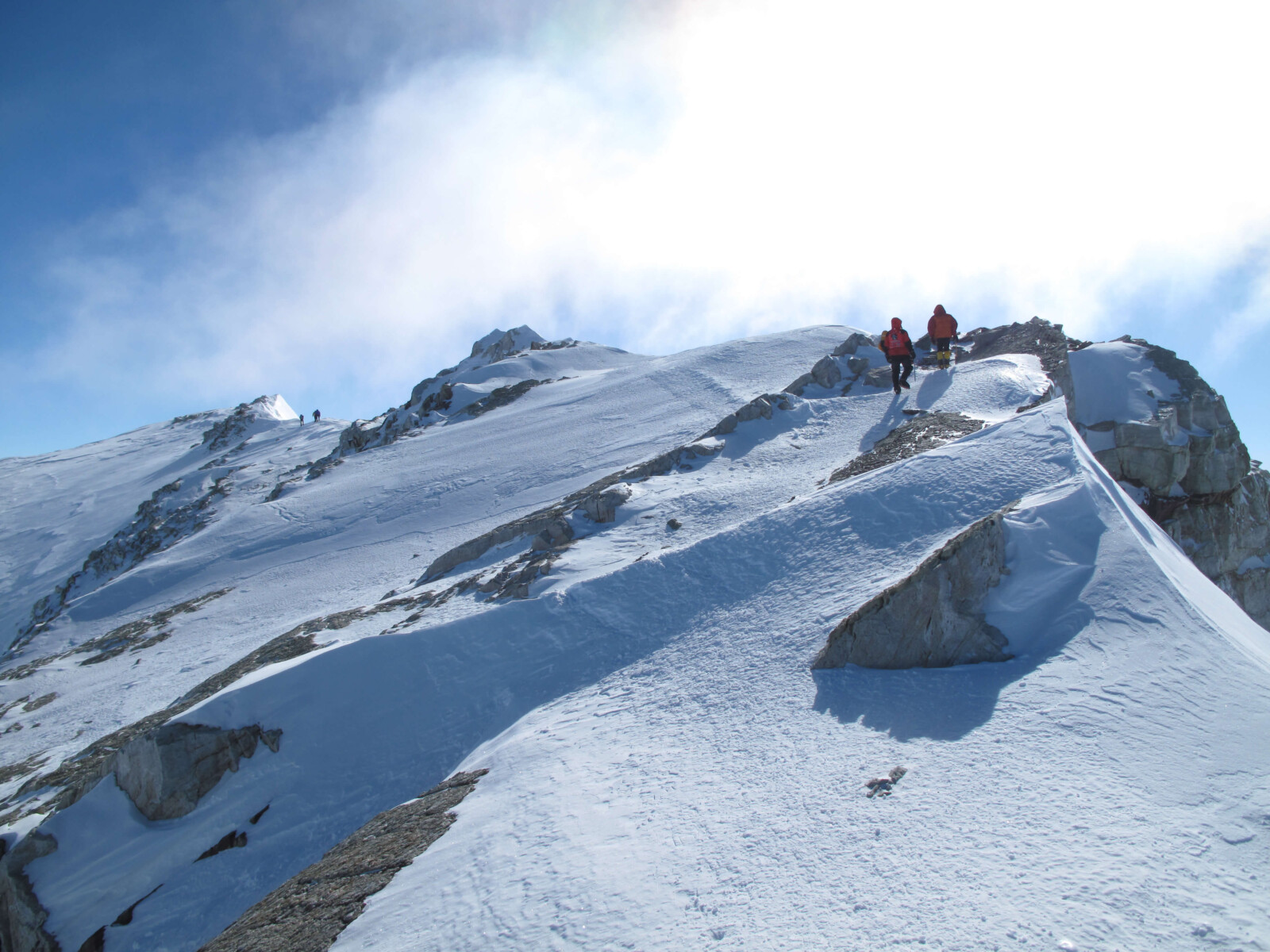
The summit push begins from High Camp — timing is determined by weather forecasting rather than a fixed clock. We traverse the summit plateau on the broad upper ridge, passing Branscomb Peak before the final Vinson summit pyramid comes into view. The terrain above High Camp is exposed but non-technical, requiring steady pacing and full cold-weather management. From the summit at 16,050 ft / 4,892 m, the Ellsworth Range and the Ronne Ice Shelf stretch to every horizon. The sky curves visibly at this latitude. After summit photographs and a moment to absorb the place, we descend carefully back to High Camp, then continue down to Low Camp or Base Camp.

Overnight: High Camp or Low Camp after descent

Days 11–12: Descend to Base Camp  ·  6,900 ft / 2,100 m

We descend from High Camp through Low Camp back to Vinson Base Camp in a single sustained effort — retracing the fixed ropes and the lower glacier. The expedition is complete. At Base Camp we rest, eat, pack out all gear and waste, and wait for the Twin Otter transfer window.

Overnight: Vinson Base Camp — 6,900 ft / 2,100 m


Days 13–14: Transfer to Union Glacier → Fly to Punta Arenas

When weather permits, the Twin Otter returns us to Union Glacier. From Union Glacier, the Ilyushin IL-76 carries us back to Punta Arenas — the 4.25-hour flight back over the Drake Passage and to the first trees, warmth, and hot food in weeks. A final night in Punta Arenas marks the close of the expedition.

Overnight: Punta Arenas, Chile

Days 15–18: Weather Reserve / Buffer Days

Antarctic weather is the governing force of every expedition timeline. Delays at both the departure and return stages are common and should be expected. These buffer days are built into the program specifically to absorb weather holds at Union Glacier or Punta Arenas — they are not padding. Book all onward travel with this flexibility in mind: do not book flights from Punta Arenas or Santiago on the day of your scheduled return. Budget for potential extra hotel nights in Punta Arenas.

Overnight: Punta Arenas (as needed)

Vinson’s summit sits at a relatively modest 16,050 ft / 4,892 m — well below the altitude of Aconcagua or Kilimanjaro. Do not mistake moderate altitude for a moderate challenge. The environment is the challenge, and it is among the most extreme on earth.

What Vinson Actually Demands

The technical difficulty of the Branscomb Shoulder Route is intermediate — fixed ropes assist the steepest sections, and no advanced ice climbing skills are required. What Vinson truly demands is:

  • Cold tolerance — temperatures of -40°C / -40°F with wind chill are realistic at High Camp and on summit day. This is not a figurative number. Frostbite and cold injury are genuine risks and your primary adversary on this mountain.
  • Psychological endurance — Antarctica is genuinely remote, genuinely isolated, and genuinely unforgiving. No road leads here. No rescue is fast. Your team, your guide, and your preparation are what you have.
  • Gear competence — at these temperatures, failing to correctly layer, failing to manage a wet base layer, or failing to protect exposed skin can turn a manageable day into a medical emergency. You must be practiced with your cold-weather system before you arrive.
  • Fitness — High Camp days involve load carries of 40–50 lb / 18–23 kg over steep terrain in cold and wind. Summit day is 10–14 hours of sustained movement in extreme conditions.
  • Flexibility — Antarctic weather is ungovernable. Weather holds of several days are common at every transition point. The ability to wait patiently, stay positive, and perform when the window opens is as important as any technical skill.


Required Experience

Previous high-altitude or cold-weather expedition experience is strongly recommended. Participants should have:

  • Solid glacier travel skills: crampon technique, rope team movement, crevasse awareness
  • Experience with fixed-line ascending on steep snow — 35–45 degree slopes
  • Prior experience camping and performing in temperatures below -20°C / -4°F
  • The ability to haul a loaded sled and carry a heavy pack over multiple consecutive expedition days

Vinson is frequently used as a Seven Summits objective by experienced alpinists who have completed peaks like Aconcagua, Denali, Kilimanjaro, Elbrus, or the Carstensz Pyramid. It is also a standalone expedition for serious cold-climate adventurers. Prior experience on any BBE program provides excellent preparation.

Fitness

Train specifically for loaded uphill movement in cold conditions. Key benchmarks:

  • Multi-day back-to-back effort days carrying 35–45 lb / 16–20 kg — the sled and carry days are the hardest movement days
  • Cold-exposure training — winter hiking, cold-weather camping, or similar sustained outdoor activity in freezing conditions
  • Sustained cardiovascular output for 10–14 hours — summit day is a long, cold, continuous effort

Begin structured training at least 4–6 months before departure. A training plan is provided to every confirmed climber.

Mental Preparation

Antarctica is unlike anywhere else a climber goes. The scale is total. The silence is absolute. The light never changes. The remoteness is not abstract — it is physical. Your guide team has been here before. The preparation they give you is designed for exactly this environment. Trust the system and arrive ready to meet the place on its own terms.

Expect -15°C to -30°C (-5°F to -22°F) on typical climbing days in good conditions. When storms move in and katabatic winds hit the upper mountain, effective temperatures with wind chill can reach -40°C / -40°F. It is not the altitude that will test you on Vinson — it is the cold. Gear selection and layering discipline are your primary defense.

All flights to Antarctica operate through ALE — Antarctic Logistics & Expeditions — the only logistics provider with access to this remote region. The intercontinental leg is a 4.25-hour flight from Punta Arenas, Chile aboard a heavy-lift Ilyushin IL-76 cargo jet, landing on ALE’s blue-ice runway at Union Glacier. From Union Glacier, a ski-equipped Twin Otter carries climbers the final hour to Vinson Base Camp. All flights are weather-dependent — departure windows are typically given 2 hours in advance. Delays of several days are common. Do not plan tight connections anywhere in this travel chain.

The Branscomb Shoulder Route is non-technical by mountaineering standards — no advanced ice climbing or rock climbing is required. The steepest sections (35–45 degrees) are assisted by fixed ropes; you need to be competent using an ascender with mittened hands in extreme cold. Solid glacier travel skills and crampon proficiency are required. What distinguishes success on Vinson is not technical skill but cold management, load-carrying fitness, and the ability to perform after days of accumulated effort in an extreme environment.

The climbing season runs November through January — the Austral summer — when 24-hour daylight and the most stable (if still extreme) weather conditions prevail. Outside this window, Antarctica is uninhabitable for all practical purposes, and ALE does not operate flights. This makes expedition planning lead times critical: BBE programs must be coordinated with ALE’s published flight schedules, which allocate fixed slots per season. Space is genuinely limited.

The personal gear allowance on the Ilyushin IL-76 is 50 lbs / 22.7 kg. Additional weight is typically charged at $30 per pound with a maximum of 66 lbs / 30 kg — no exceptions. This is a hard operational constraint driven by aircraft capacity. Pack thoughtfully and ruthlessly. Bring expedition boots and insulated down suit in your carry-on — these items cannot be replaced in Antarctica if checked luggage is lost or delayed.

ALE maintains the only operational infrastructure in this region of Antarctica. Emergency evacuation is possible via Twin Otter from Base Camp or from camps on the mountain in suitable weather, connecting to the Union Glacier medical facility and the IL-76 for evacuation to Punta Arenas. Weather governs all response timelines. Evacuation insurance covering remote Antarctic operations is mandatory — standard policies do not cover this environment. See the Before You Go section.

Yes. Vinson is widely considered the most logistically complex and expensive of the Seven Summits, though its technical difficulty is lower than Denali and comparable to Kilimanjaro on the Normal Route. For Seven Summits completionists, Vinson is often saved for later in the sequence because of cost and logistical complexity. For those targeting the Explorer’s Grand Slam (Seven Summits + both Poles), Vinson pairs naturally with an ALE South Pole Last Degree ski program — contact BBE to discuss a combined program.

Mount Vinson is the most expensive of the Seven Summits to climb — primarily because of ALE’s flight and logistics fees, which are fixed costs outside BBE’s control. Industry pricing for guided Vinson expeditions typically ranges from $50,000–$55,000+ USD depending on group size, guide ratio, and included services. BBE structures pricing around private group size. Contact us directly for a current quote — all pricing is provided as part of a custom program proposal.

Deposits are non-refundable due to ALE logistics fees committed at booking. Remaining balance refund schedule: 120+ days: partial refund less unrecoverable ALE costs; 90–119 days: partial refund reviewed individually; less than 90 days: no refund. Trip cancellation insurance is mandatory. All cancellations must be submitted in writing.

Passport

Your passport must be valid for at least 6 months beyond your travel dates and have at least two blank pages. Both Chile and Antarctica require it for entry and ALE documentation. No visa is required for Antarctica — no country owns the Antarctic continent. However, you transit through Chile, and most nationalities (including US, EU, UK, Canadian, and Australian citizens) do not require a visa for Chile for stays under 90 days. Non-qualifying nationalities must arrange Chilean visas in advance — confirm your requirement at least 90 days before departure.

ALE Documentation — Required

ALE requires all climbers to sign and submit their own registration documents, medical forms, and liability waivers before being authorized to board their flights. BBE coordinates this process for all clients and provides the full ALE documentation package at booking. Passport details are required at booking to initiate this process.

Rescue & Evacuation Insurance — Mandatory

Trip evacuation insurance is mandatory — required by ALE as a condition of boarding their aircraft. Your policy must cover:

  • Emergency evacuation from remote Antarctic terrain
  • Helicopter and aircraft evacuation at the altitudes and conditions encountered on Mount Vinson
  • Medical repatriation from Chile to your home country
  • Minimum $300,000 USD combined coverage; $500,000 recommended given the logistical complexity of Antarctic evacuation

Standard travel policies do not cover Antarctic mountaineering. We recommend Global Rescue (globalrescue.com) — purchase the High-Altitude Adventure add-on and confirm coverage explicitly extends to Antarctic operations. Your policy must run for two weeks beyond the scheduled end of your trip to account for weather-related extension. Trip cancellation insurance is also strongly recommended.

Health

No vaccinations are required for Chile or Antarctica. There are no known disease risks in Antarctica itself. Consult a physician about any chronic conditions that could be affected by cold, exertion, or isolation. All climbers undergo a BBE pre-departure health screening. Carry personal prescription medications in your carry-on with supply for the full trip plus a 7-day buffer for weather delays.

Your staging point is Punta Arenas, Chile — Presidente Carlos Ibáñez del Campo International Airport (PUQ). Arrive in Punta Arenas by Day 1 of the expedition — no later than 2:00 PM. Missing this deadline may result in missing the expedition with no refund.

Getting to Punta Arenas

No direct international flights serve Punta Arenas from North America or Europe. All itineraries route through Santiago (SCL):

  • LATAM Airlines: frequent Santiago–Punta Arenas service, approximately 3.5 hours; most common routing
  • Sky Airline: competitive domestic Chile fares, same route
  • JetSmart: budget option on the Santiago–PUQ route

Book domestic Chile flights as early as possible — the Antarctic season generates high demand on this route from November through January. Arrive in Santiago with at least one full buffer day before your Punta Arenas connection — international flight delays compounded with a domestic miss can remove you from the expedition.

Departure from Punta Arenas

Book flexible return tickets for all flights departing Punta Arenas — weather holds at Union Glacier are common and can extend your stay by several days. Do not book non-refundable onward connections. Budget for 2–5 extra nights in Punta Arenas as a contingency. Hotels in Punta Arenas regularly host expedition teams and are experienced with last-minute extensions. BBE will coordinate your return timeline as conditions evolve.

Baggage

The Ilyushin IL-76 to Antarctica enforces a strict 50 lb / 22.7 kg personal gear allowance. Additional weight is $30 per pound up to a maximum of 66 lbs / 30 kg — beyond that, items cannot board. Pack your expedition parkas, insulated pants, and boots in your carry-on — these cannot be replaced in Antarctica if lost. Leave all ‘city’ clothing at your Punta Arenas hotel for retrieval after the expedition.

Punta Arenas — Days 1–3 and Return

Punta Arenas hotels are accustomed to hosting Antarctic expeditions. BBE coordinates accommodation at a well-located property in the city centre — comfortable rooms, secure gear storage, reliable Wi-Fi, and proximity to gear shops and restaurants. City clothing and unneeded personal effects are stored securely at the hotel during the Antarctic leg.

Vinson Base Camp — 6,900 ft / 2,100 m

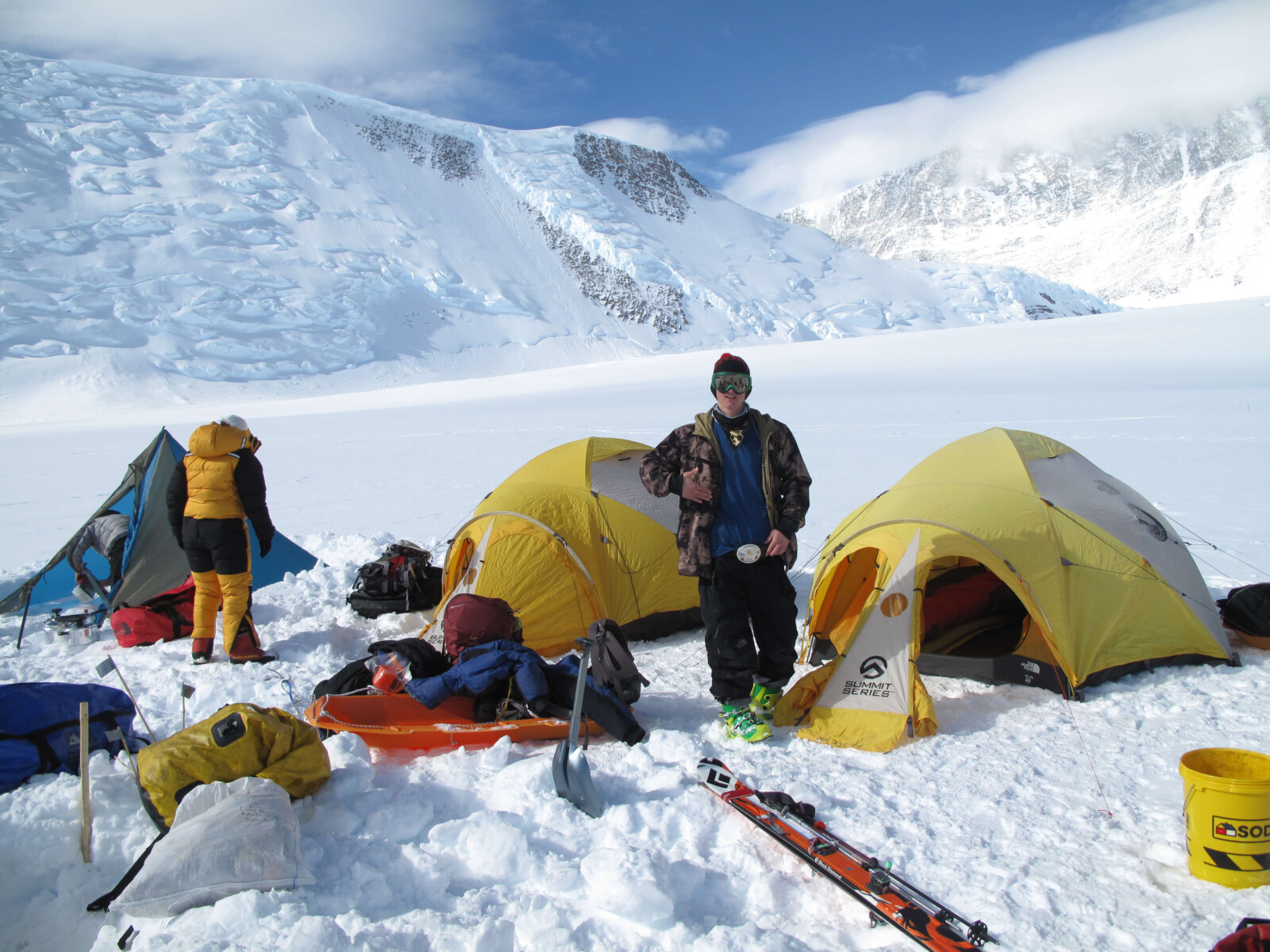
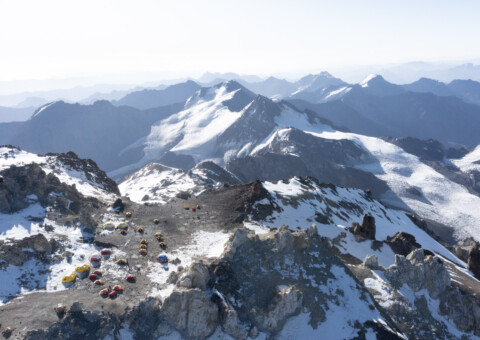
ALE maintains a staffed and fully equipped Base Camp on the Branscomb Glacier. Facilities include large Weatherhaven insulated tents serving as an operations center and heated dining area for guided clients, 4-season Mountain Hardwear Trango 3.1 expedition tents for sleeping, and chef-prepared meals with fresh ingredients when resupply allows.

Low Camp — 9,000 ft / 2,743 m

Expedition tents set up and managed by the BBE guide team. Guides construct a wind-protected cooking and dining shelter. Cold management at this camp is more demanding than at Base Camp — temperatures drop significantly with elevation gain.

High Camp — 12,400 ft / 3,780 m

More exposed and more basic. Expedition tents in the most wind-protected positions available. Meals are prepared in tents using stove systems — simple, calorie-dense, hot food. The wind at High Camp is the dominant environmental factor. Sleeping bag rated to -40°C / -40°F is mandatory for High Camp nights.

Your clothing and equipment at this temperature are not comfort items — they are life safety systems. Gear failure at -40°C / -40°F in a remote Antarctic environment has no tolerance margin. Arrive with gear that has been tested and is fully functional. A complete, itemized gear list is provided to every confirmed climber.

Boots — Most Critical Item

Double or triple mountaineering boots rated for extreme cold — -40°C / -40°F or colder. Recommended: La Sportiva G2 Evo, Baffin Impact, or Millet Everest Summit GTX. Single-layer boots are insufficient. Bring boots in your carry-on — replacements are not available in Antarctica.

Sleeping System

Sleeping bag rated to -40°C / -40°F minimum for High Camp. Expedition-weight models: Western Mountaineering Puma Super MF, Marmot CWM -40, or North Face Inferno -40. A closed-cell foam pad under your inflatable sleeping pad is required — cold conducts through the ground efficiently at these temperatures.

Clothing System — Extreme Cold

Summit temperatures combine thin air, katabatic wind, and direct cold — manage them systematically:

  • Base layer: heavyweight merino wool or synthetic — no cotton at any layer
  • Mid layer: heavyweight fleece or softshell; consider a one-piece expedition suit (e.g., Marmot Speed Light) as a mid-layer option for sled days
  • Insulation: heavyweight down or synthetic expedition parka — rated minimum -30°C / -22°F (e.g., Mountain Hardwear Absolute Zero, Feathered Friends Helios)
  • Outer shell: waterproof/windproof hardshell jacket and pants — Gore-Tex or equivalent, fully sealed seams
  • Down suit / expedition parka: for High Camp and summit push — your single most important insulation item
  • Gloves: liner gloves + mid-weight insulated gloves + expedition mitts rated to -40°C (e.g., Black Diamond Mercury Mitts, Outdoor Research Alti Mitts) — always have mitts accessible
  • Face: balaclava covering nose and mouth; goggles with 100% UV protection; ColdAvenger expedition balaclava recommended for wind protection on summit day

Technical Equipment

  • 12-point crampons — step-in or hybrid, compatible with your boots
  • Ice axe — 60–70 cm general mountaineering; leash required for glacier travel
  • Ascender / jumar — for fixed rope sections on the Branscomb Ridge
  • Harness; helmet; locking carabiners (×4); prusik cords
  • Trekking poles with large baskets — essential for sled-hauling days

Sled & Pack

Expedition sled for gear transport on the lower glacier — provided by BBE. Personal summit pack 25–35L. Expedition duffel for base camp equipment — 70–90L, must close completely and withstand aircraft cargo handling.

Lighting & Comfort

24-hour daylight during the climbing season means a sleep mask is essential for rest. Bring a 300+ lumen headlamp with lithium batteries as backup — lithium batteries perform in extreme cold; alkaline do not. Eye protection: Category 4 glacier glasses with side shields mandatory at all elevations.

Group Equipment — Provided

Ropes, anchors, snow pickets, group stoves and fuel, group tents, group first aid kit, satellite communications, and emergency oxygen are provided by BBE. You do not need to bring technical group hardware.

24-Hour Daylight

Antarctica’s Austral summer delivers continuous daylight throughout the climbing season. This is disorienting — your body clock loses its normal cues. A quality sleep mask is not optional. Guides time rest periods deliberately based on weather windows rather than clock time. Prepare to sleep at unconventional hours and climb when conditions are right, regardless of what the clock says.

Food & Hydration

At Base Camp, ALE provides chef-prepared meals for guided parties — hot, nutritious, and morale-building. At Low Camp and High Camp, meals are guide-prepared in tents: soups, hot drinks, oatmeal, pasta, and calorie-dense dehydrated meals. Eat even when you are not hungry. Cold increases caloric demand significantly. Hydration in dry polar air is also critical — minimum 3–4 liters per day. Water is produced by melting snow using stove systems at all camps.

Communication

No cell service in Antarctica. Satellite communications are carried by the guide team throughout. BBE maintains regular check-in schedules with the home office and with ALE. A personal Garmin inReach or SPOT satellite communicator is strongly recommended for direct communication with family — send check-ins rather than extended messages to conserve battery in the cold.

Cold Injury Prevention

Frostbite and frostnip are the primary medical risks on this expedition — not altitude, not technical terrain. The guide team monitors the team continuously for signs of cold injury. Daily self-checks of extremities — fingers, toes, nose, ears, and cheeks — are standard practice. At the first sign of whitening or numbness in any extremity, report immediately. Caught early, frostnip is treatable at camp. Unaddressed, it becomes frostbite. Wear gloves and mitts at all times above Base Camp.

In Chile, the local currency is the Chilean Peso (CLP). ATMs are widely available in Punta Arenas — withdraw cash on arrival for meals, tipping, and personal expenses. USD and major credit cards are accepted at hotels and most restaurants. In Antarctica, there are no services or transactions — bring nothing you expect to spend on the mountain.

Personal Budget Estimate for Punta Arenas

  • Hotel nights in Punta Arenas (3–5 nights + weather buffer): $150–$200 USD/night
  • Meals and drinks (pre- and post-expedition): $30–$80 USD/day
  • Personal expenses, gear supplements, and emergency cash: $500–$1,000 USD

Gratuities

Tips for the BBE guide team, ALE Base Camp staff, and support crew are not included in expedition pricing and are greatly appreciated.

Bring gratuity cash in pristine USD bills — Chilean banks and Antarctic staff prefer large-denomination clean bills. Tip at the conclusion of the expedition in Punta Arenas.

The Mount Vinson expedition operates as a private or custom program for all BBE departures. We are not currently running fixed-date group departures — all Vinson programs are built around your group, your schedule, and your objectives.

  • Private 1:1 expedition with a BBE IFMGA guide
  • Private group expeditions — 2 to 4 climbers
  • Seven Summits consulting — advice on sequencing, logistics, and preparation across all seven peaks
  • Explorer’s Grand Slam combination program — Vinson + ALE South Pole Last Degree ski option
  • Filming, media, and brand projects — BBE has supported major Antarctic filming operations

Contact climbing@benegasbrothers.com to begin the conversation. Include your preferred season, group size, and any Seven Summits or Antarctic objectives you are working toward.

Expedition Pricing — Custom Quote on Inquiry

Mount Vinson is the most expensive of the Seven Summits to climb — primarily because of ALE’s fixed flight and logistics costs, which are outside BBE’s control and are charged per climber regardless of group size. Industry pricing for fully guided Vinson expeditions currently ranges from $50,000–$55,000+ USD per person depending on group size, services, and inclusions. BBE provides custom pricing for private programs based on group composition. Contact us for a current quote.

What Program Pricing Typically Includes

  • ALE intercontinental flight from Punta Arenas to Union Glacier and return (Ilyushin IL-76)
  • ALE Twin Otter flights Union Glacier ↔ Vinson Base Camp
  • ALE Union Glacier Camp use and logistics coordination
  • IFMGA-certified BBE guide for the full expedition
  • All group equipment: ropes, tents, stoves, sleds, group kitchen system
  • All meals and accommodation from arrival at Vinson Base Camp through return to Union Glacier
  • Satellite communications and emergency oxygen
  • Pre-trip preparation: training plan, gear consultation, ALE documentation coordination

What Is NOT Included

  • International flights to/from Santiago, Chile
  • Domestic Chile flights Santiago → Punta Arenas and return
  • Hotel nights in Punta Arenas (pre- and post-expedition)
  • Meals in Punta Arenas
  • Personal climbing and cold-weather gear — substantial investment required
  • Evacuation and trip cancellation insurance (mandatory)
  • Guide and staff gratuities
  • Extra hotel nights in Punta Arenas due to weather delays (budget for 2–5 nights)


Full Personal Budget Estimate (Beyond Program Fee)

  • International roundtrip flights to Santiago: $700–$1,500
  • Domestic Chile flights (Santiago ↔ Punta Arenas): $250–$600
  • Punta Arenas hotels (5–8 nights incl. weather buffer): $750–$1,600
  • Meals in Punta Arenas: $300–$600
  • Evacuation & trip cancellation insurance: $500–$1,000
  • Personal cold-weather gear (down suit, boots, sleeping bag, mitts): $2,500–$6,000
  • Technical climbing gear (crampons, ice axe, harness): $500–$1,200
  • Guide and staff gratuities: $500–$800
  • Emergency cash reserve: $500–$1,000
  • Personal expenses buffer: $300–$500

Total additional personal costs: ~$6,800–$13,800

The Mount Vinson climbing season runs from November through January — the Austral summer — when ALE operates its intercontinental air bridge from Punta Arenas to Union Glacier. Outside this window, access to the Ellsworth Mountains is not operationally possible.


Current Status

We are not actively booking fixed-date group departures for Mount Vinson at this time, and welcome custom and private expedition inquiries for the 2026–2027 season (November 2026 – January 2027). ALE flight allocations are limited and are secured on a first-come basis — serious interest should be expressed well in advance of the desired season.

How to Inquire

Contact BBE at climbing@benegasbrothers.com with:

  • Your preferred season or specific date range
  • Group size (1–4 climbers)
  • Your Seven Summits status or relevant expedition background
  • Whether you are considering the Explorer’s Grand Slam / South Pole combination

We will respond within 48 hours with availability, a program proposal, and current pricing.

Deposits & Payment

A 20% deposit is required to initiate ALE booking and secure your flight allocation. Because ALE charges a non-refundable logistics fee at reservation, deposits on Vinson programs are non-refundable from the moment of booking. Final balance is due 120 days before departure. Payment by wire transfer, ACH, or credit card.

Cancellation Policy

  • 120+ days before departure: partial refund less ALE’s non-refundable fees and unrecoverable costs
  • 90–119 days prior: partial refund reviewed individually based on committed costs
  • Less than 90 days: no refund

Trip cancellation insurance is mandatory — ALE requires proof before boarding. This policy protects your investment in the event of illness, injury, or unavoidable cancellation.

The Bottom of the World. The Top of the Continent.

Antarctica is not a destination. It is a reckoning. At 16,050 ft / 4,892 m, Mount Vinson stands on the coldest, most remote continent on earth — where temperatures hit -40°C and the nearest help is measured in flight hours. For those who are ready, nothing else compares.

Book Trip
Location:
Antarctica
Group:
4 people
Duration:
2 months
Skill:
Intermediate
Activities:
Expeditions, 7 Summits
Pricing

Pricing is a typical estimate, final quote will be provided after receiving your inquiry.

The Bottom of the World. The Top of the Continent.

Antarctica is not a destination. It is a reckoning. At 16,050 ft / 4,892 m, Mount Vinson stands on the coldest, most remote continent on earth — where temperatures hit -40°C and the nearest help is measured in flight hours. For those who are ready, nothing else compares.

Related Trips