Global Expeditions Nepal

Everest Base Camp Trek

18 or 23 days Group: 6-10 trekkers From $4,500 per Person

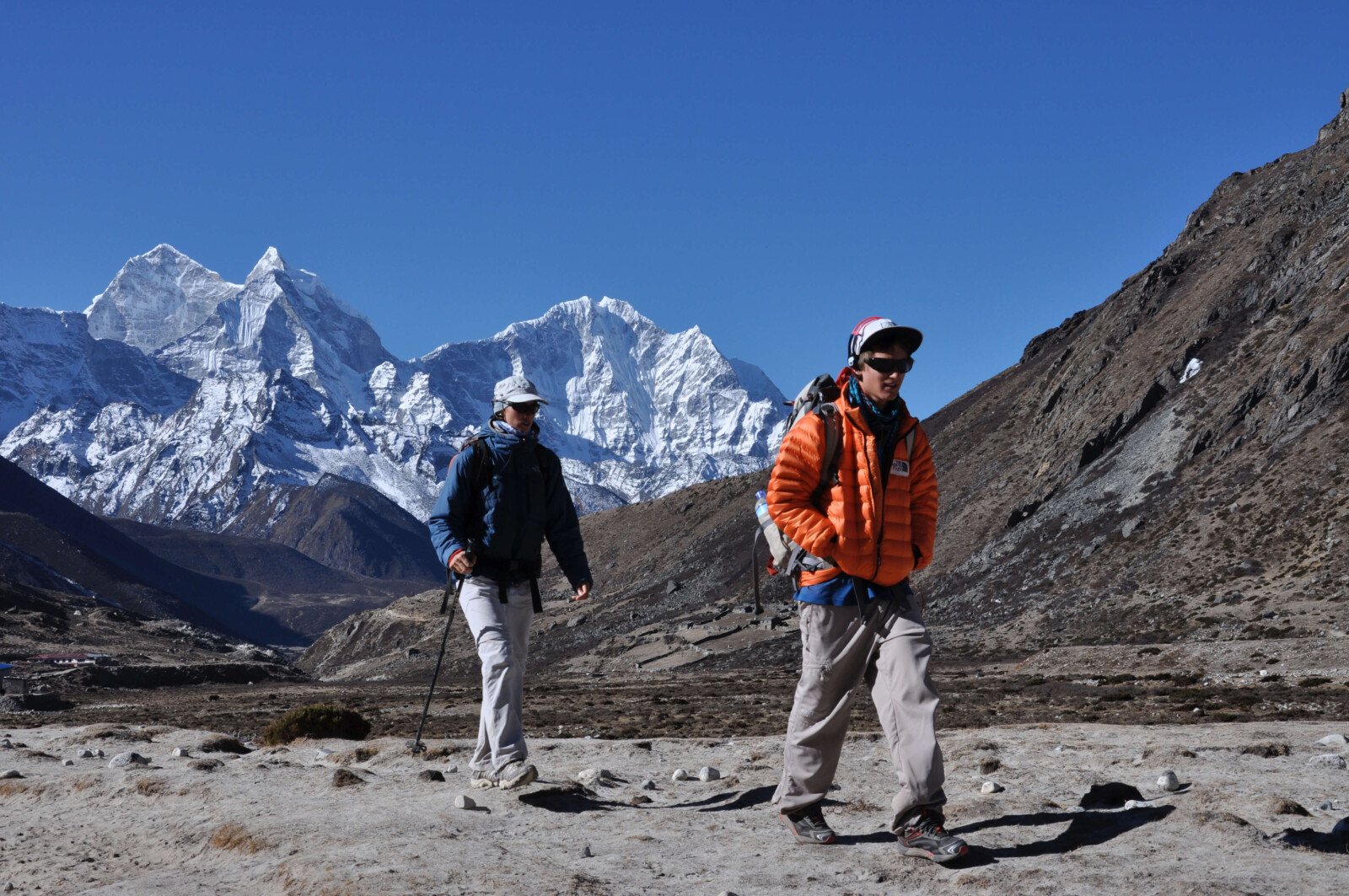
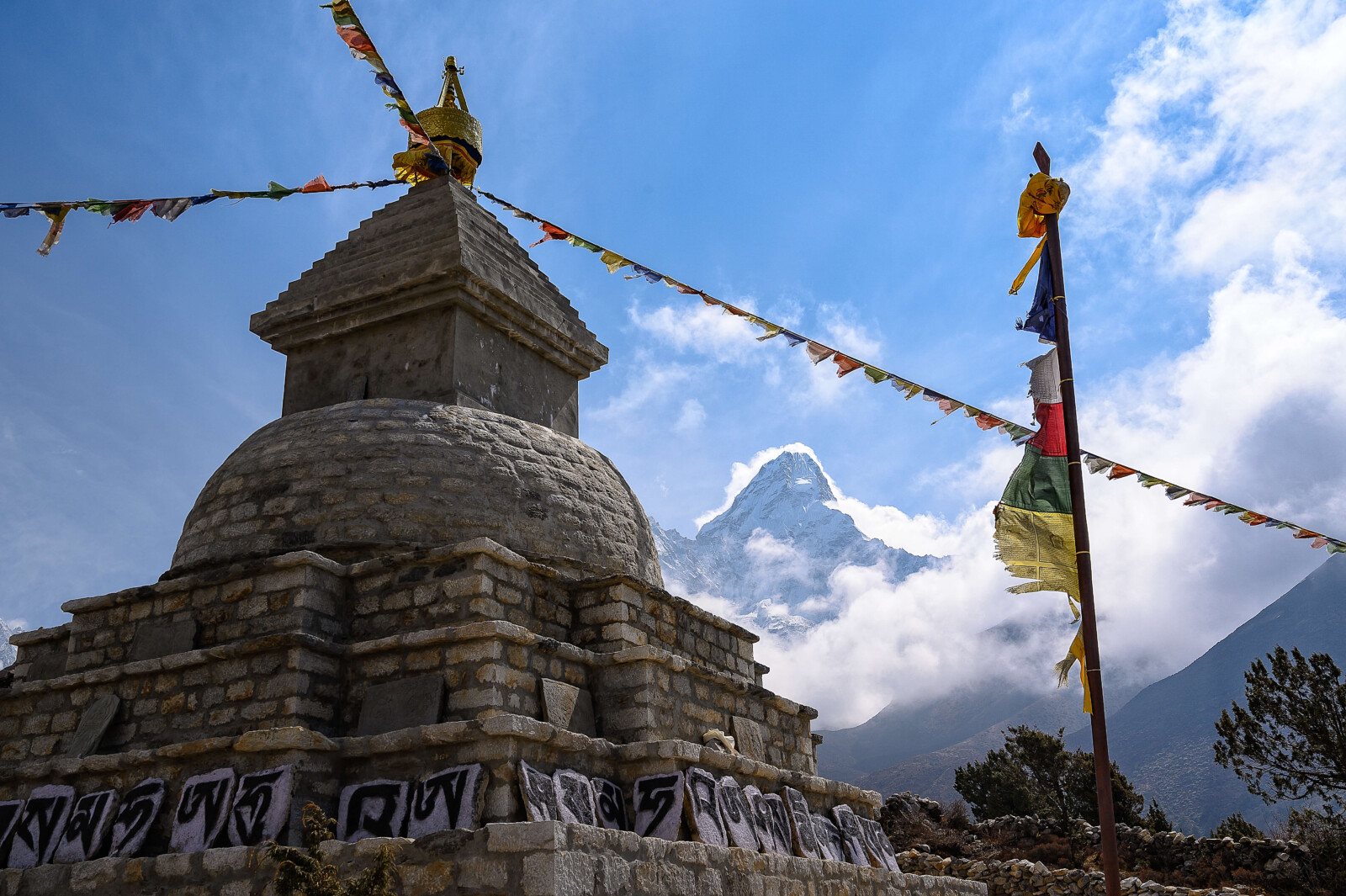
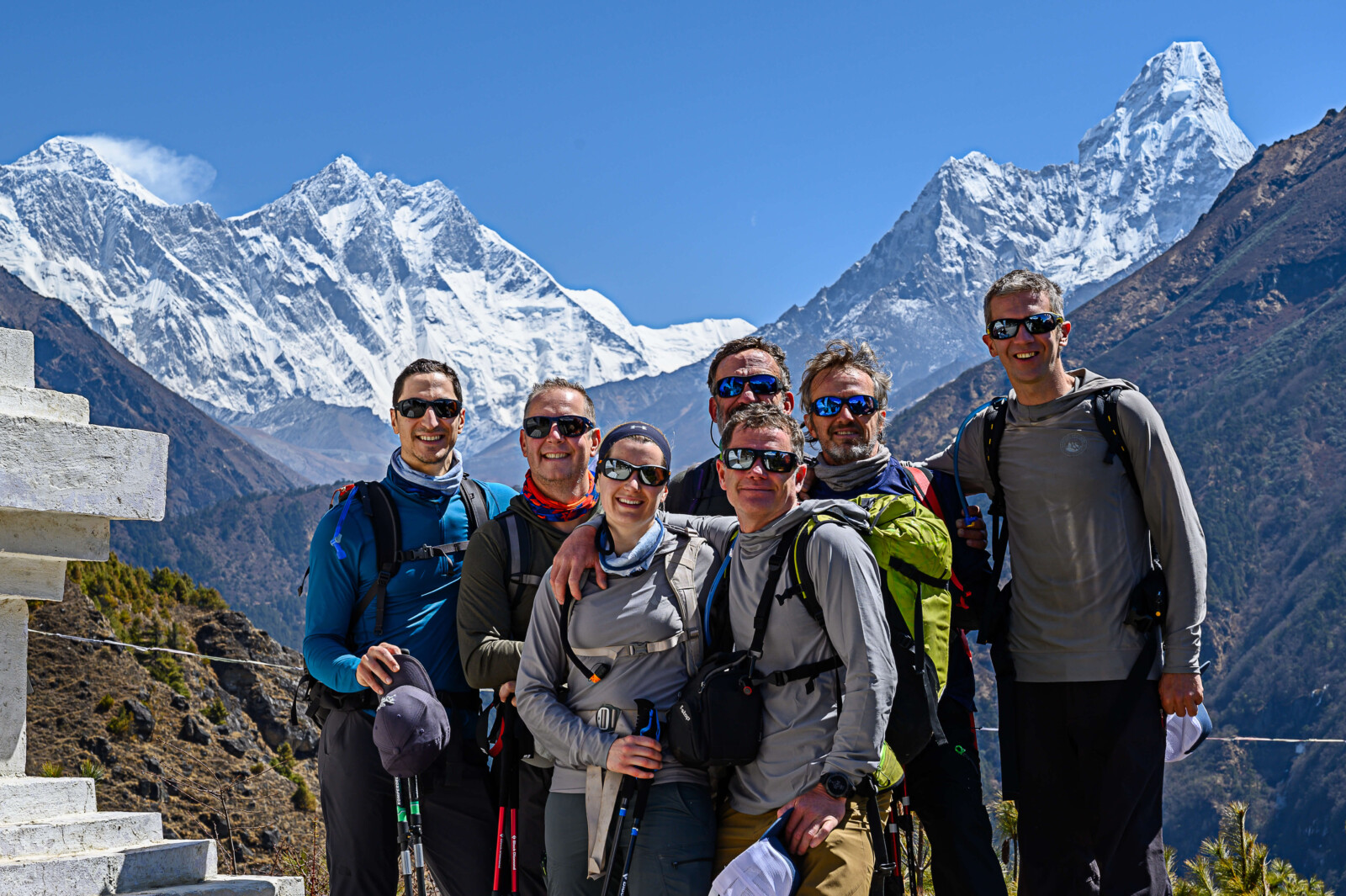
While the world’s greatest peaks — Everest, Lhotse, Nuptse, and Ama Dablam — characterize the mighty Khumbu Region, trekkers have the opportunity to explore from within its sacred valleys and picturesque villages, enjoying spectacular views of the high Himalaya’s unforgettable panoramas. Along the way, we are showered with impressions of ancient Tibetan Buddhism as we visit and learn from our friends living in these inspiring monastic communities.

The Everest Base Camp Trek is reasonable for the fit and enthusiastic. This journey into the heart of the sacred regions of the Khumbu offers a lifetime of impressions and reflections. Most days are nothing short of breathtaking while we trek amidst the Himalayan giants to the jingle of yak bells. Each corner turned reveals new views and perspectives that transport our minds deep into the world of these daunting and breathtaking peaks.

Why Trek with Benegas Brothers

Trekking in these regions with Benegas Brothers offers an experience of a lifetime. No other organization can provide the combination of expertise, committed and long-lasting relationships with local Nepalis, and the first-hand knowledge of the mountains and environment. Our walking days include much discourse on the peaks of the Everest region, the architecture of Buddhist shrines, and Sherpa Buddhism.

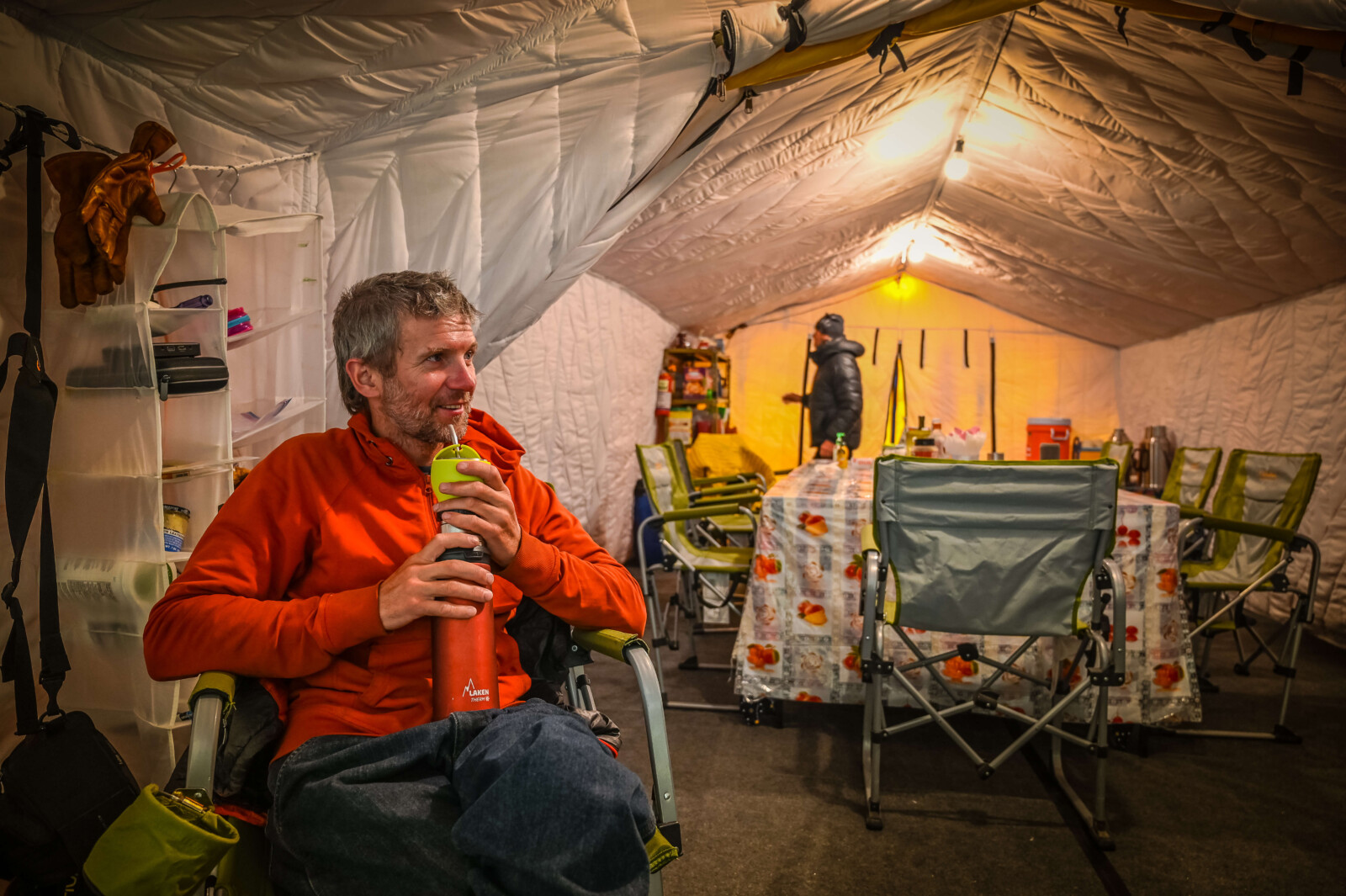
As with all our expeditions, we believe that you should be free to lose yourself in the world of the mountains and travel unfettered by the rigors of food preparation, lodging, and logistics. Benegas Brothers Expeditions offers the most comprehensive program available, utilizing a distinguished staff of Sherpas, base camp tents, and a diverse assortment of quality meals — some of the food being flown in from the US and Argentina.

“I have been climbing big mountains for 20+ years. Having been on multiple Himalayan expeditions, I will never consider another guide or outfitter other than BBE moving forward. They lead the pack from a logistics, infrastructure, food quality, personal attention, and safety perspective by a WIDE margin.” — James Walkley, Everest Expedition

The Lobuche East Extension

We also climb Lobuche East (20,075 ft / 6,119 m) — a great first Himalayan experience for any aspiring mountaineer and a perfect “next step” to other climbs. Lobuche East consists of moderate snow and ice climbing depending on conditions as we ascend to over 20,000 feet, and is open to all individuals in good physical condition who possess basic mountaineering skills: cramponing, ice axe arrest, roped travel, as well as self-care and efficiency techniques.

Tea Houses & Sherpa Villages

During the Everest Base Camp Trek we lodge in Sherpa villages, many of them remote, giving us a rare look into both traditional and monastic communities. Our lodging is in guest houses accessed through our close network of long-time Sherpa friends, with the belief that a sharing of cultures is paramount to our understanding of the world. While the tea houses are fairly simple by western standards, they are balanced by the warmth and tremendous support of the Sherpa people.

On the trail to base camp, all trekkers will have the opportunity for an exciting summit of their own on Kala Patthar (18,209 ft / 5,550 m) — one of the great viewpoints in the Himalaya, with many iconic Everest photographs taken from its summit. For more background on the region, see himalayantrust.org.

Trip Overview

  • Location: Khumbu, Himalaya, Nepal
  • Length: 18 Days (Trek Only)  ·  23 Days (Lobuche East Extension)
  • Skill Level: Beginner to Advanced, good fitness encouraged  ·  Basic mountaineering skills required for Lobuche East Extension
  • Primary Goals: Explore the Khumbu Region, learn about Sherpa culture, and experience life at an Everest expedition
  • Guide Ratio: 6:1 (Trek)  ·  2:1 (Lobuche East Extension)
  • Group Size: 6–10 trekkers

See the Is This Trip for Me? section for full fitness and experience requirements.
18-Day Trek  ·  Kathmandu → Lukla → Khumbu Valley → Everest Base Camp → Kathmandu

The itinerary is a guide, not a contract. Weather and acclimatization always drive final decisions — particularly around Lukla flights, which are weather-dependent.


Day 1: Arrivals in Kathmandu  ·  4,593 ft / 1,400 m

Arrival in Kathmandu. Private transfer to the Yak & Yeti Hotel — one of Nepal’s finest five-star properties — for two nights in shared rooms. Rest, acclimatize to the city, and prepare for the days ahead.

Overnight: Yak & Yeti Hotel, Kathmandu — 4,593 ft / 1,400 m

Day 2: Kathmandu City Tour  ·  4,593 ft / 1,400 m

Today we visit three of Kathmandu’s most iconic sacred sites: the Monkey Temple (Swayambhunath), Bodnath Stupa — one of the largest stupas in the world — and the Pashupatinath Temple, the most sacred Hindu temple in Nepal. The day provides an essential cultural grounding before entering the Khumbu.

Overnight: Yak & Yeti Hotel, Kathmandu

Day 3: Fly to Lukla · Trek to Phakding  ·  Lukla: 9,383 ft / 2,860 m  ·  Phakding: 8,563 ft / 2,610 m

After an early start, we fly via Twin Otter to the unforgettable landing strip of Lukla Airport — one of the most dramatic short-field airports in the world at 9,383 ft / 2,860 m. Weather permitting, this flight offers outstanding views of the eastern Himalayas. We overnight at Phakding, just a short 3-hour hike from Lukla. Hiking time: ~3 hours.

Overnight: Phakding — 8,563 ft / 2,610 m

Day 4: Phakding to Namche Bazaar  ·  11,286 ft / 3,440 m

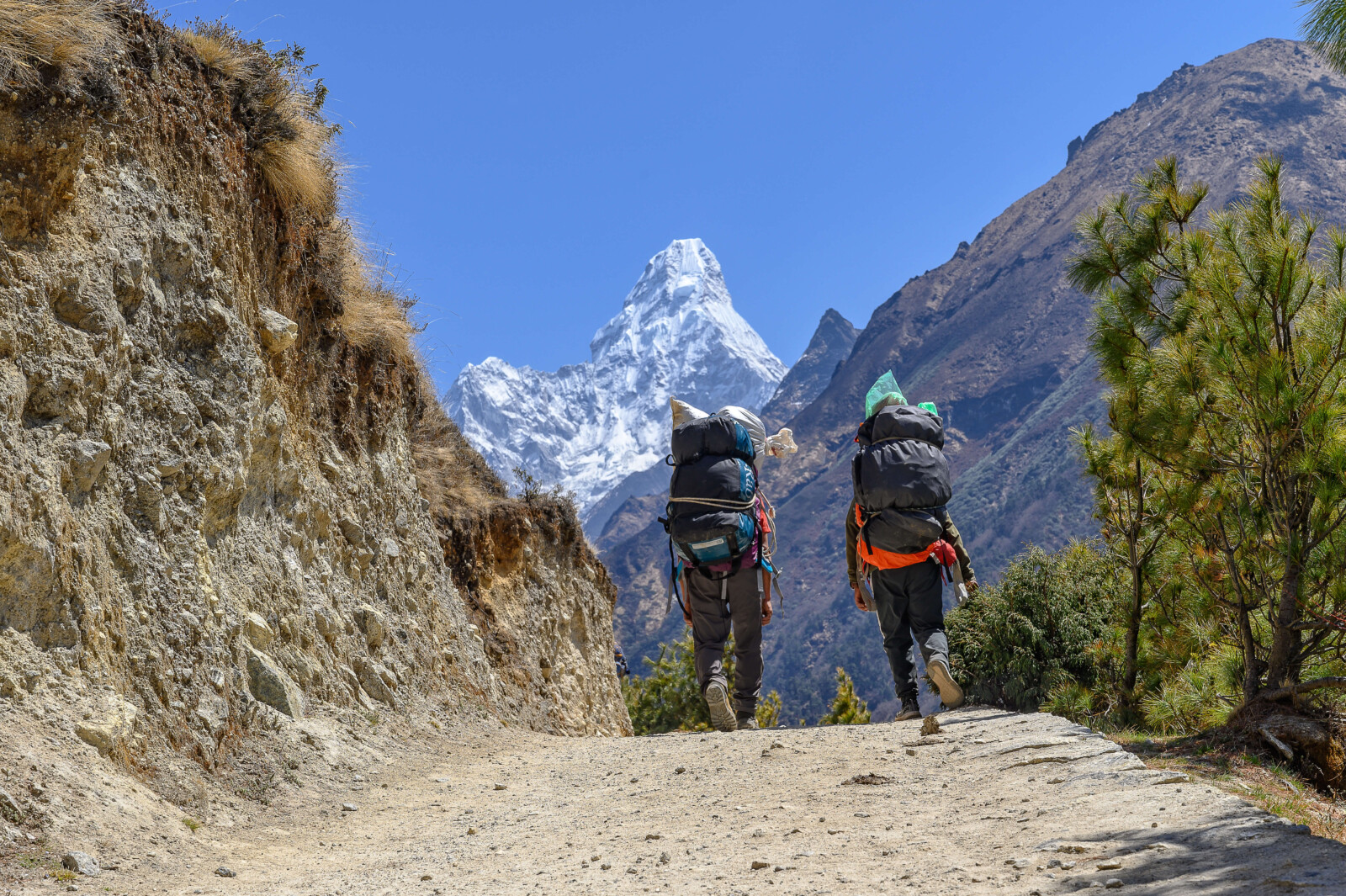
We continue deeper into the Khumbu region, crossing suspension bridges over the Dudh Koshi River and climbing steadily toward Namche Bazaar — the commercial hub of the Sherpa world. Arriving in Namche, we may see lowland porters, highland Sherpas, and Tibetan people trading food and supplies during market time. Hiking time: ~6 hours.

Overnight: Namche Bazaar — 11,286 ft / 3,440 m

Day 5: Namche Bazaar Rest & Acclimatization Hike  ·  11,286 ft / 3,440 m

A strategic acclimatization day. We take an uphill hike above Namche to approximately 12,500–13,000 ft / 3,810–3,962 m — following the climb-high, sleep-low principle — before returning to Namche for the night. On a clear morning, views of Everest appear for the first time above the ridge.

Overnight: Namche Bazaar — 11,286 ft / 3,440 m

Day 6: Namche Bazaar to Deboche  ·  12,894 ft / 3,930 m

We pass through Tengboche (12,664 ft / 3,860 m) — the cultural and religious center of the Khumbu — where the Tengboche Monastery is one of the most well-known in the world and the Rinpoche is revered throughout the Buddhist community. The jagged peaks of Thamserku and Kangtega stand to the south; Everest, Lhotse, Nuptse, and Ama Dablam are visible to the north. Hiking time: ~7 hours.

Overnight: Deboche — 12,894 ft / 3,930 m

Day 7: Deboche to Pheriche  ·  13,793 ft / 4,207 m

Our next stop is Pheriche, famous for its high-altitude research center where world-renowned physicians acquire data on the effects of altitude on human physiology. During our stay we visit the research center and have time to chat with staff physicians. Hiking time: ~5 hours.

Overnight: Pheriche — 13,793 ft / 4,207 m

Day 8: Pheriche Rest & Acclimatization Hike  ·  13,793 ft / 4,207 m

A second deliberate acclimatization day. We hike higher into the valley above Pheriche before returning to sleep low. These rest days are not optional — they are what makes the upper mountain possible. Hiking time: ~4 hours.

Overnight: Pheriche — 13,793 ft / 4,207 m

Day 9: Pheriche to Lobuche  ·  16,109 ft / 4,910 m

Situated on the flank of an old lateral moraine of the Khumbu Glacier, Lobuche is the last inhabited area before Everest Base Camp. The trail winds through high tundra and glacial moraine — a stark, moon-like landscape above the treeline. Hiking time: ~6 hours.

Overnight: Lobuche — 16,109 ft / 4,910 m

Day 10: Lobuche to Gorak Shep · Kala Patthar  ·  Gorak Shep: 16,929 ft / 5,160 m  ·  Kala Patthar: 18,209 ft / 5,550 m

From Gorak Shep we make an ascent of Kala Patthar — a small peak with outstanding views of Everest, Nuptse, and nearby Pumori. Many of the world’s most iconic Everest photographs are taken from this summit, from where we also look down onto Everest Base Camp. Hiking time: ~4 hours.

Overnight: Gorak Shep — 16,929 ft / 5,160 m

Day 11: Gorak Shep to Everest Base Camp  ·  17,598 ft / 5,364 m

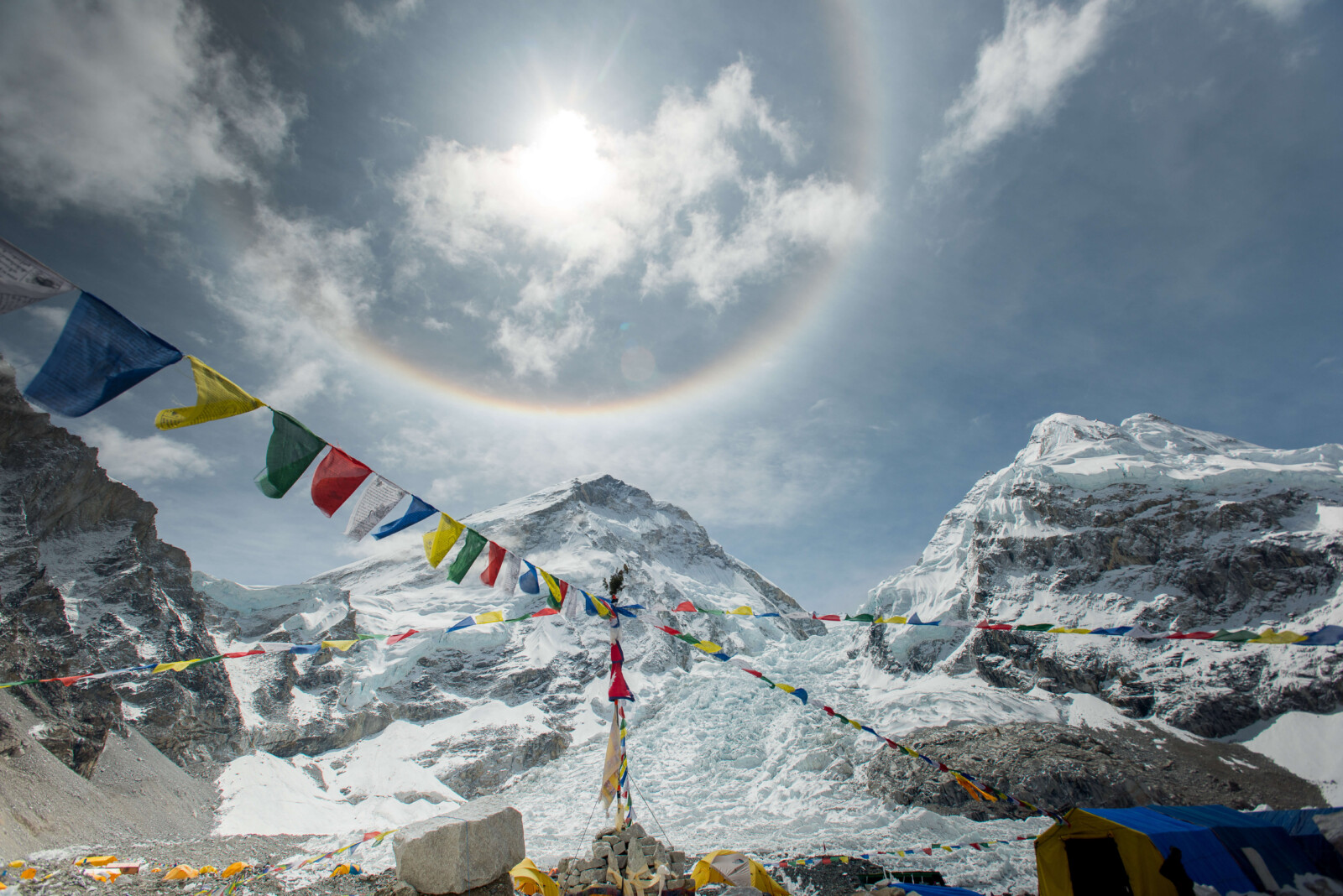
Our team finally hikes into base camp and finds BBE’s camp, settling in for the night with a warm welcoming celebration with the climbers and Sherpas. At Base Camp we walk to the base of the Khumbu Icefall to get a closer view of the route that weaves through enormous jumbled seracs. Hiking time: ~3.5 hours.

Overnight: Everest Base Camp — 17,598 ft / 5,364 m

Day 12-14: Everest Base Camp to Namche Bazaar  ·  11,286 ft / 3,440 m

We begin our return to lower altitudes and quickly feel the difference in our lungs. First overnight stop: the village of Pheriche, right on the vegetation line. Second night: the now seemingly lush Deboche. Third day: arriving back in Namche Bazaar. Hiking time: ~6–7 hours per day.

Overnight: Pheriche → Deboche → Namche Bazaar

Day 15: Namche Bazaar to Lukla  ·  9,383 ft / 2,860 m

Our final day of trekking from Namche Bazaar down to Lukla — retracing the valley in reverse, with the entire Khumbu spread above. Hiking time: ~6 hours.

Overnight: Lukla — 9,383 ft / 2,860 m

Day 16: Lukla to Kathmandu  ·  4,593 ft / 1,400 m

Early morning flight back to Kathmandu (weather permitting) and a free day to relax and enjoy the restaurants of Kathmandu. Return to the Yak & Yeti Hotel for two nights.

Overnight: Yak & Yeti Hotel, Kathmandu

Day 17: Contingency Day

A free final day in Kathmandu for souvenir shopping. This day must be kept available in case of delayed flights in or out of Lukla or if weather postpones the trek at any point. Lukla weather holds are common — this day is a structural necessity, not padding.

Overnight: Yak & Yeti Hotel, Kathmandu

Day 18: Departures from Kathmandu

Private transfers to Tribhuvan International Airport (KTM) for international departure flights.

Days 1–11 follow the Trek itinerary above. The extension diverges from Day 12.

Day 12: Everest Base Camp (Second Night)  ·  17,598 ft / 5,364 m

We spend a second night at EBC for additional acclimatization and a review of cramponing, ice axe technique, and belay skills from Everest Base Camp — skills that will be used directly on Lobuche East.

Overnight: Everest Base Camp — 17,598 ft / 5,364 m

Day 13: Back to Lobuche  ·  16,109 ft / 4,910 m

Saying farewells to the trekking team headed for Pheriche, we descend to spend a night back at Lobuche.

Overnight: Lobuche — 16,109 ft / 4,910 m

Day 14: Lobuche East High Camp  ·  19,029 ft / 5,800 m

A considerable ascent to high camp, mostly on rocky terrain. Our high camp, just below the crampon point for summit day, has wonderful views across the Khumbu. Shared VE-25 tents.

Overnight: Lobuche East High Camp — 19,029 ft / 5,800 m

Day 15: Lobuche East Summit Day  ·  20,075 ft / 6,119 m

An early start for the summit bid — climbing the south shoulder of Lobuche East before ascending the summit ridge, where we rope up to follow this classic ridge to the 20,075 ft / 6,119 m summit. Outstanding views of Everest, Lhotse, Nuptse, and Ama Dablam await. We then continue down to Lobuche East Base Camp.

Overnight: Lobuche East Base Camp

Day 16: Bad Weather Contingency Day

Reserve day for weather holds on the summit attempt. If summit was achieved on Day 15, this is a rest and recovery day.

Overnight: Lobuche East Base Camp

Days 17–19: Lobuche East Base Camp to Namche Bazaar  ·  11,286 ft / 3,440 m

Descent through Pheriche and Deboche back to Namche Bazaar — three days of steady descent with improving oxygen levels at every step.

Overnight: Pheriche → Deboche → Namche Bazaar

Day 20: Namche Bazaar to Lukla  ·  9,383 ft / 2,860 m

Final day of trekking down to Lukla.

Overnight: Lukla — 9,383 ft / 2,860 m

Day 21: Lukla to Kathmandu

Early morning flight to Kathmandu (weather permitting). Free day. Yak & Yeti Hotel for two nights.

Overnight: Yak & Yeti Hotel, Kathmandu

Day 22: Contingency Day

Final free day in Kathmandu. Must be kept available in case of weather-related flight delays from Lukla.

Overnight: Yak & Yeti Hotel, Kathmandu

Day 23: Departures from Kathmandu

Private transfer to Tribhuvan International Airport (KTM) for international departure.

The Everest Base Camp Trek is one of the most accessible great adventures in the world — and one of the most rewarding. No technical mountaineering skills are required for the trek itself. What it does ask for is honest physical preparation and a genuine respect for altitude.

The Trek — Who It’s For

This trek works for a wide range of people. What they share is not a background — it’s a mindset. We have guided first-timers, seasoned hikers, climbers using it as an acclimatization tool before bigger objectives, and people who simply decided they wanted to stand in one of the most extraordinary places on earth.

  • Fit hikers and backpackers ready for a multi-week mountain journey at altitude
  • Climbers building toward Himalayan objectives who want firsthand knowledge of the Khumbu
  • Couples, friends, and small groups seeking a shared experience that genuinely tests them
  • Anyone who wants to see Everest up close and understand what it means to live and work at altitude

Fitness

You need solid aerobic fitness and the ability to sustain steady uphill movement for 5–7 hours per day on consecutive days with a daypack. The trek reaches 17,598 ft / 5,364 m at Everest Base Camp and 18,209 ft / 5,550 m on Kala Patthar. Altitude affects everyone — the two acclimatization rest days at Namche and Pheriche are built into the program for a reason.

Begin training at least 2–3 months before departure: back-to-back hiking days with a loaded pack are the most specific preparation. Cardiovascular fitness — running, cycling, swimming — builds the aerobic base altitude demands.

The Lobuche East Extension — Additional Requirements

Lobuche East (20,075 ft / 6,119 m) requires a step up from trekking fitness. Participants need:

  • Basic mountaineering skills: cramponing, ice axe arrest, and roped glacier travel
  • Good physical condition with strong recovery between effort days
  • No prior high-altitude climbing required — skills are reviewed at Everest Base Camp before the summit push

If you have completed a mountaineering course, climbed a glaciated peak in the Cascades or Alps, or have basic glacier travel experience, you are well positioned for Lobuche East. The summit at 20,075 ft / 6,119 m is a genuine achievement — higher than any peak in North America — and a natural stepping stone toward more technical Himalayan objectives.

Altitude Awareness

The Khumbu region is genuinely high. Namche Bazaar (11,286 ft / 3,440 m) is already above most North American ski resorts. Pheriche (13,793 ft / 4,207 m) sits above the summit of Mount Rainier. At these elevations, common symptoms include headache, disrupted sleep, and reduced appetite. The acclimatization days built into the itinerary are deliberate and important. Hydration — minimum 3–4 liters per day — is your most important daily discipline. Discuss acetazolamide (Diamox) with your physician before departure.

No. The base trek to Everest Base Camp requires no technical skills — just solid fitness and the willingness to walk 5–7 hours per day at altitude. The Lobuche East Extension requires basic mountaineering skills: crampons, ice axe use, and roped travel. Skills are reviewed at Base Camp before the summit push.

Kala Patthar at 18,209 ft / 5,550 m is the highest point on the main trek. Everest Base Camp sits at 17,598 ft / 5,364 m. The Lobuche East Extension adds a summit at 20,075 ft / 6,119 m — higher than any mountain in North America.

Lukla’s Tenzing-Hillary Airport (IATA: LUA) is one of the most weather-dependent airports in the world. Flights are operated by small Twin Otter or similar aircraft and are frequently delayed or cancelled due to cloud and fog — particularly in early morning. This is why Day 17 (and Day 22 on the extension) is a built-in contingency day. Do not book your international departure flight from Kathmandu on the same day as your Lukla-to-Kathmandu flight. Allow at least one full buffer day.

Tea houses are simple, warm, and genuine — shared rooms with basic beds, blankets, and attached bathroom facilities (quality varies by altitude and remoteness). At the upper elevations, expect cold nights and limited electricity. BBE books through our long-established network of Sherpa-run guest houses, which consistently offer the warmest welcome and best local meals on the trail.

At BBE’s Base Camp, trekkers are welcomed into our expedition camp — large tents, quality meals (including food flown in from the US and Argentina), and the Sherpa team that supports our climbing expeditions. This is a genuine Everest Base Camp experience, not a campsite visit.

Yes, with honest preparation. The itinerary includes two planned acclimatization days — at Namche Bazaar and Pheriche — specifically to give your body time to adapt. Our guides monitor every trekker throughout the trip. People who arrive well-prepared and follow the pace-and-hydration guidance perform consistently well. People who rush, underhydrate, or ignore symptoms are the ones who struggle.

Spring (March–May) and autumn (September–November) are the two primary trekking seasons. Spring offers the best chance of clear summit views and coincides with the Everest climbing season — meaning you may encounter active expeditions at Base Camp. Autumn offers stable weather and exceptional visibility after the monsoon. The trek runs in the months of April–June. Monsoon season (June–August) and winter (December–February) are generally avoided.

Deposits ($750 for trek, $1,250 for Lobuche East Extension) are non-refundable. Remaining balance refund schedule: 121+ days: 75% refund; 90–120 days: 50%; 60–89 days: 25%; 59 days or less: no refund. All cancellations must be submitted in writing. Trip cancellation and interruption insurance is strongly recommended.

Yes. Private departures are available on custom dates for individuals and small groups. Contact us to discuss availability, dates, and pricing.

Passport

A valid passport is required for entering Nepal. Your passport must be valid for at least 6 months beyond your expected return date and have at least two blank pages for entry stamps. Make a copy of the first two pages and keep them in a separate bag. Leave a copy with your emergency contact at home.

Nepal Visa — Required

All foreigners except Indian nationals require a visa for Nepal. U.S. passport holders can stay up to 90 days without a special visa. Visas can be obtained in advance or upon arrival at Tribhuvan International Airport (KTM) with one passport photo and payment in cash (U.S. Dollars). On-arrival processing is generally efficient but can be slow during peak season — arriving with a visa photo ready speeds the process considerably.

  • Visa fee (15 days): USD $30  ·  Visa fee (30 days): USD $50  ·  Visa fee (90 days): USD $125
  • For a 18–23 day program, the 30-day visa is the correct option
  • Forms are available on the incoming flight and in the arrivals building

Rescue Insurance — Required

All participants must carry travel insurance that includes medical evacuation, repatriation, and medical coverage for the full duration of the trip. Trip cancellation insurance is strongly recommended. BBE does not provide insurance coverage.

Your policy must cover trekking and mountaineering to the altitudes involved — standard travel policies often cap at 3,000 m / 9,843 ft, which is not sufficient for this trek. For the Lobuche East Extension, confirm your policy explicitly covers technical mountaineering to 6,119 m / 20,075 ft and helicopter evacuation. Recommended providers: Global Rescue (globalrescue.com) and Ripcord by Redpoint.

Vaccinations & Health

No vaccinations are required for Nepal entry. Recommended by most travel medicine clinics: Hepatitis A, Typhoid, and routine boosters (Tetanus, MMR). Malaria is not a risk in the Khumbu region at trekking elevations. Consult a travel doctor 4–6 weeks before departure. Discuss acetazolamide (Diamox) with your physician for altitude illness prevention.

During your flight to Kathmandu (KTM) you will cross the International Date Line. Total travel time is approximately three days from most North American departure points. If you want to see the mountains as you fly into Kathmandu, sit on the right-hand side of the plane.

Airlines & Routing

There are no direct flights from North America or Europe to Kathmandu. All itineraries require at least one connection.

  • Qatar Airways via Doha (DOH) — most popular routing from the US; excellent Kathmandu connection
  • Turkish Airlines via Istanbul (IST) — strong European and US connections
  • Emirates via Dubai (DXB) — reliable and frequent
  • Ethiopian Airlines via Addis Ababa (ADD) — excellent value from East Coast US
  • Singapore Airlines via Singapore (SIN) — best option from West Coast US and Australia

Airport Arrival

Upon arrival at Tribhuvan International Airport (KTM), follow signs to the Arrivals Building. Proceed to the visa counter for visitors without a visa. The disembarkation and visa application forms are available on your incoming flight and in the arrivals building. You will need one passport photo for your visa application.

Once you receive your bags from Baggage Claim, proceed to Customs. Keep all your bags together. Outside the arrivals hall there will be a large group of taxi drivers and agents from many hotels and travel companies. Look for a sign with the name Benegas Brothers Expeditions. A private vehicle will take you to the hotel. If you do not see your driver, stay at the airport and call — do not leave with anyone not clearly associated with our team.

Departure Flights

Schedule your international departure from Kathmandu at least one full day after your Lukla-to-Kathmandu flight. Lukla flights are weather-dependent and frequently delayed — the contingency day (Day 17 or Day 22) exists precisely for this purpose. Do not book a same-day connection from Kathmandu.


Kathmandu — Days 1–2 and Days 16–18

We stay at the Yak & Yeti Hotel — one of Nepal’s premier five-star properties, well-located in central Kathmandu with reliable service, excellent food, and experience working with expedition teams. Double occupancy; single supplement available on request. A single supplement fee will be charged to those occupying single rooms by choice or circumstance. The single supplement is not available in huts, tents, or all hotels.

Tea Houses Along the Trail

We lodge in Sherpa-run tea houses and guest houses accessed through our long-standing network of Khumbu families. These are simple, warm, and genuine — private or shared rooms, warm meals, and the hospitality of the Sherpa people. Expect basic facilities: shared bathrooms at lower elevations, pit toilets higher up, and limited hot water above Namche.

  • Phakding — 8,563 ft / 2,610 m: comfortable lower-valley lodges; warm showers available
  • Namche Bazaar — 11,286 ft / 3,440 m: the best tea house infrastructure on the route; good restaurants, bakeries, and Wi-Fi
  • Deboche — 12,894 ft / 3,930 m: quieter, more traditional setting near Tengboche Monastery
  • Pheriche — 13,793 ft / 4,207 m: basic but well-run lodges; medical post nearby
  • Lobuche — 16,109 ft / 4,910 m: simple, cold nights; layers essential
  • Gorak Shep — 16,929 ft / 5,160 m: the highest tea house settlement; basic conditions; cold
  • Everest Base Camp — 17,598 ft / 5,364 m: North Face VE-25 tents in BBE’s expedition camp

Lobuche East Extension — High Camps

  • Lobuche East High Camp — 19,029 ft / 5,800 m: shared VE-25 tents; bring sleeping bag rated to -20°C / -4°F

A full detailed gear list is provided to every confirmed trekker. Key categories:

Footwear

  • Hiking boots: waterproof, mid-to-high cut, fully broken in before departure — the most important item on the list
  • Camp sandals or lightweight shoes for tea house evenings
  • Gaiters: recommended for snowy sections above Lobuche

Clothing System

  • Base layers: moisture-wicking merino or synthetic — no cotton at any layer above Namche
  • Mid layer: fleece jacket; insulated down jacket for evenings and high camp
  • Hard shell: waterproof/windproof jacket and pants
  • Gloves: lightweight trekking gloves + insulated mittens for Kala Patthar and Lobuche East
  • Warm hat, balaclava, sun hat, sunglasses (UV protection critical at altitude), sunscreen SPF 50+

Equipment

  • Trekking poles: strongly recommended — essential for long descents
  • Headlamp: 300+ lumens, lithium batteries — early starts are common
  • Sleeping bag: rated to 0°F / -18°C — tea house blankets are not reliable above Lobuche
  • Daypack 20–25L; porter duffel (75L max, 15 kg / 33 lbs limit) for the porter team
  • Reusable water bottles or hydration reservoir — 2L minimum; water purification tablets or filter

Lobuche East Extension — Additional

  • 12-point crampons compatible with your boots
  • Ice axe — standard mountaineering length
  • Mountaineering harness; helmet; locking carabiner and belay device
  • Sleeping bag rated to -20°C / -4°F for High Camp nights at 19,029 ft / 5,800 m

The Trekking Day

Wake to a hot drink. Breakfast at the tea house. Morning briefing. Trek at a pace built for acclimatization — slow and deliberate, especially in the first week. Arrive at the next village by early-to-mid afternoon. Rest, tea, dinner. Sleep as early as possible. Repeat.

Food & Water

All meals during the trek are provided at tea houses — dal bhat, noodles, eggs, potatoes, porridge, and locally sourced vegetables. Quality is good at lower elevations and acceptable higher up. Four liters of water per day is the minimum. Above Namche, purchase bottled water or use purification tablets/filters — do not drink untreated water at any elevation on this route.

At Everest Base Camp, the BBE expedition kitchen provides significantly higher-quality meals — including food flown in from the US and Argentina — as part of the base camp welcome experience.

Altitude Management

The acclimatization days at Namche and Pheriche are not rest days — they are active altitude adaptation days involving uphill hikes above camp followed by return to sleep lower. This is the proven method for safe acclimatization. Communicate any symptoms — headache, nausea, dizziness, or shortness of breath at rest — to your guide immediately.

Communications & Connectivity

Namche Bazaar has reliable Wi-Fi (available for purchase at tea houses and bakeries). Above Namche, connectivity becomes increasingly limited and expensive. Gorak Shep and Base Camp have minimal to no reliable mobile signal. The BBE guide team carries a satellite communication device throughout the trek. A personal Garmin inReach or SPOT satellite communicator is recommended for regular contact with home above Namche.

The official currency of Nepal is the Nepalese Rupee (NPR). In Nepal you are almost always required to pay for goods or services with Nepalese Rupees. American Express, Mastercard, and Visa are accepted in tourist shops, hotels, restaurants, and agencies in Kathmandu. You will find a large number of ATMs in Kathmandu — using ATMs is the common method of obtaining cash. Plan on bringing cash for any purchases during the trek. While a few tea houses and bakeries in the Khumbu accept credit cards, they charge a very high commission.

Check a financial newspaper or xe.com for current exchange rates before departure. It is recommended to change only as much money as you expect to spend — local currencies cannot be removed from Nepal or reconverted easily.

Recommended Personal Budget

We suggest bringing $700–$800 USD total for personal spending money and the staff tip pool on the trek only. If participating in the Lobuche East Extension, bring $850–$950 USD total. You may wish to bring more depending on your shopping plans in Kathmandu. Bring cash in U.S. dollars only — bills printed 2013 or newer, pristine condition. Nepalese banks and exchange counters reject worn or older-series bills.

Tipping

Tipping is expected and professionally important for the Sherpa and porter team. BBE recommends:

  • Lead Sherpa / Sirdar: $100–$150 USD per trekker
  • Trek staff and support crew: $50–$80 USD per trekker (distributed as a pool)
  • Hotel porters and drivers: $5–$10 USD per transfer in small bills

For the Lobuche East Extension, additional tips for the climbing Sherpas and high-camp porters: $80–$120 USD per climber.

The contingency days on Day 17 and Day 22 are structurally important — not optional padding. Lukla flights are weather-dependent and among the most frequently delayed in Nepal. If weather cancels your Lukla-to-Kathmandu flight, the contingency day absorbs the delay and protects your international connection.

If a participant needs to depart early for personal, medical, or safety reasons, evacuation options from the trail include: helicopter evacuation from Pheriche or Namche (approximately $2,000–$5,000 USD depending on weather and location — covered by rescue insurance), or overland to Lukla for the first available flight. The guide team manages all early departure logistics. Additional costs not covered by insurance are the participant’s responsibility.

Private departures are available for individuals and small groups on your preferred dates throughout the spring and autumn trekking seasons.

  • Trek only — custom private departure, 2–8 trekkers
  • Trek + Lobuche East — private mountaineering program with personalized instruction
  • Custom extensions: Gokyo Lakes, Three Passes, Island Peak combinations
  • Corporate and charity group programs

Contact us to discuss options.

Pricing

Trek Only: $4,500 USD per person  ·  6 trekkers minimum at this rate

Trek with Lobuche East Extension: $5,750 USD per person  ·  3 trekkers minimum at this rate

Price Includes

  • Four scheduled hotel nights in Kathmandu — Yak & Yeti 5-star Hotel (double occupancy)
  • Park entrance fees, trekking permits, and Kathmandu city tour
  • Porters and porter wages throughout the trek
  • All meals and overnight accommodations during the trek (not meals in Kathmandu) — double occupancy in tea houses and lodges; shared North Face VE-25 tents at Base Camp
  • Round-trip airport transfers
  • Return airfare from Lukla to Kathmandu, fixed wing

Price Does NOT Include

  • International airfare
  • Personal equipment
  • Staff and guide gratuities
  • Items of a personal nature: phone calls, laundry, room service, extra meals, beverages
  • Meals in Kathmandu
  • Non-scheduled meals during the trek
  • Trip cancellation insurance and medical rescue/evacuation insurance
  • Nepal visa and airport departure tax

Full Budget Estimate

  • Trek fee (base): $4,500  ·  or $5,750 with Lobuche East Extension
  • International flights to Kathmandu: $900–$1,800 (varies by origin and routing)
  • Nepal visa (30-day, most travelers): $50 USD — paid in cash on arrival
  • Rescue & medical evacuation insurance (required): $300–$500 / yr — Global Rescue recommended
  • Travel insurance (recommended): $200–$400
  • Personal trekking gear (if purchasing): $500–$1,500
  • Mountaineering gear — Lobuche East only: $500–$1,500 additional
  • Staff and guide gratuities: $200–$350 (trek)  ·  $350–$500 (with extension)
  • Personal cash — meals, snacks, extras: $400–$600
  • Emergency reserve: $300–$500
  • Essentials total (fee + flights + visa + insurance + tips): ~$6,500–$8,500

Typical total with gear and personal costs: ~$7,500–$10,000

The Everest Base Camp Trek runs during Nepal’s two primary trekking seasons: spring (March–May) and autumn (September–November). Both offer excellent conditions and clear views. Spring coincides with the Everest climbing season — meaning you may encounter active expeditions at Base Camp.


2026 Expedition Dates

Current departure dates are in the months of April–June. Contact BBE directly for confirmed 2026 availability and to reserve your place.


Pricing Summary

Trek Only: $4,500 USD per person  ·  6 trekkers minimum

Trek + Lobuche East Extension: $5,750 USD per person  ·  3 trekkers minimum


Deposits

Trek Only: $750 deposit to reserve your spot.

Trek + Lobuche East: $1,250 deposit to reserve your spot.


Cancellation Policy

All deposits are non-refundable. Remaining balance refund schedule:

  • 121+ days before departure: 75% refund of remaining balance
  • 90–120 days prior: 50% refund of remaining balance
  • 60–89 days prior: 25% refund of remaining balance
  • 59 days or less: no refund

All cancellations must be submitted in writing. No refunds are provided for unused services once a trip begins. Travel insurance covering trip cancellation is strongly recommended.

Private Departures

Private departures for the Everest Base Camp Trek are available throughout the spring and autumn seasons on custom dates. Contact climbing@benegasbrothers.com to discuss.

The World's Greatest Peaks. Experienced from Within.

Step into the Khumbu over 18 days — ancient Sherpa villages, a live Everest expedition at Base Camp, and a summit of Kala Patthar at 18,209 ft with Everest filling the sky. No technical experience required. Just fitness and the willingness to be changed by one of the great journeys of your life.

Book Trip
Location:
Nepal
Group:
6-10 trekkers
Duration:
18 or 23 days
Skill:
Beginner to Advanced, good fitness encouraged
Activities:
Alpine Climbing
Pricing

Pricing is a typical estimate, final quote will be provided after receiving your inquiry.

The World's Greatest Peaks. Experienced from Within.

Step into the Khumbu over 18 days — ancient Sherpa villages, a live Everest expedition at Base Camp, and a summit of Kala Patthar at 18,209 ft with Everest filling the sky. No technical experience required. Just fitness and the willingness to be changed by one of the great journeys of your life.

Related Trips