Global ExpeditionsPeak Performance Series South America

Aconcagua Peak Performance Ascent

Optional Extension: Ojos del Salado

14 Days Group: Max. 4 people $16,500 per person

Advanced climbers don’t need more days on the mountain. They need better preparation before they arrive, smarter logistics once they’re there, and a guide team that matches their level. The Peak Performance Ascent is built exactly for that.

A Different Kind of Aconcagua Expedition

Most Aconcagua programs are designed for climbers who need time. Time to acclimatize slowly, time to learn the mountain, time to figure out their gear and pace. The Normal Route serves that purpose well — and we run it every season for exactly that kind of climber.

The Peak Performance Ascent is built for a different profile entirely. You have already been on serious mountains. You understand altitude, expedition living, and your own physiology. What you need is a program that respects your experience, maximizes your time, and gives you the best possible platform to stand on the summit of the highest peak in the Americas.

Fourteen days. Four climbers. Helicopter access. Hypoxico pre-acclimatization from your home before you leave. That is the structure. Everything in it exists for a reason.

Hypoxico Pre-Acclimatization — Starts at Home

Every Peak Performance climber receives a Hypoxico altitude training system delivered to their home before departure. You use it in the weeks leading up to the expedition — sleeping or resting in a simulated high-altitude environment that triggers the same physiological adaptations your body needs at elevation.

By the time you land in Mendoza, your body is already working. The Las Cuevas pre-acclimatization phase then pushes that preparation further, so that when the helicopter sets you down at Plaza de Mulas Base Camp, you are not starting from zero. You are ready to climb.

This is the foundation that makes a 14-day summit program not just possible — but safe and effective.

Las Cuevas — Pre-Acclimatization in the High Andes

Days 2 and 3 are spent at the Portezuelo del Viento refuge in Las Cuevas — 10,500 ft / 3,200 m — high on the Argentine-Chilean border. Acclimatization hikes push to 11,500 ft. Technical skills are reviewed. The team settles into expedition rhythm before the real mountain begins.

Combined with the Hypoxico preparation, this phase is what allows the Peak Performance program to move faster and higher than a standard expedition without cutting corners on safety.

Helicopter Access — In and Out

On Day 4, a helicopter transfers the team directly from Puente del Inca to Plaza de Mulas Base Camp at 14,000 ft / 4,267 m. On Day 13, a helicopter carries the team back out. Both flights are included in the program.

This is not a luxury upgrade. It is a strategic decision. The long approach trek — two to three days each way on foot — is physically taxing before the real climbing even begins. By removing it, the Peak Performance program directs your energy exactly where it matters: the acclimatization rotations, the carries, and the summit push.

Maximum 4 Climbers  ·  Two Summit Windows

The Normal Route caps at 6. The Peak Performance caps at 4 — the smallest group size we offer on any program. At this level, every climber gets direct, continuous guide attention. Decisions are made faster. The team moves as a unit. There is no averaging down to accommodate a wide range of ability levels — the entire program is calibrated to experienced, well-prepared climbers.

Two summit windows — Days 10 and 11 — are built into the program, giving the team real flexibility around weather. Having a genuine second option, positioned and rested, is what separates a well-designed program from one that simply hopes for good weather on a single day.

Optional Extension — Ojos del Salado  ·  22,615 ft / 6,893 m

The world’s highest active volcano, located in Chile’s Atacama Desert. After descending from Aconcagua, Peak Performance climbers are physiologically primed for Ojos del Salado. The existing acclimatization carries directly. A 6-day extension moves the team from Mendoza to Copiapó, Chile — through Laguna Verde and the Atacama Refuge to the summit. $8,500 USD per person. Available as a seamless continuation — contact us to add it to your expedition.

Thirty Years on Aconcagua

Thirty years of guiding on Aconcagua. IFMGA-certified guides on every expedition. A track record built not on marketing but on real summit performance with real clients in real mountain conditions. Willie and Damian Benegas have forgotten more about this mountain than most people will ever learn. The Peak Performance program reflects everything we know about how to climb Aconcagua efficiently, safely, and at a level that respects the climber’s experience and ambition.
A compressed, high-performance timeline built for experienced climbers with Hypoxico pre-acclimatization already underway at home. Every day has a purpose. Every decision reflects three decades of knowing exactly how this mountain works.

Arrive in Mendoza — Argentina’s wine and mountaineering capital. BBE transfers you from the airport to the hotel. The evening is a team dinner: introductions, expedition overview, gear check. This is the last night at low elevation before the program begins in earnest.

Overnight: Premium hotel, Mendoza

Three-hour drive up through the Andes on Ruta 7 — one of the most dramatic high-altitude highways in South America. The pass climbs past Uspallata, through the Cristo Redentor tunnel, and delivers the team to Las Cuevas on the Argentine-Chilean border. Check into the Portezuelo del Viento refuge. Afternoon acclimatization walk.

Overnight: Portezuelo del Viento Refuge

Morning acclimatization hike to approximately 11,500 ft. Afternoon technical review: crampon technique, ice axe use, rope systems, self-arrest, glacier travel protocols. For experienced climbers, this serves as calibration — a chance to confirm systems and sync with the guide team before the real climbing begins.

Overnight: Portezuelo del Viento Refuge

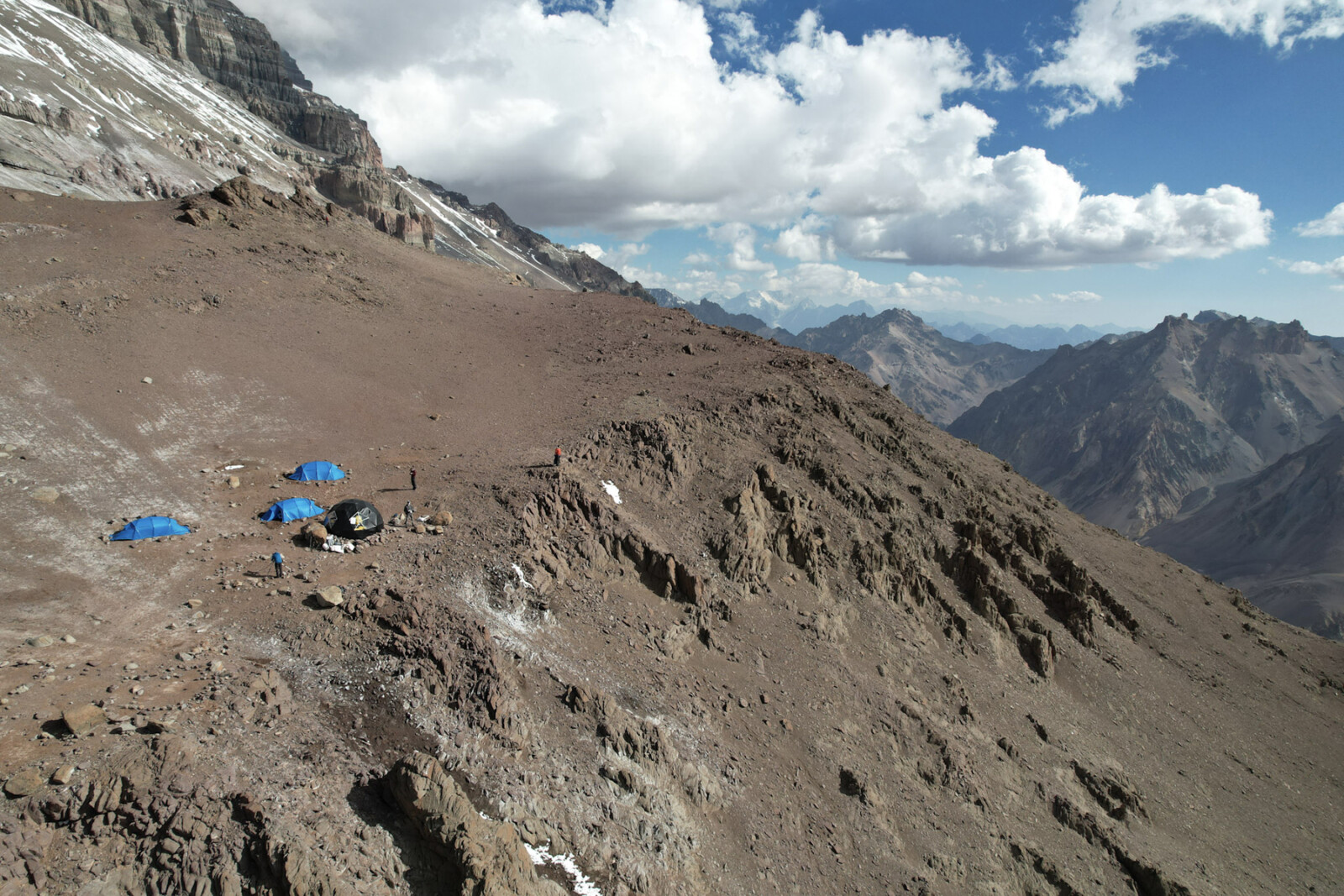
Helicopter transfer from Puente del Inca directly to Plaza de Mulas Base Camp (~20 minutes). This eliminates the standard two-to-three-day approach trek, ensuring the team arrives at base camp with full energy reserves. Afternoon: set up, orientation, first look at the mountain from 14,000 ft.

Overnight: Plaza de Mulas Base Camp

First acclimatization push above Plaza de Mulas, climbing to approximately 15,000 ft before descending. Guides assess the team’s response to elevation throughout the day. Climb high, sleep low — this principle governs the next several days.

Overnight: Plaza de Mulas Base Camp

Carry day: the team loads personal gear and supplies to Camp Canada at 16,100 ft, then returns to base camp to sleep. Sleeping low after pushing high accelerates red blood cell production — the engine of acclimatization.

Overnight: Plaza de Mulas Base Camp

The team moves from Plaza de Mulas to Camp Canada with full loads. Camp Canada sits above the Horcones Glacier moraine, with the upper mountain opening up ahead. The team settles in, eats well, and sleeps.

Overnight: Camp Canada

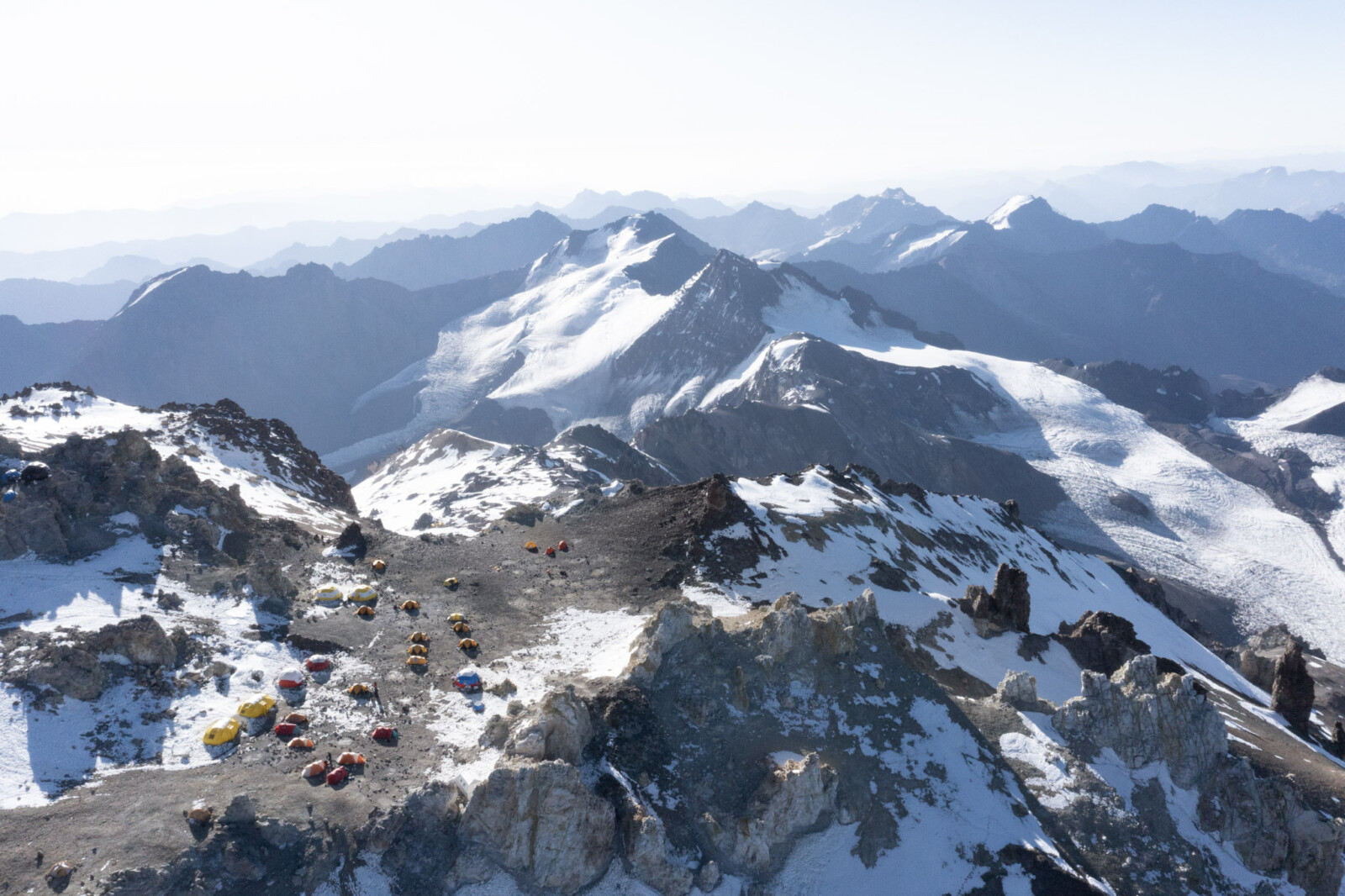
From Camp Canada, the route climbs steeply through loose scree and rocky switchbacks to Nido de Cóndores — the Condors’ Nest — at 18,300 ft. One of the best-positioned high camps on Aconcagua: sheltered from the prevailing wind, with a direct line to the upper mountain.

Overnight: Nido de Cóndores

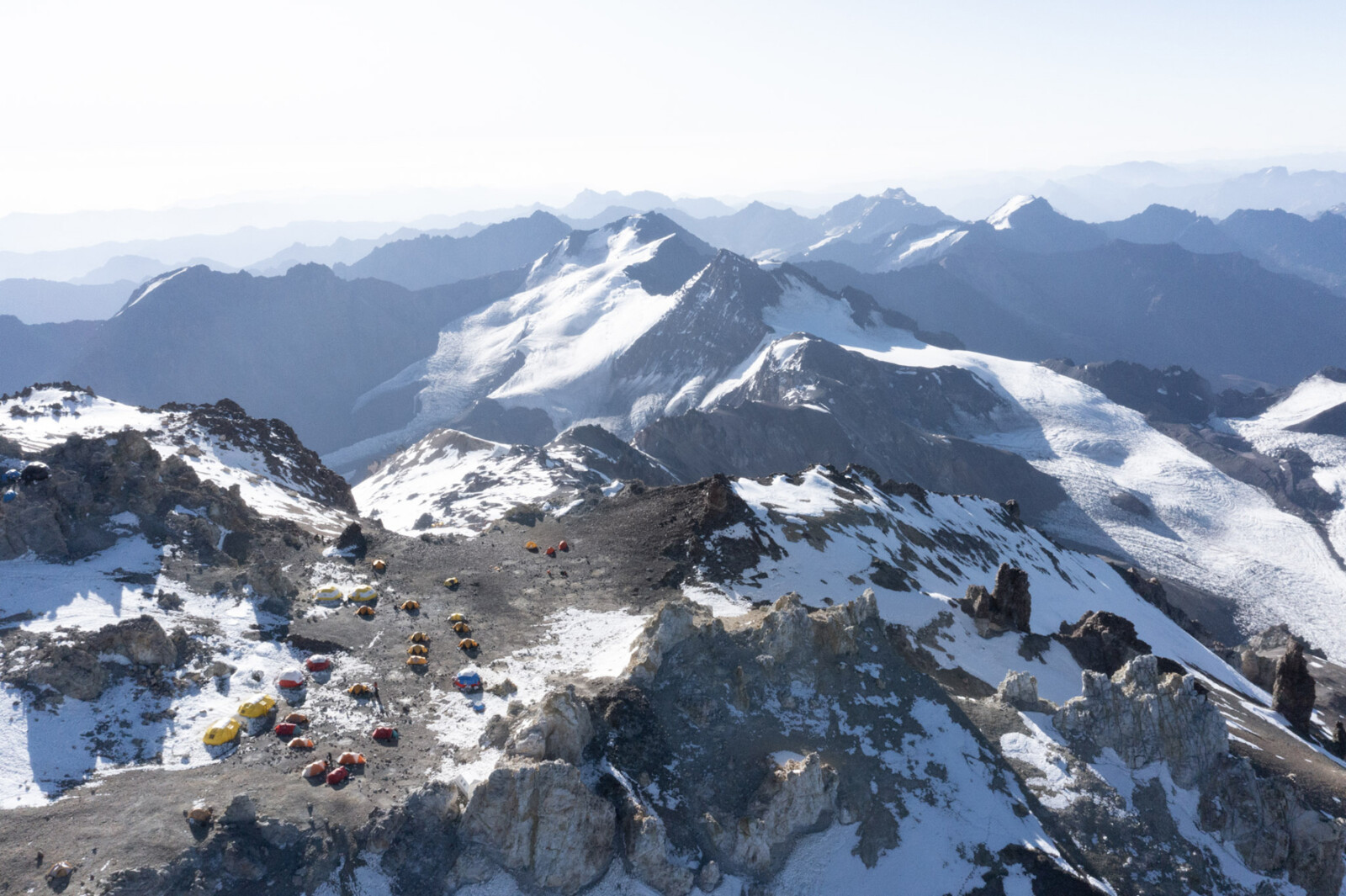
The move from Nido to Camp Colera puts the team in summit position. The terrain climbs through the upper couloirs and rocky flanks of the Normal Route. Camp Colera at 19,580 ft is as high as the team sleeps. Guides make final weather assessments and confirm the summit strategy. Early dinner. Gear laid out. Rest.

Overnight: Camp Colera

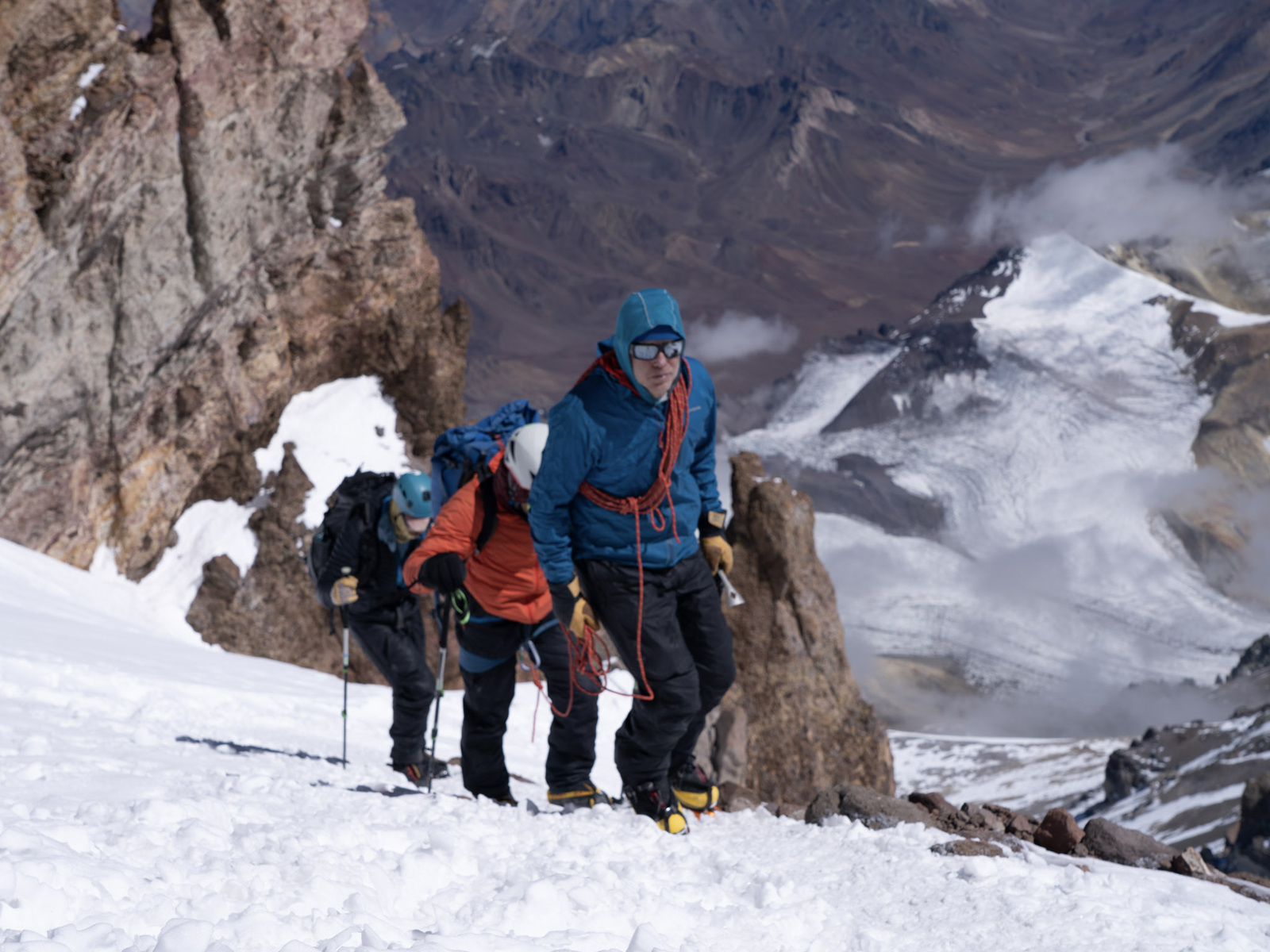
Pre-dawn start — typically 3:00 to 4:00 AM. Summit day involves 3,200 ft of vertical gain through the Canaleta — a steep, sustained couloir of loose rock and scree leading to the summit ridge. From the summit: the highest point in the Western Hemisphere. Descent back to Camp Colera or Nido de Cóndores depending on team condition.

Overnight: Camp Colera or Nido de Cóndores

Day 11 is the built-in contingency: a second summit window if Day 10 was blocked by weather, or a rest and descent day if the summit was reached on Day 10. Two summit windows is not standard on a 14-day program — it is a deliberate design choice.

Overnight: Camp Colera or Nido de Cóndores

Full descent from high camp to Plaza de Mulas through Nido de Cóndores and Camp Canada. Arrival at base camp: showers, a real meal, cold beer if available. The mountain is done — the work is over.

Overnight: Plaza de Mulas Base Camp

Helicopter transfer from Plaza de Mulas back to the Horcones Valley trailhead. Ground transfer to Mendoza. Shower, change, and a proper celebration dinner at one of Mendoza’s best restaurants. This evening belongs to the team.

Overnight: Hotel, Mendoza

Morning departure transfers to Mendoza Airport. Program ends at the airport. Fourteen days. The highest peak in the Americas. Done right.

Extension Day A: Fly from Mendoza to Copiapó, Chile (via Santiago). Hotel in Copiapó — the last city with full services before the high Atacama.

Extension Day B: Drive from Copiapó into the high Atacama Desert to Laguna Verde (14,500 ft / 4,420 m) — a striking turquoise high-altitude lake. Basic refuge or tents.

Extension Days C–D: Atacama Refuge (17,100 ft / 5,200 m) — primary staging base for the Ojos summit push. Two nights allow for final acclimatization.

Extension Day E: Pre-dawn summit push to Ojos del Salado (22,615 ft / 6,893 m). Descent back to the refuge or lower elevation.

Extension Day F: Full descent and drive back to Copiapó. Program ends in Copiapó — fly to Santiago for international departure.

The Honest Answer

If you are asking yourself whether this program is for you, the Normal Route is probably the better starting point. That is not a criticism — the Normal Route is a serious, well-designed expedition that produces summit rates above 90% for prepared climbers. It is the right program for the majority of people who come to us for Aconcagua.

The Peak Performance Ascent is designed for a different profile entirely. It assumes you have already been to altitude. It assumes you know your physiology and can operate effectively in a compressed, high-intensity schedule. It is built for climbers who do not need more time on the mountain — they need a better platform.

The Experience Requirement

Previous experience above 18,000 ft / 5,500 m is required — ideally on an expedition-style ascent where you managed multi-day logistics, camp carries, and your own altitude response over several days. Peaks like Denali, Kilimanjaro, Island Peak, Mera Peak, Mont Blanc, or Elbrus are good benchmarks. If your highest summit is 14,000 ft, the Normal Route will serve you better.

The question is not whether you are fit. It is whether your body has already proven it can function above 18,000 ft. That information only comes from experience.

Physical Preparation

The 14-day Peak Performance timeline is compressed. There is no buffer for slow acclimatizers or underprepared bodies. Training should reflect that: long days with sustained elevation gain, weighted carries, and back-to-back efforts. The Canaleta on summit day is 3,200 ft of gain starting above 19,500 ft. Being strong at sea level is not the same as being ready for that.

The Hypoxico Commitment

Every Peak Performance climber receives a Hypoxico altitude training system before departure. The system only works if you use it consistently for 4–6 weeks leading up to the expedition. Climbers who arrive without completing the Hypoxico protocol are starting at a disadvantage.

This is not optional. The 14-day structure is built on the assumption that the pre-acclimatization work has been done.

Mental Profile

Beyond the physical requirements, the Peak Performance Ascent selects for a specific mental profile:

  • You make good decisions under pressure — at high altitude, tired and cold, you still assess your condition accurately and communicate it to the guide team
  • You are coachable — you have experience, and you know it, but you also know that guides with thirty years on this specific mountain have information you do not
  • You are a good expedition teammate — on a team of four, one person’s bad energy affects everyone

Who This Is NOT For

The Normal Route is the better choice if: you have not been above 17,000 ft, you are uncertain about your altitude response, you want more time on the mountain to build confidence, or you simply prefer a less compressed schedule.

Neither program is better than the other. They are built for different climbers. Choosing the right one matters more than choosing the prestigious one.

Yes. The 14-day timeline is built around the assumption that pre-acclimatization work has been done at home. Climbers who skip it are not starting at zero — they are starting behind the program. The Hypoxico system is delivered to your door before departure. Use it consistently for 4–6 weeks and you will feel the difference when the helicopter sets you down at 14,000 ft.

Previous time above 18,000 ft / 5,500 m on an expedition-style climb. You should have managed multi-day logistics, camp carries, and your own altitude response before. Peaks like Denali, Kilimanjaro, Elbrus, Mont Blanc, Island Peak, or Mera Peak are good benchmarks. If your highest point is 14,000 ft, the Normal Route is the better starting point.

The approach trek to Plaza de Mulas is two to three days each way on foot — physically taxing terrain before the real climbing even starts. On a 14-day program, those days matter. The helicopter gets the team to base camp fresh, with full energy reserves for the acclimatization work and carries ahead. It is a strategic decision, not a comfort upgrade.

Days 10 and 11. The program is positioned at Camp Colera by Day 9, with the first summit attempt on Day 10. If weather blocks Day 10, Day 11 is the backup. Having two genuine summit windows — with the team already in position — is one of the key structural advantages of the Peak Performance program.

If both windows are blocked by genuinely dangerous conditions, the guide team makes the call to descend safely. This outcome is rare, but it happens on any mountain. This is also why trip cancellation insurance is strongly recommended.

No. Ojos requires advance coordination with Chilean park authorities (DIFROL), Atacama logistics, and guide scheduling. It needs to be confirmed before the expedition departs — ideally at the time of booking.

The Peak Performance program operates with a maximum of 4 climbers. At 4 climbers maximum, every client receives a level of attention that is simply not possible on larger expeditions. Contact us for specifics on guide ratio for your group size.

On private expeditions, yes. If you want Willie or Damian leading your climb directly, a private Peak Performance departure can be arranged with that specifically built in. Contact us to discuss availability and pricing.

Contact us directly at climbing@benegasbrothers.com. Spots are limited to 4 per departure. A non-refundable 10% deposit secures your place. We will confirm dates, discuss your climbing history, and review the Hypoxico protocol with you before the deposit is collected.

The 10% deposit is non-refundable from the moment of booking. All cancellation requests must be submitted in writing. 120+ days prior: partial refund less unrecoverable costs. 90–119 days: partial refund reviewed individually. Less than 90 days: no refunds available. See the full Terms & Conditions for complete details.

Passport

Your passport must be valid for at least six months beyond your expedition return date. Both Argentina and Chile require a valid passport. Most nationalities — US, Canadian, EU, UK, Australian — do not require an advance visa for either country for stays under 90 days.

Aconcagua Park Permit

The permit is required and not included in the expedition fee. BBE handles all paperwork — you pay the fee in cash (USD) at the park office in Mendoza on Day 1. Estimated 2026–2027 fee: $850–$1,150 USD. Budget at the higher end. Bring your passport to the permit office — required for processing.

Ojos del Salado — Chilean Park Permits (Extension Only)

Access to Ojos del Salado requires a permit from DIFROL (Dirección Nacional de Fronteras y Límites del Estado) — Chile’s border and frontier authority. BBE handles all coordination for the Ojos extension. This is one reason the extension cannot be added last-minute.

Rescue & Evacuation Insurance — Mandatory

Rescue and evacuation insurance is required for all Peak Performance climbers. Global Rescue is the provider we recommend. For Aconcagua (and the Ojos extension), two components are required:

  • Standard membership: ~$360/year
  • High-Altitude Evacuation Package: ~$495 additional

Total: approximately $855 for full coverage. Helicopter evacuation from the mountain runs $770–$2,300+ depending on group size — do not arrive without coverage.

Chile Entry — Ojos Extension

Chile enforces some of the strictest agricultural biosecurity rules in South America. Strictly prohibited at the border crossing: fresh or dried fruit and vegetables, meat and dairy products, seeds, plants, soil, and honey or bee products. Violations result in fines and confiscation.

Medical Considerations

No vaccinations required for Argentina or Chile. Consult your physician about acetazolamide (Diamox) at least 6 weeks before departure. Prescription medications should travel in carry-on luggage with adequate supply plus buffer days.

The gateway city is Mendoza, Argentina (MDZ). Most travelers fly into Buenos Aires (EZE) and connect to Mendoza domestically. Flying through Santiago, Chile (SCL) is sometimes faster or cheaper — particularly for West Coast travelers.

Flight Booking Guidance

  • Book flights early — January is peak season in Mendoza
  • Arrive Day 1 by early to mid-afternoon for the team dinner — do not book a morning departure from a long journey
  • Add a buffer day if you can — one delayed flight and a tight arrival becomes a missed Day 1
  • Buenos Aires layover: EZE and AEP are separate airports — allow at least 3–4 hours for the city transfer
  • Notify your bank and credit cards of international travel in both Argentina and Chile

Ojos Extension — Travel Logistics

On the day after the Aconcagua program ends, the team flies from Mendoza to Copiapó, Chile (via Santiago SCL → CPO). BBE coordinates team flights as part of the extension booking — do not book Copiapó flights independently until dates are confirmed with us. Return home from Copiapó, connecting through Santiago for international departure.

Mendoza — Arrival (Day 1) & Return (Day 13)

One night each at a centrally located hotel in Mendoza with private rooms, reliable Wi-Fi, and easy access to restaurants. The celebration dinner on Day 13 is hosted here.

Las Cuevas — Pre-Acclimatization (Days 2–3)

Two nights at the Portezuelo del Viento refuge at 10,500 ft / 3,200 m — a mountain refuge with basic shared accommodations, hot meals, and heating. Not a hotel, but exactly suited to its purpose.

On the Mountain (Days 4–12)

Expedition tents at each camp. Plaza de Mulas Base Camp (14,000 ft): staffed kitchen, shower facilities, Wi-Fi access, and a small camp store. Higher camps — Camp Canada, Nido de Cóndores, Camp Colera — are expedition tent camps only. No services beyond what the team carries in.

Ojos del Salado Extension — Full Lodging Sequence

  • Extension Day A: Hotel in Copiapó, Chile
  • Extension Day B: Basic refuge or tents at Laguna Verde (14,500 ft / 4,420 m)
  • Extension Days C–D: Atacama Refuge (17,100 ft / 5,200 m) — final acclimatization before summit
  • Extension Day E: Summit day — Ojos del Salado (22,615 ft / 6,893 m)
  • Extension Day F: Return to Copiapó — hotel or direct to airport

Your equipment is not a detail — it is a core part of your safety system. At nearly 23,000 feet, gear failure is not inconvenient. It is dangerous. A complete, itemized Official Gear List is provided with your expedition documents.

Key Gear Categories — Same as Normal Route

  • Base layers, mid layers, hardshell — merino/synthetic only, no cotton at any layer
  • Down parka rated to at least -20°C / -4°F; insulated down or synthetic pants/bibs
  • Minimum three layers of hand protection: liner gloves, mid-weight insulated gloves, expedition mitts
  • Double-layer mountaineering boots (crampon-compatible), fully broken in before departure
  • Expedition sleeping bag rated -20°C / -4°F or colder; insulated sleeping pad(s)
  • 12-point crampons, ice axe (55–65 cm), trekking poles, harness, carabiners
  • Category 4 mountaineering sunglasses; ski goggles for high camps
  • 300+ lumen headlamp + spare; lithium batteries
  • GPS watch or device; satellite communicator (Garmin inReach or SPOT) strongly recommended

Additional for Ojos del Salado Extension

The Atacama is extreme — intense UV, very cold nights, dry air. Your Aconcagua gear covers most needs. A specific extension packing note is included in your pre-departure materials.

Rental Equipment — Mendoza

Available: double boots, expedition sleeping bags, crampons, ice axe, trekking poles, limited insulated clothing. Rental requests must be submitted at least three weeks before departure.

The Rhythm

The Peak Performance program runs on a tight, purposeful schedule. Every day has a specific objective. There is very little idle time above base camp. Summit day begins at 3:00–4:00 AM. Carry days and move-up days typically begin between 6:00 and 8:00 AM.

Food & Water

All meals provided from Day 1 dinner through departure from the mountain. Base camp kitchen at Plaza de Mulas produces real, hot meals. At higher camps, food is simpler and guide-managed. Caloric intake is critical above 18,000 ft. Minimum 4–5 liters of water per day — non-negotiable. Personal snacks for carry days and summit day are your responsibility.

Sleep & Rest

Sleep quality deteriorates above 15,000 ft. At high camps — Nido de Cóndores and Camp Colera — nights are cold, loud with wind. A properly rated sleeping bag and insulated pad are essential. A pee bottle is non-negotiable — leaving the tent at -20°F at 3:00 AM is not a reasonable option.

Managing Your Body at Altitude

Watch yourself closely. The guide team is watching too. Report: persistent worsening headache, severe nausea, extreme fatigue disproportionate to effort, or any symptom that feels wrong. Communicating early keeps small problems from becoming serious ones.

The Small Team Difference

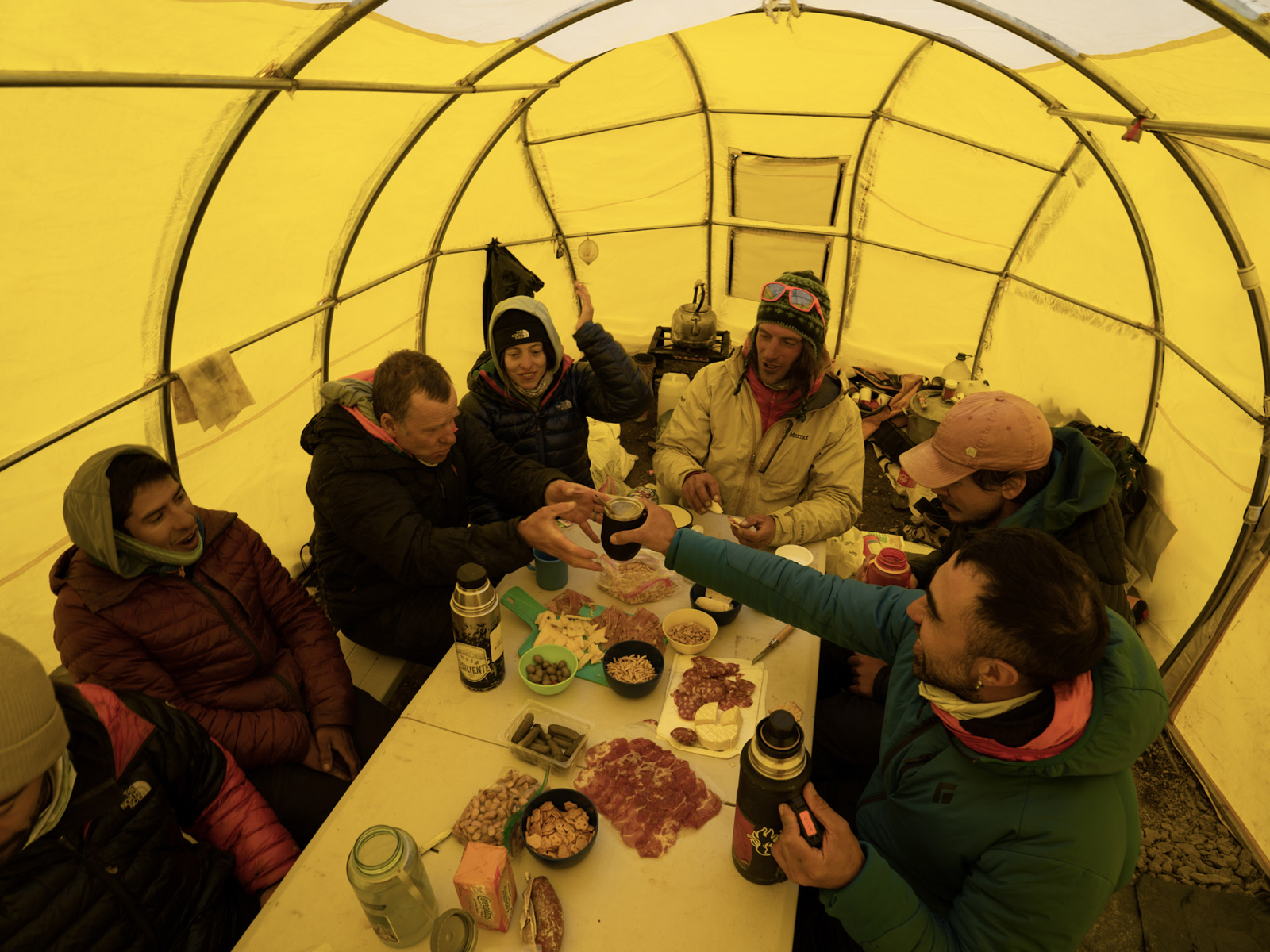
At max 4 climbers, there is no averaging, no waiting on a slower group member, no guide attention split ten ways. Decisions are made fast. The team moves as a unit. The climbers who do best communicate honestly, support their teammates, and manage their own psychology without leaning on others for emotional labor.

Connectivity

Plaza de Mulas has Wi-Fi available for purchase. Above base camp, connectivity is very limited. The guide team carries a satellite communication device for emergencies. Personal satellite communicators (Garmin inReach, SPOT) are recommended for regular contact with home.

Park Permit — Not Included

Estimated 2026–2027: USD $850–$1,150. Paid in cash (USD) in Mendoza on Day 1.

Tipping

  • Guide team: $500–$1,000+ per climber for the full expedition (starting point $500, with $750–$1,000+ appropriate for a strong performance)
  • Base camp staff: $25–$50 per climber

Porter Support — Optional

Camp I carry ~$200+; Camp II carry ~$300+; High Camp carry ~$380+.

Ojos Extension Local Expenses

Chilean pesos (CLP) for incidentals in Copiapó. Tips for Chilean support crew and truck driver: $50–$100 per climber.

Recommended Budget Buffer

Plan for $1,500–$2,000 USD in personal cash and card access beyond the expedition fee. Add $300–$500 if doing the Ojos extension. No banking services above Mendoza.

The Peak Performance Ascent already runs as a small, high-attention program — max 4 climbers, helicopter access, Hypoxico pre-acclimatization. Private departures take that further: your schedule, your team, your objective, your guides.

Who Private Expeditions Are For

  • Couples and small groups — two to four climbers on their own terms
  • Climbers with specific objectives — modified acclimatization, timeline extension, or Aconcagua + Ojos as a dedicated two-peak private program
  • Climbers who want Willie or Damian personally leading — available on private departures
  • Anyone who needs a specific date outside published departures

The Peak Performance Ascent paired with the Ojos del Salado extension is one of the great two-peak challenges in the Americas — as a private program, this combination can be built as a single seamless expedition with consistent guide leadership throughout.

Contact us at climbing@benegasbrothers.com to start the conversation.

Expedition Cost: $16,500 USD per person

The Peak Performance Ascent is a premium, small-team expedition. Every core component — Hypoxico pre-acclimatization, helicopter access, max 4 climbers, IFMGA guide leadership — is built in.

Price Includes

  • Hypoxico Pre-Acclimatization System: Altitude tent system delivered to your home for the 4–6 week pre-acclimatization protocol
  • Helicopter Access — In and Out: Round-trip helicopter transfers between Puente del Inca and Plaza de Mulas Base Camp
  • Pre-Trip Support: Expedition preparation guidance, Hypoxico protocol coaching, equipment consultation, and training recommendations before departure
  • Logistics & Transportation: Airport pickup in Mendoza, all ground transportation, and all transfers to and from the helicopter staging point
  • Accommodations: Hotel nights in Mendoza per itinerary, Las Cuevas lodge stay (Days 2–3), and all expedition camp accommodations
  • Meals: All meals from Day 1 dinner through departure from the mountain
  • Expedition Operations: IFMGA-certified guide leadership, mule transport of group equipment, group camp systems, satellite communication, and comprehensive group medical kit
  • Permit Coordination: BBE coordinates all permit paperwork — permit fee paid separately

Price Does NOT Include

  • International airfare
  • Aconcagua climbing permit fee (~$850–$1,150 USD, paid in cash in Mendoza)
  • Rescue and medical evacuation insurance (mandatory — Global Rescue High-Altitude Package ~$855)
  • Trip cancellation / travel insurance (strongly recommended)
  • Guide and staff gratuities
  • Personal porter services (optional)
  • Base camp extras: showers, Wi-Fi, beverages
  • Personal snacks and summit day fuel
  • Personal gear and clothing
  • Equipment rentals
  • Ojos del Salado extension ($8,500 per person — optional add-on)
  • Costs resulting from delays or circumstances beyond expedition control


Budget Summary

Expedition fee: $16,500

Climbing permit (est.): $850 – $1,150

Global Rescue — High-Altitude package (required): ~$855

Trip cancellation / travel insurance: $300 – $600

Guide gratuities: $500 – $1,000+

Personal porter (optional): $200 – $380 / carry

Personal snacks & summit fuel: $75 – $125

Base camp extras (showers, Wi-Fi): $50 – $150

Personal expenses buffer: $500 – $1,000

Estimated Total (without Ojos): ~$20,000 – $21,500

Ojos del Salado Extension (optional): +$8,500 + ~$500 local expenses

You are not paying for luxury. You are paying for precision — the highest probability of standing on the summit of the highest peak in the Americas in the shortest operationally sound timeline available anywhere.

The Peak Performance season runs January through February — the optimal window for the most stable conditions on Aconcagua. Departures are limited to maximum 4 climbers per team. Spots fill well in advance.

2026–2027 Expedition Dates

Teams are capped at 4 climbers. Contact our office for current availability.

January 2027

Jan 4, 2027 – Jan 17, 2027  ·  Open

Jan 18, 2027 – Jan 31, 2027  ·  Open

Ojos del Salado Extension Dates

Jan 18, 2027 – Jan 23, 2027  ·  Following Departure 1  ·  Open

Feb 1, 2027 – Feb 6, 2027  ·  Following Departure 2  ·  Open

The extension must be booked in advance — it cannot be added after arrival.

Payment Policy

A non-refundable 10% deposit is required to reserve your place. The remaining balance is due 120 days prior to the expedition start date. Payments by ACH transfer, wire transfer, check, or credit card (credit card subject to a 3.5% processing surcharge). All prices in USD.

Cancellation Policy

The 10% deposit is non-refundable from the moment of booking. All cancellation requests must be submitted in writing.

  • 120+ days prior: partial refund less unrecoverable costs already incurred
  • 90–119 days prior: partial refund reviewed individually based on committed costs
  • Less than 90 days: no refunds available

BBE will work with participants when circumstances allow, including potential transfer to a future departure or credit toward another program when operationally feasible.

Private Expedition Pricing

Private departures for the Peak Performance Ascent are custom-quoted based on group size, dates, guide assignments, and program design — including the option for Willie or Damian to personally lead. Contact us at climbing@benegasbrothers.com to begin the conversation.

This is not a standard Aconcagua climb

It’s a refined, efficient expedition for modern climbers who train hard, plan smart, and value precision and professionalism.

Book Trip
Location:
Argentina / Chile
Group:
Max. 4 people
Duration:
14 Days
Skill:
Intermediate to Advanced
Dates:

December – February

Pricing

Pricing is a typical estimate, final quote will be provided after receiving your inquiry.

This is not a standard Aconcagua climb

It’s a refined, efficient expedition for modern climbers who train hard, plan smart, and value precision and professionalism.